

Maddy summaryThis resolution (HRES 249) supports designating March 23, 2023, as "Tuskegee Airmen Commemoration Day" and urges all states, the District of Columbia, and U.S. territories to formally recognize the Tuskegee Airmen. It directly affects state and local governments by calling on them to honor these Black military personnel who served in the U.S. Army Air Corps from 1941-1949. The resolution highlights their historic achievements - flying over 15,000 combat sorties, overcoming segregation, and contributing to the military's integration through Executive Order 9981 - without creating new laws or funding. As a symbolic measure, it focuses on commemoration rather than policy change.
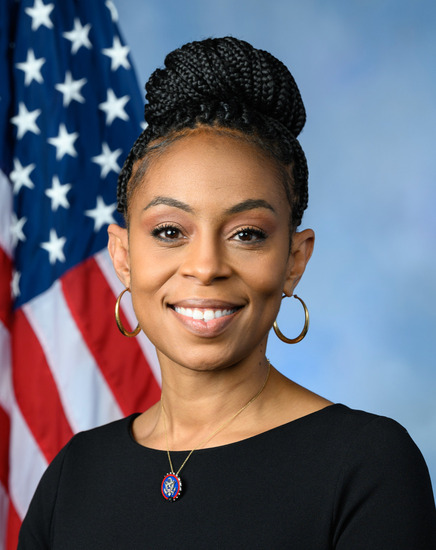
Rep. Shontel M. Brown
Sponsored bills
Maddy summaryThe More Teaching Less Testing Act of 2023 would reduce standardized testing in public schools by allowing states to use alternative assessment methods like grade-span testing (administering tests once per grade span instead of annually) and requiring a 90-day public comment period before implementing assessments. It prohibits using test scores as the sole factor for grade retention, diplomas, or teacher evaluations, and establishes a taskforce to evaluate testing practices and promote innovative assessment systems. This bill directly affects elementary and secondary schools across the country, potentially freeing up instructional time for more engaging learning activities. The legislation would change how states administer assessments while focusing on deeper learning rather than test preparation.
Transparency in Government Contracts Act This bill expands the Small Business Administration's (SBA) reporting requirements to include certain disaggregated demographic data about federal contracts (and subcontracts to the extent practicable) awarded to small businesses owned by socially and economically disadvantaged individuals. The SBA also must include whether such a small business participates in the 8(a) business development program.
Maddy summaryThis bill restores access to VA housing loans and educational benefits for Black World War II veterans who were denied GI Bill benefits due to racial discrimination, as well as for their living spouses, children, grandchildren, or direct descendants. It defines eligibility by requiring applicants to certify that their veteran relative was denied GI Bill benefits on racial grounds, with a five-year application window starting from the bill's enactment date. The VA must process these applications within 90 days and report to Congress on the number of recipients and total benefit value within one year. This addresses historical discrimination by creating new pathways to benefits for affected individuals and their families.
Maddy summaryHR 1723, the Abortion is Health Care Everywhere Act of 2023, amends the Foreign Assistance Act to remove restrictions on using U.S. foreign aid funds for abortion services. It explicitly allows U.S. foreign assistance programs to fund comprehensive reproductive health care, including abortion services, training, and equipment. This change directly affects U.S. international health programs and recipient countries, enabling them to integrate safe abortion care into broader reproductive health services. The bill aims to align U.S. policy with global health guidelines by making abortion services a standard part of reproductive health care funded through foreign assistance.
Maddy summaryHR 1619 requires schools participating in the National School Lunch Program to provide fluid milk substitutes (like soy or almond milk) upon request by a student or their parent/guardian. The bill removes the previous requirement that substitutions needed a medical authority's written statement for most dietary needs, instead allowing requests based on the student's or parent's request alone. It aligns the definition of acceptable substitutes with current Dietary Guidelines for Americans. This change directly affects students with dietary restrictions, making it simpler for schools to accommodate their needs without extra medical documentation.
Maddy summaryHR 1520 reauthorizes the Energy Efficiency and Conservation Block Grant Program through 2028 with $3.5 billion annually. It expands eligible uses to include infrastructure for alternative fuels (like hydrogen or electric vehicle charging) and projects that diversify energy supplies. State and local governments would receive grants for initiatives such as district heating systems, distributed energy resources, or fuel delivery infrastructure. The bill explicitly allows funding for projects that expand alternative fuel access, building on the 2007 Energy Independence Act framework. This represents a concrete policy update to modernize program eligibility and funding levels.
Maddy summaryThis bill (HR 1444) amends the Superfund law to require the EPA to consider climate change impacts when planning cleanups at contaminated sites. It adds new language requiring the EPA to assess how climate-related disasters - like floods or storms - might affect cleanup sites, including projected changes due to climate change. The EPA must now evaluate whether existing cleanup plans remain protective as climate conditions evolve. This applies directly to all current and future Superfund site remediation efforts managed by the EPA.
Maddy summaryHRES 231 requires all House Members, Delegates, Resident Commissioners, officers, and employees to complete annual medical emergency preparedness training. The training, provided by the Office of the Attending Physician, must cover cardiopulmonary resuscitation (CPR) and automated external defibrillator (AED) use. New staff must complete the training within 90 days of starting their position, and all staff must renew it annually. Certification of completion will be issued by the Office of the Attending Physician, and the rule takes effect 90 days after the resolution is adopted.
Maddy summaryHR 1595 establishes a federal grant program to help states improve their licensing systems for firearms dealers. It authorizes annual competitive grants (up to $2.5 million per state per year) for states to develop, implement, or evaluate their dealer licensing programs, provided they already meet minimum standards like requiring 3-year licenses, conducting inspections, and imposing penalties for violations. States receiving grants must report annually on inspections, violations, license status, and other metrics, with the Attorney General also submitting annual reports to Congress. This bill directly affects state governments that operate firearms dealer licensing programs, providing funding to strengthen oversight without changing existing state laws.