

Maddy summaryThe MORE Act (HR 5068) would remove cannabis from the federal list of controlled substances, effectively decriminalizing it at the federal level while establishing a new tax on cannabis products. The bill creates an Opportunity Trust Fund that would distribute tax revenues to support communities disproportionately impacted by cannabis prohibition, including funding for expungement programs, job training, and equitable licensing initiatives for minority business owners. It also includes provisions to prevent discrimination based on cannabis use in federal programs, immigration proceedings, and workplace policies. The bill would require federal courts to expunge non-violent cannabis convictions and establish a process for resentencing individuals currently serving time for such offenses. These provisions aim to address racial disparities in cannabis enforcement and create more equitable opportunities in the legal cannabis industry.
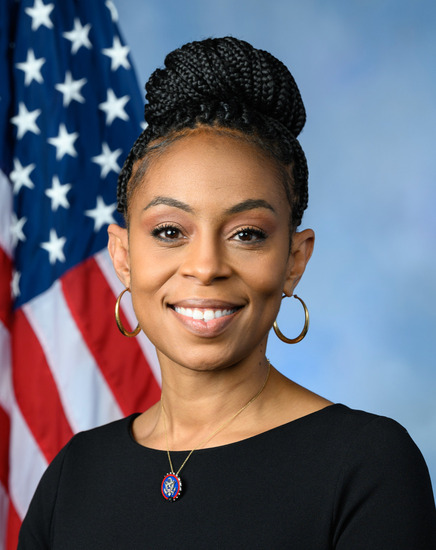
Rep. Shontel M. Brown
Sponsored bills
Maddy summaryThis bill amends the Food and Nutrition Act to improve SNAP (food stamp) access for seniors and disabled individuals. It creates a new standard medical deduction: seniors can self-attest to monthly medical expenses over $35, allowing a fixed $155 deduction (adjusted yearly for inflation) to be subtracted from household income when calculating SNAP benefits. States may also set higher deductions if they provide evidence of higher local medical costs. This directly affects seniors and disabled SNAP recipients with medical expenses, making it easier for them to qualify for benefits by reducing their counted income. The changes apply to certification periods starting after the bill's effective date.
Maddy summaryHR 909, the Crime Victims Fund Stabilization Act of 2025, modifies how funds from the False Claims Act are deposited into the Crime Victims Fund. It specifies that from 2025 through 2029, certain False Claims Act proceeds (specifically those for qui tam plaintiff payments and government damage reimbursements) cannot be deposited into the fund. This change directly affects the composition of the Crime Victims Fund by excluding these specific revenue streams during the specified period. The bill does not create new benefits or alter victim services; it only adjusts fund allocation rules for existing False Claims Act revenues.
Maddy summaryThis concurrent resolution (HCONRES 69) commemorates the 15th anniversary of the January 8, 2011, Tucson shooting that killed six people and injured 13, including former Congresswoman Gabby Giffords. It honors the victims, survivors, and Giffords - now a prominent advocate for gun violence prevention - and recognizes her leadership in promoting civility and reducing gun violence. The resolution also commends Tucson residents and first responders for their resilience and reaffirms Congress’s commitment to respectful dialogue and opposing political violence. As a ceremonial resolution, it does not create new laws or policies.
Maddy summaryHR 4611 (EACH Act of 2025) requires all federally funded health programs - including Medicaid, Medicare, military health plans, and the Indian Health Service - to cover abortion services without restrictions, repealing the Hyde Amendment's long-standing ban on federal funding for most abortions. This directly affects millions of people enrolled in these programs, particularly low-income women, women of color (including 25% of Black women and 22% of Hispanic women on Medicaid), and young people. The bill mandates coverage in all federally administered health plans and prohibits state or private insurers from restricting abortion coverage in health insurance. It aims to eliminate current federal and state barriers that deny abortion access to people who rely on government health programs.
Maddy summaryHR 6857 requires all colleges and universities receiving federal funds to prominently display a link to the Department of Education’s civil rights complaint portal on their website homepage and to post annual Title VI awareness materials in high-traffic campus locations (like student centers) and on campus websites. The bill mandates these institutions to annually report discrimination complaints (based on race, color, or national origin) to the Department of Education’s Inspector General. It also requires the Department to provide monthly congressional briefings on complaint volumes and resolution timelines, while the Inspector General must audit institutions with the highest complaint rates and study why some complaints go to schools versus the federal office. This directly affects every federally funded higher education institution in the U.S. by changing how they handle and report civil rights complaints.
Maddy summaryHRES 956 is a symbolic resolution passed by the U.S. House of Representatives condemning an antisemitic attack that occurred during a Hanukkah celebration in Sydney, Australia, on December 14, 2025. It expresses strong condemnation of the shooting (which caused deaths and injuries), extends condolences to victims and the Australian Jewish community, and affirms the right to worship freely. The resolution also reaffirms the U.S. commitment to combating antisemitism and terrorism and urges the Australian government to address rising antisemitism and protect religious communities. As a non-binding resolution, it does not create new laws or directly affect any individuals or groups.
Essential Caregivers Act of 2025 This bill prohibits certain health care facilities from limiting the access of essential caregivers to residents of those facilities, including during designated emergency periods. Specifically, the bill generally prohibits Medicare skilled nursing facilities, Medicaid nursing facilities, Medicaid intermediate care facilities, and associated inpatient rehabilitation facilities from restricting the access of essential caregivers to residents of the facilities, including during emergency periods in which visitation rights are otherwise restricted. During emergency periods, facilities may restrict access for an initial period of up to seven days and for one additional maximum seven-day period (if the additional period is approved by the state health department). Facilities may restrict access for a total of 7 days (or 14 days with the approval of the state health department) during an emergency period. Essential caregivers must agree to comply with any safety protocols set by the facility, which may be no more stringent for caregivers compared to those for staff. Caregivers who fail to comply with these requirements may be denied access, subject to an appeals process.
Maddy summaryHR 6731, the "Restore Trust in Government Act," requires Members of Congress, the President/Vice President, and their spouses or dependent children to divest certain financial investments during federal service. It defines "covered investments" broadly (including stocks, commodities, and derivatives) but excludes Treasury bonds, municipal bonds, family farm interests, and some Alaska Native Settlement stock. Covered individuals must sell holdings within 90-180 days of taking office or enacting the law, with limited exceptions for qualified blind trusts or spouses’ occupational trading. Violations incur a 10% fee on the investment value and require returning profits, paid to the Treasury. Ethics offices enforce these rules, publish penalty details, and issue divestiture certificates.
Strengthening Agency Management and Oversight of Software Assets Act This bill requires federal agencies and Intelligence Community (IC) elements to assess their software inventory and develop software management plans. The bill requires each agency and each IC element to complete a comprehensive assessment of the software paid for by, in use at, or deployed throughout the agency or element. The assessment must include information such as (1) the current inventory of software; (2) contracts and other arrangements used to acquire, build, deploy, or use the software; (3) costs and fees not included in the initial contract or agreement; and (4) the interoperability of the software and restrictions on its use. Each agency and IC element must use their assessment to develop a plan to consolidate software entitlements, develop procedures for cost-effective acquisition strategies, and restrict subordinate entities from using any software entitlement without approval. (A software entitlement is software that has been purchased, leased, or licensed by or billed to an agency and that is subject to use limitations.) Such plans must be submitted to the Office of Management and Budget (OMB) and Congress. Within two years of enactment, OMB must submit recommendations to Congress regarding government software procurement policies and practices to • increase the interoperability of software licenses; • consolidate licenses when appropriate; • reduce costs; • improve performance; and • modernize the management and oversight of agency software. The GAO must report on certain related topics, including governmentwide trends in agency software asset management practices and comparisons of such practices among agencies.