

Revitalizing Downtowns Act This bill expands the investment tax credit to add a qualified office conversion credit. The amount of such credit is 20% of the qualified conversion expenditures with respect to a qualified converted building. The bill defines qualified converted building as any building if (1) prior to conversion, the building was nonresidential real property which was leased, or available for lease, to office tenants; (2) the building has been substantially converted from an office use to a residential, retail, or other commercial use; (3) the building was initially placed in service at least 25 years prior to the beginning of the conversion, and (4) straight line depreciation is allowable with respect to the building.
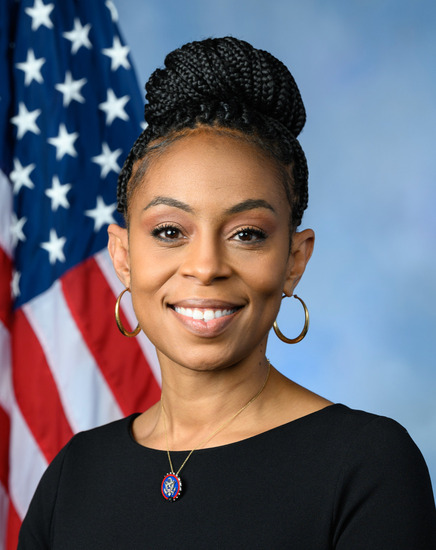
Rep. Shontel M. Brown
Sponsored bills
Closing the Meal Gap Act of 202 1 This bill revises the requirements for calculating Supplemental Nutrition Assistance Program (SNAP) benefits. The bill increases the minimum SNAP benefit and requires benefits to be calculated using the value of a low-cost food plan. The Department of Agriculture (USDA) must determine the requirements for the low-cost food plan, which is the diet required to feed a family of four, consisting of a man and a woman 19-50 years of age, a child 6-8 years of age, and a child 9-11 years of age. USDA must (1) reevaluate and publish the market baskets of the plan by January 1, 2027, and every five years thereafter, based on current food prices, food composition data, consumption patterns, and dietary guidance; and (2) make adjustments to the plan to account for household size, changes in the cost of the diet, and the costs of food in specified areas. The bill modifies the requirements for calculating household income to determine SNAP eligibility by (1) authorizing a standard medical expense deduction for households containing an elderly or disabled member, and (2) eliminating the cap on the excess shelter expense deduction. The bill eliminates certain work requirements for SNAP. The requirements apply to able-bodied adults who are ages 18-49 and have no dependent children. The bill allows Puerto Rico, American Samoa, and the Northern Mariana Islands to participate in SNAP. Currently, the three territories receive block grants instead of participating in SNAP.
Time for Completion Act This bill expands consumer information disclosure requirements related to student completion or graduation rates at institutions of higher education (IHEs) that participate in federal student-aid programs. Currently, such IHEs must disclose the completion or graduation rate of first-time, full-time, certificate- or degree-seeking undergraduate students. This bill expands disclosure requirements to include the completion or graduation rates of non-first-time and half-time certificate- or degree-seeking undergraduate students. The bill also sets forth new time periods for calculating the completion or graduation rates for programs of study that are less than four years.
Designates the facility of the United States Postal Service located at 102 West Main Street in New Albany, Ohio, as the "Congressman Samuel L. Devine Post Office."
This concurrent resolution recognizes the service and sacrifice of those who served and perished in California at Port Chicago Naval Magazine during World War II. The concurrent resolution also exonerates the 50 Port Chicago sailors convicted of the charge of mutiny against the United States and all other charges brought against them after the July 17, 1944, explosion that killed 320. It upgrades the general and summary discharges of the Port Chicago sailors to honorable discharges.
Preserving Rules Ordered for The Entities Covered Through 340B Act of 2021 or the PROTECT 340B Act of 2021 This bill prohibits pharmacy benefit managers (PBMs) and health insurance plans from discriminating against health providers participating in the 340B drug pricing program, including pharmacies contracted with such providers to dispense 340B drugs. The 340B program allows certain providers to receive covered outpatient drugs at reduced prices from manufacturers. Specifically, PBMs and insurance plans may not reimburse 340B participants at a lower rate than other entities not participating in the program; impose differing terms (such as fees, charge-backs, or audits) on 340B participants; interfere with an individual's choice to receive drugs from a 340B participant; require 340B participants to identify which drugs fall within the program; or refuse to contract with a 340B participant on the basis that they utilize the program. Violations of this bill are subject to a civil penalty of not more than $5,000 per violation per day. These prohibitions also apply to prescription drug (Part D) sponsors under Medicare. The bill also provides for a process to prevent duplicate 340B drug discounts to states under Medicaid.
Safe Schools Improvement Act of 2021 This bill requires states to direct their local educational agencies (LEAs) to establish policies that prevent and prohibit bullying and harassment of elementary and secondary school students. In particular, these policies must prohibit bullying and harassment based on race, color, national origin, sex, sexual orientation, gender identity, disability, or religion. Further, LEAs must provide (1) students, parents, and educational professionals with annual notice of the conduct prohibited in their disciplinary policies; (2) students and parents with grievance procedures that target such conduct; and (3) the public with annual data on the incidence and frequency of that conduct at the school and LEA level. The Department of Education must conduct and report on an independent biennial evaluation of programs and policies to combat bullying and harassment in elementary and secondary schools. The National Center for Education Statistics must collect state data to determine the incidence and frequency of the conduct prohibited by LEA disciplinary policies.
Connecting Youth to Jobs Act This bill establishes and provides funding through FY2031 for grant programs to address barriers to youth employment. The bill also excludes certain youth employment income from Supplemental Nutrition Assistance Program (SNAP) eligibility determinations. Specifically, the bill requires the Department of Labor to provide formula grants to states and local areas, and competitive grants to community-based organizations and other eligible entities, to assist in carrying out subsidized public employment programs for youth with barriers to employment. Funding to states and local areas must be used for programs that lead eligible youth to unsubsidized full-time employment or to attainment of at least one recognized postsecondary credential. Grants to eligible entities must be used to match youth with employment barriers to subsidized employment programs funded by the bill and to provide hands-on work experience. The Government Accountability Office must evaluate and report on the activities funded by the bill. The bill also excludes from SNAP income eligibility determinations any income earned by a household member who is younger than 22 years old, is an elementary or secondary school student, and lives with a parent.
Pet Safety and Protection Act of 2021 This bill revises requirements concerning the sources of dogs and cats used by research facilities. Specifically, the bill revises the list of permissible sources of dogs and cats used by research facilities to include dogs and cats obtained (1) from a licensed dealer, (2) from a publicly owned and operated pound or shelter that meets specified requirements, (3) by donation from a person who bred and raised the dog or cat or owned it for not less than one year, or (4) from a research facility licensed by the Department of Agriculture. The requirements pertaining to sources apply to dogs and cats obtained through sales, donations, or offers. Monetary penalties are established for violations.
Food and Nutrition Education in Schools Act of 202 1 This bill directs the Department of Agriculture (USDA) to establish a Food and Nutrition Education in Schools Pilot Program to award grants to local educational agencies for (1) projects that hire qualified, full-time food and nutrition educators to carry out programs in schools that have the goal of improving student health and nutrition; and (2) projects that fund school gardens or other evidence-based interventions relating to student health and nutrition, aligned with the latest school nutrition standards, to create hands-on learning opportunities for students. In awarding grants under the program, USDA must prioritize projects that serve schools or districts (1) in which not less than 40% of students qualify for free or reduced-price meals, or (2) that include neighborhoods with high rates of childhood obesity or other diet-related diseases. Additionally, it must give priority to projects that provide programming in summer months and those that are joint partnership projects.