

Enabling More Penetrating Oversight When Examining Research for NIH Act of 2021 or the EMPOWER NIH Act of 2021 This bill requires annual, unannounced, in-person inspections of all nonfederal entities that receive funding, including through subawards, from the National Institutes of Health (NIH) to assess whether the funded research is consistent with the research proposal and otherwise meets record-keeping requirements and NIH standards. The inspections are required even when an entity is located in a foreign country with a government that interferes with the inspection; entities that fail an inspection must return the full amount of NIH funding and lose eligibility for future NIH funding for at least five years. The bill is effective on October 1, 2023, and applies to NIH funding awarded both before and after that date.
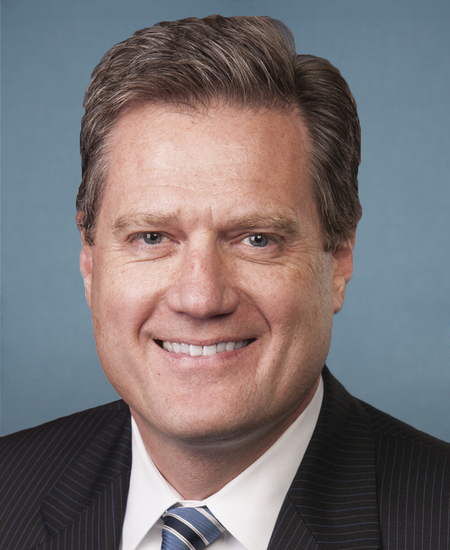
Rep. Michael R. Turner
Sponsored bills
Minor League Baseball Relief Act This bill establishes a program for the relief of certain minor league baseball clubs and independent professional baseball clubs that experienced large business losses. The bill provides funding for the Small Business Administration to make grants to such clubs that experienced decreases in gross revenue in 2020 of at least 75%, as measured against revenues in 2019 (or, if revenues were negatively affected by a natural disaster or weather disruption in 2019, by the average of revenues over the prior three-year period). The source of funding for the grants shall be funds appropriated under enacted COVID-19 relief legislation that have not been obligated and are no longer being used to carry out activities authorized under those laws. Grant amounts provided to any club may not exceed $10 million.
Protecting Older Workers Against Discrimination Act of 2021 This bill revises the evidentiary standard for age discrimination by establishing an unlawful employment practice when the complaining party demonstrates that age or participation in an investigation, proceeding, or litigation related to an age discrimination claim was a motivating factor for an adverse practice, even though other factors also motivated the practice (thereby allowing what are commonly known as mixed motive claims). The bill (1) permits the complaining party to rely on any type or form of admissible evidence, which need only be sufficient for a reasonable trier of fact to find that an unlawful practice occurred; and (2) declares that the complaining party shall not be required to demonstrate that age or retaliation was the sole cause of the employment practice (thereby rejecting the Supreme Court's decision in Gross v. FBL Financial Services, Inc. , which requires the complainant to prove that age was the but-for cause for the employer's decision). The bill applies this evidentiary standard to other employment discrimination and retaliation claims, including claims under the Civil Rights Act of 1964, the Americans With Disabilities Act of 1990, and the Rehabilitation Act of 1973. In a claim in which age discrimination is shown, but where the employer demonstrates that it would have taken the same action absent the motivating factor of age, the bill authorizes courts to grant declaratory and injunctive relief, but prohibits the court from awarding damages or issuing an order requiring any admission, reinstatement, hiring, promotion, or payment. This limitation also applies to claims of discrimination based on disability. The bill also includes reporting requirements for the Equal Employment Opportunity Commission and the Department of Labor.
Vanessa Guillén Military Justice Improvement and Increasing Prevention Act This bill modifies the process and policy related to the disposition of charges and convening of courts-martial for certain sexual assault cases and other specified offenses under the Uniform Code of Military Justice (UCMJ). Among other elements, the bill provides that the determinations on the preferral, disposition, and referral of charges for specified offenses under the UCMJ must be made by a commissioned officer of the Armed Forces who is designated as a court-martial convening authority (in grade O-6 or higher) and who is available for detail as trial counsel, has significant trial experience, and is outside the chain of command of the member subject to the charges.
Foreign Gain-of-Function Research Prevention Act of 2021 This bill prohibits the use of federal funds to conduct or support gain-of-function research involving potential pandemic pathogens by China, Russia, Iran, North Korea, or other foreign adversaries. Gain-of-function research is any research that is anticipated to confer an attribute on a pathogen to enhance its pathogenicity or transmissibility in mammals. If the Department of State finds that an entity has used funds for prohibited research, the entity may not receive any federal funding for a period of five years.
Retain Skilled Veterans Act This bill modifies the restriction related to the appointment of retired members of the Armed Forces to certain civil service positions in the Department of Defense. Under the bill, the 180-day waiting period before a retired member may be appointed to a position only applies to those positions in the excepted or competitive service classified at or above GS-14 of the General Schedule (or equivalent).
Presumptive Benefits for War Fighters Exposed to Burn Pits and Other Toxins Act of 2021 This bill establishes a presumption of service-connection for specified diseases associated with exposure to burn pits (an area used for burning solid waste in open air without equipment) and other toxins by veterans who were awarded specified medals on or after August 2, 1990. Under a presumption of service-connection, specific conditions diagnosed in certain veterans are presumed to have been caused by the circumstances of their military service. Health care benefits and disability compensation may then be awarded. Under the bill, if the Department of Veterans Affairs (VA) receives a written petition to add a disease to the list, the VA must request a determination by the National Academies of Sciences, Engineering, and Medicine with respect to whether there is a positive association between the exposure of humans to a covered toxin and the occurrence of the disease in humans. The bill makes disability or death of certain employees from specified diseases compensable as a work injury. Specifically, such employees are those who were employees of the Department of State, the Department of Defense, or an element of the intelligence community on or after August 2, 1990, and carried out job responsibilities for at least 30 days during a contingency operation.
This bill requires the Department of Veterans Affairs to ensure that, if it creates a presumption of service-connection between the occurrence of a disease and exposure to an herbicide agent while serving in the Armed Forces between January 9, 1962, and June 30, 1976, at a military base in Thailand, such presumption must also apply to exposure at any military base in Thailand, regardless of where on the base the veteran was located or what military job specialty the veteran performed.
Traditional Cigar Manufacturing and Small Business Jobs Preservation Act of 2021 This bill exempts traditional large and premium cigars from Food and Drug Administration (FDA) regulation and FDA-assessed user fees.
It's About Time Act This bill changes the calendar period for the federal fiscal year (currently October 1-September 30) to January 1-December 31 beginning in 2023.