Performing Artist Tax Parity Act of 2021 This bill modifies the tax deduction for the expenses of performing artists (including commissions paid to managers or agents) to provide for a phaseout of such deduction for taxpayers whose adjusted gross income exceeds $100,000 ($200,000 for joint return filers). The $100,000 phaseout threshold is adjusted for inflation annually for taxable years beginning after 2021.
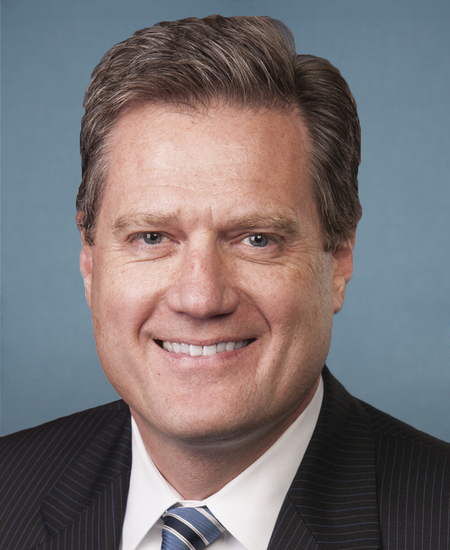
Rep. Michael R. Turner
Sponsored bills
Recognizing and Ensuring Taxpayer Access to Infrastructure Necessary for GPS and Satellite Communications Act of 2021 or the RETAIN GPS and Satellite Communications Act of 2021 This bill places conditions on entities that deploy commercial terrestrial operations in the 1525-1559 megahertz (MHz) band or the 1626.5-1660.6 MHz band of the electromagnetic spectrum. These frequency bands are traditionally used for satellite operations, including the global positioning system (GPS). On April 19, 2020, the Federal Communications Commission approved an application for a low-power 5G wireless network in such bands despite concerns about the network interfering with GPS and other operations on adjacent bands. In its application, the entity committed to update, repair, or replace federal devices, platforms, or systems affected by its operations. This bill requires an entity (including the previously approved entity) that deploys terrestrial operations in the designated bands to reimburse a federal agency or a person for certain costs if the entity's operations interfere with or otherwise affect the operations of the agency or person. These costs may include necessary upgrades, repairs, or replacements to satellite communication devices and related equipment, as well as expenses for engineering studies and labor. Reimbursable costs owed by the entity transfer to any assignee, successor, or purchaser of its license to deploy terrestrial operations in the designated bands. The bill also expressly authorizes federal agencies to directly accept from the entity reimbursements for incurred costs.

Designates the facility of the United States Postal Service located at 102 West Main Street in New Albany, Ohio, as the "Congressman Samuel L. Devine Post Office."
This resolution denounces socialism and opposes the implementation of socialist policies in the United States.
This bill provides supplemental FY2021 appropriations to the National Guard for its response to the events at the U.S. Capitol on January 6, 2021. The bill designates the funding as emergency spending, which is exempt from discretionary spending limits.
Technical Reset to Advance the Instruction of Nurses Act or the TRAIN Act This bill modifies the methodology and application of Medicare Advantage nursing and allied health education payments for hospitals. Specifically, for 2010-2019, the bill eliminates the annual cap on total payments and excludes any resulting increase from factoring into calculations for graduate medical education payments for such hospitals. (The Centers for Medicare & Medicaid Services recently issued guidance providing for the recalculation and correction of certain payments to account for the annual payment cap.)
Brownfields Redevelopment Tax Incentive Reauthorization Act of 2021 This bill extends through 2024 the election to expense (i.e., deduct in the current taxable year) environmental remediation costs (i.e., costs for the abatement or control of hazardous substances at a qualified contaminated site). The bill applies to expenditures paid or incurred after December 31, 2020.
Military PFAS Testing Disclosure Act This bill requires the Department of Defense (DOD) to immediately publicly disclose the results of any testing for perfluoroalkyl or polyfluoroalkyl substances, commonly referred to as PFAS, conducted on or at specified sites (i.e., areas surrounding DOD military installations in the United States, formerly used defense sites, and state-owned facilities of the National Guard). DOD must also disclose the expected timing and location of any planned testing for PFAS conducted at the specified sites. DOD may satisfy the disclosure requirements by publishing the information, data sets, and results relating to the testing on a publicly available DOD website or in the Federal Register. Prior to conducting any testing for PFAS, DOD must provide notice in writing to (1) the managers of the public water system and the publicly owned treatment works serving the areas located immediately adjacent to the military installation being tested, (2) the municipal government serving the areas located immediately adjacent to the military installation being tested, and (3) all Restoration Advisory Board members for the military installation where the testing is to occur. DOD must test for any PFAS for which a method of measurement in drinking water has been validated by the Environmental Protection Agency.
PFAS Exposure Assessment and Documentation Act This bill requires the Department of Defense (DOD) to include in various health evaluations an assessment of whether a member of the Armed Forces has been exposed to perfluoroalkyl or polyfluoroalkyl substances, commonly referred to as PFAS. Specifically, the bill requires DOD to ensure that any periodic health assessment, physical assessment for recently separated members, pre-deployment medical examination, post-deployment medical examination, and post-deployment health reassessment provided to a member of the Armed Forces includes an evaluation of whether the member has been exposed to PFAS or was based or stationed at a military installation with a known or suspected release of PFAS during the period the member was there. If any of the evaluations result in a positive determination of potential exposure to PFAS, DOD must provide blood testing during the evaluation to be included in the member's health record. DOD must pay for blood testing to determine and document potential exposure to PFAS for former members of the Armed Forces or family members of such members who lived at a location identified by DOD as having a known or suspected PFAS release during the time the individuals lived there. DOD must share results of the evaluations with the Department of Veterans Affairs and establish a registry of members of the Armed Forces who have been exposed to, or suspected to have been exposed to, PFAS. Members may elect to be excluded from the registry.
Federal Retirement Fairness Act This bill modifies the federal civilian service that is creditable service under the Federal Employees Retirement System (FERS). Specifically, it expands the nondeduction service that may be creditable under FERS. Nondeduction service is federal service where an employee's pay is not subject to retirement deductions (e.g., service under a temporary appointment). Currently, nondeduction service performed before January 1, 1989, is creditable under FERS so long as a deposit is made into the retirement fund to cover the period of nondeduction service. This bill allows nondeduction service performed on or after January 1, 1989, to be creditable under FERS so long as a deposit is made into the retirement fund.