

Maddy summaryThis symbolic resolution expresses congressional support for designating September 29, 2024, as "Veterans of Foreign Wars of the United States Day" to honor the organization's 125th anniversary. It requests the President issue a proclamation encouraging government agencies and the public to observe the day with ceremonies, though it creates no new laws or policy changes. The resolution recognizes the VFW's historical service to veterans but does not directly affect any individuals or programs.
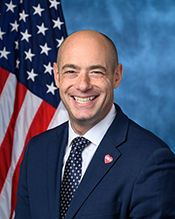
Rep. Greg Landsman
Sponsored bills
Maddy summaryHRES 1432 designates September 10, 2024, as "National Firearm Suicide Prevention Day" to raise public awareness about firearm suicides and promote safe storage practices. The resolution encourages healthcare professionals to discuss safe firearm storage with patients and supports the day's goals of reducing firearm suicides through education. It directly affects the general public and healthcare providers by highlighting evidence that safe storage lowers suicide risk, referencing statistics like 54.6% of U.S. suicides in 2022 involving firearms. The bill is symbolic, with no new legal requirements, and aligns with existing awareness efforts like Firearm Suicide Prevention Day.
Maddy summaryThe Stand with Ukraine Act of 2024 establishes a framework for sustained U.S. security assistance to Ukraine in response to Russia's invasion. It endorses a 10-year bilateral security agreement and directs the U.S. government to provide military equipment, training, and security assistance to strengthen Ukraine's defense capabilities against Russian aggression. Key provisions include treating Ukraine as a major non-NATO ally for defense transfers, fast-tracking military sales through the Foreign Military Sales program, and creating mechanisms to prioritize defense article transfers. The bill also includes specific support for Ukraine's recovery, reconstruction, and demining efforts following the conflict. This legislation directly affects U.S. foreign policy implementation, military assistance programs, and Ukraine's ability to build a credible defense against Russian threats.
Maddy summaryHR 3507, the "Yes In My Backyard Act," requires local governments receiving certain federal Community Development Block Grants (CDBG) to report on their progress toward adopting specific housing-friendly land use policies. It directly affects cities and counties that administer CDBG funds by mandating they submit plans tracking 22+ policy changes, such as allowing duplexes in single-family zones, reducing parking requirements, or streamlining permits. The bill does not require local governments to adopt these policies but requires them to document their current status and plans for implementation. This reporting mechanism aims to identify barriers to affordable housing without binding local governments to specific actions. The requirement applies to CDBG recipients starting one year after the bill's enactment.
Maddy summaryThe Elder Pride Protection Act of 2024 establishes a new federal task force (the ELDER Task Force) within the Department of Justice to address elder abuse targeting LGBTQI+ seniors. The task force, formed within 90 days of the bill's enactment, will study abuse patterns against LGBTQI+ individuals aged 60+, develop best practices for law enforcement, and create educational materials for prevention and response. It will coordinate federal, state, and local efforts and report to Congress within one year. The bill directly affects LGBTQI+ seniors facing abuse, focusing on concrete policy actions through research, resource development, and interagency coordination.
Maddy summaryHR 9374, the Stand with Israel Act, prohibits U.S. federal funds from being used to support the United Nations or its entities if they restrict Israel's full participation as a member state. The bill specifically blocks funding for any UN body that expels, downgrades, or suspends Israel's membership or limits its ability to participate equally with other nations. This affects U.S. government contributions to the UN, requiring the Department of State and other agencies to halt funding for such UN actions. The key mechanism is a new provision in the UN Participation Act that mandates this funding restriction whenever Israel's UN participation is impaired.
Maddy summaryHR 6531, the TRAIN VA Employees Act, requires the Department of Veterans Affairs (VA) to create mandatory training for all VA supervisors and certain other designated employees. The training program, to be developed within one year of enactment, covers key supervisor duties like performance appraisals, addressing workplace issues (including hostile environments), and managing employee conduct. All affected employees must complete the initial training within 18 months and refresher sessions every two years. The bill directly impacts VA supervisors and specific leadership roles, focusing on improving management practices through structured, adult-learning-based instruction.
Maddy summaryHR 9299, the IRAN Act, requires the U.S. Secretary of State to lead federal efforts promoting internet freedom and access to information in Iran. It amends a 2012 law to mandate specific strategy updates, including evaluating how activists use virtual private networks (VPNs) and satellite tech, developing guidance to prevent sanctions from blocking internet tools for Iranians, and planning to bypass government internet blackouts. The bill directs the State Department to coordinate with Treasury, Commerce, USAID, and intelligence agencies to implement these updates. This affects U.S. government agencies' coordination and aims to improve internet access for Iranian civil society activists.
Maddy summaryThe Campus Accountability and Safety Act amends the Clery Act to require colleges and universities to collect and report more detailed statistics about campus incidents of domestic violence, dating violence, sexual assault, sexual harassment, and stalking. It establishes new requirements for institutions to provide confidential support through "sexual and interpersonal violence specialists" who can help victims navigate reporting options and campus resources without triggering investigations. The bill mandates trauma-informed training for staff involved in addressing these incidents and requires institutions to provide clear information about their disciplinary processes and support services. It also creates specific reporting requirements about how many cases were reported to Title IX coordinators, how many victims sought campus disciplinary action, and how many cases were resolved through campus processes. Institutions that fail to comply may face civil penalties of up to 1% of their operating budget.
Maddy summaryThis bill reauthorizes the Debbie Smith DNA Backlog Grant Program, which provides federal funding to state and local law enforcement agencies to reduce backlogs in processing DNA evidence from crime scenes. It extends the program's funding period from fiscal years 2024 through 2029 (previously ending in 2024). The bill also updates audit requirements to ensure grant funds are used properly through 2029. This directly affects law enforcement agencies that receive these grants to accelerate DNA analysis for criminal investigations.