

Maddy summaryHR 10115 creates new Small Business Administration loan programs specifically for nonprofit child care centers meeting defined criteria (like 501(c)(3) status, state licensing, and non-discrimination policies). The bill allows these centers to access 7(a) and 504 loans with simplified guarantee requirements for loans under $500,000, while protecting religious activities under the First Amendment. It also mandates business assistance through small business development centers and women’s business centers, including tailored workshops on planning and operations. The legislation requires annual reports to Congress on loan distribution and establishes a resource guide for child care providers.
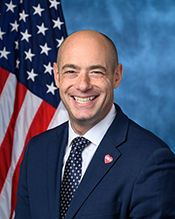
Rep. Greg Landsman
Sponsored bills
Maddy summaryHRES 1566 is a symbolic House resolution honoring all U.S. veterans on Veterans Day 2024. It recognizes the service and sacrifice of the estimated 15.8 million veterans living in the U.S. as of 2023, including those who served in conflicts from World War II to post-9/11. The resolution calls on the American public to observe Veterans Day to acknowledge veterans' role in preserving national freedom. As a non-binding resolution, it has no direct policy impact but formally expresses congressional recognition of veterans' contributions.
Maddy summaryThis resolution (HRES 1558) is a symbolic House of Representatives measure supporting October as "National Domestic Violence Awareness Month." It does not create new laws or allocate funding but formally expresses the House's support for raising awareness about domestic violence and its impacts, and urges continued backing for existing programs that address domestic violence. The resolution cites statistics on domestic violence prevalence (e.g., 24 people per minute affected by intimate partner violence) to underscore the importance of the observance. It directly affects public awareness efforts but does not change policies or directly impact individuals.
Maddy summaryHRES 1555 is a symbolic House resolution condemning the spread of false claims and malicious rumors about disaster response efforts, which have led to credible threats against FEMA personnel and disrupted aid for survivors. It specifically references incidents after Hurricanes Helene and Milton, including a pause in North Carolina door-to-door assistance due to safety threats and antisemitic targeting of officials. The resolution formally condemns those spreading disinformation for political gain and commits Congress to supporting FEMA’s efforts to combat misinformation and promote accurate recovery information. As a non-binding resolution, it does not create new laws but expresses congressional support for protecting disaster response workers and ensuring survivors receive timely aid.
Maddy summaryThe 21st Century Vehicle Choice Act requires federal agencies to produce reports on vehicle market data and critical minerals for electric vehicles, while increasing tax credits for clean vehicles. It mandates the Commerce Secretary to report on new vehicle variety and pricing trends, the Energy Secretary to track critical minerals needed for EVs annually, and studies on high-gasoline-use vehicles and EV charging station availability. The bill also directly increases tax credits: doubling the new EV credit from $3,750 to $7,500, raising the used EV credit from $4,000 to $8,000, and boosting the refueling infrastructure credit from 30% to 50%. These changes primarily affect EV buyers, automakers, and energy infrastructure providers by altering financial incentives and data transparency around vehicle choices.
Maddy summaryThis bill requires the Department of Veterans Affairs (VA) to establish standard practices for all suicide prevention and mental health grant or pilot programs run through the Veterans Health Administration. It mandates these programs must set clear, measurable goals, create detailed evaluation plans for data collection and analysis, and regularly share progress with relevant stakeholders. The VA must also conduct thorough post-program evaluations to assess effectiveness and share successful strategies. These rules apply to all such programs, regardless of when they began, ensuring consistent, evidence-based approaches to preventing veteran suicide.
Maddy summaryThis bill establishes the Public Health Service Ready Reserve Corps (PHS RRC) as a formal reserve component with benefits matching those of military reserves. It amends federal laws to ensure PHS RRC members receive equal treatment in areas such as leave benefits, educational assistance, and access to military-style healthcare benefits like TRICARE. The bill increases annual funding for the program from $12.5 million to $13.6 million. This affects health professionals serving in the PHS RRC, providing them with benefits similar to military reservists.
Maddy summaryThis bill amends VA policy to allow headstones or markers for cremated veterans buried alongside other eligible veterans. It specifically permits the VA to provide such markers when the cremated veteran shares a burial site with another eligible veteran (per 38 U.S.C. §2402(a)), the marker includes both individuals' names, and the cost does not exceed current limits. The change directly affects cremated veterans interred with other eligible veterans at VA cemeteries. It does not expand eligibility but adjusts how existing markers are provided under specific conditions.
Maddy summaryHR 9819, the Saving Our Veterans Lives Act of 2024, establishes a program through the Department of Veterans Affairs (VA) to provide eligible veterans with secure firearm lock boxes upon request. The bill defines "covered items" as U.S.-made, ASTM-compliant lock boxes designed to prevent unauthorized access, which veterans receive free of charge along with information on secure storage options. It explicitly states the program does not require firearm storage, registration, or affect veterans' legal right to own firearms, and prohibits the VA from collecting personal data or creating participant lists. The VA is authorized $5 million annually (2025-2035) to fund the program, develop educational materials, and run a public campaign promoting safe storage as a suicide prevention strategy.
Maddy summaryThe VA Employee Fairness Act of 2024 modifies collective bargaining rules for employees of the Veterans Health Administration (VHA). It removes existing subsections (b), (c), and (d) from the law governing VHA employee bargaining and renumbers the remaining provision. This change streamlines the collective bargaining framework but does not alter the Secretary of Veterans Affairs' existing authorities over incentive pay and expedited hiring. The bill directly affects VHA employees by changing how their collective bargaining rights are structured under federal law. The law remains neutral, focusing solely on procedural adjustments to the existing bargaining framework.