

Maddy summaryThe Firefighter Cancer Registry Reauthorization Act of 2023 reauthorizes the federal program established by the 2018 Firefighter Cancer Registry Act. It increases annual funding from $2.5 million to $5.5 million and extends the program through fiscal year 2028, replacing the previous 2018-2022 funding period. The registry collects voluntary cancer incidence data from firefighters to help researchers study occupational cancer risks in the profession. This ensures continued data collection to support efforts improving firefighter health and safety.
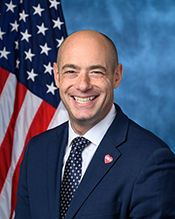
Rep. Greg Landsman
Sponsored bills
Maddy summaryThis bill establishes a commission to study whether the Weitzman National Museum of American Jewish History in Philadelphia should be transferred to the Smithsonian Institution. The commission, composed of 8 members appointed by congressional leaders with expertise in Jewish American history and museum administration, will examine the museum's collections, financial status, governance, and feasibility of transfer within two years. The commission must submit a report detailing findings, a fundraising plan, and legislative recommendations for any potential transfer. The bill does not transfer the museum but creates a process to evaluate the possibility.
Maddy summaryHR 7438 directs the U.S. Treasury to mint commemorative coins for the 2026 FIFA World Cup, including 100,000 $5 gold coins, 500,000 $1 silver coins, and 750,000 half-dollar coins. The coins will be sold to the public at face value plus surcharges ($35, $10, and $5 per coin, respectively), with all surcharge revenue paid to FWC2026 US, Inc. for U.S. soccer programs. These funds must support soccer initiatives, particularly in underserved communities and youth development, as specified in the bill. The coins are legal tender but will only be issued during 2026, with no net cost to the U.S. government.
Maddy summaryThis bill extends funding for the existing Public Health Service Act program focused on raising public awareness about Alzheimer's disease and related dementias. It authorizes $33 million annually for fiscal years 2025 through 2029 to support public health education and outreach initiatives. The program directly affects public health organizations and community groups that develop and distribute educational materials about Alzheimer's prevention, diagnosis, and care. The key provision is the multi-year funding extension, ensuring continued support for nationwide awareness efforts without altering the program's core structure.
Maddy summaryThe Trafficking Survivors Relief Act of 2024 enables victims of human trafficking to seek to vacate certain convictions or expunge arrests related to offenses they committed as a direct result of being trafficked. It establishes a court process where victims can file motions showing their criminal activity was trafficking-related, with courts required to find by preponderance of evidence that the offense was directly tied to trafficking. If granted, the court must expunge all related records, return any fines paid, and treat the individual as if the offense never occurred. The bill also adds a "human trafficking defense" that creates a presumption of duress for trafficking victims in prosecutions. It requires reports on implementation and training for U.S. attorneys on trafficking indicators.
Maddy summaryHR 10337, the Expanding the Health Care Workforce Act, creates a federal grant program to develop health care career pathways for high school students. It provides grants to hospitals partnering with secondary schools to establish structured work-based learning programs, requiring students to complete 20-100 hours of hands-on training in hospitals over five years, with specific hour requirements per grade. Priority is given to projects serving medically underserved communities, and grants must expand existing programs in 25% of cases. The program mandates annual reporting on student outcomes, including graduation rates, health care workforce entry, and post-secondary enrollment, with a final evaluation report to Congress after five years. This initiative directly affects secondary school students in underserved areas and participating hospitals through new educational partnerships.
Maddy summaryHR 6751 authorizes the U.S. Mint to produce commemorative coins honoring Roberto Clemente, a Hall of Fame baseball player and humanitarian, including 50,000 $5 gold coins, 400,000 $1 silver coins, and 750,000 half-dollar coins. The coins must feature Clemente's image and inscriptions like "Roberto Clemente" and "2027," with all sales including a surcharge ($5-$35 per coin) paid to the Roberto Clemente Foundation. The foundation, which supports youth sports, education, and disaster relief programs, will use these funds for its mission, while the U.S. Treasury must recover all production costs. The coins will be sold exclusively in 2027, with no net cost to the government.
Maddy summaryHR 10277, the Tax Relief for Renters Act of 2024, creates a new federal income tax deduction for renters. It allows eligible taxpayers to deduct 1/12 of their qualified rent payments for their primary residence, capped at $4,000 annually. The deduction is limited to individuals with adjusted gross income below $100,000 (single filers), $125,000 (head of household), or $150,000 (joint filers). This provision applies to taxable years beginning after December 31, 2024, and is available to non-itemizers without affecting other tax limitations.
Maddy summaryThis bill (HR 5640) renames a specific United States Postal Service facility in Chesterland, Ohio, located at 12804 Chillicothe Road, as the "Sgt. Wolfgang Kyle Weninger Post Office Building." It directly affects the postal facility and all official U.S. government references to that location. The key provision updates all federal documents, maps, and records to use the new name instead of the previous designation. This is a commemorative measure honoring Sgt. Wolfgang Kyle Weninger with no policy changes or funding impacts.
Maddy summaryThe Working Dog Commemorative Coin Act (HR 807) directs the U.S. Treasury to mint three types of commemorative coins honoring working dogs' service: $5 gold coins, $1 silver coins, and half-dollar coins with specific weight and composition requirements. Each coin will carry a surcharge ($35 for $5 coins, $10 for $1 coins, $5 for half-dollars) that will be paid directly to America's VetDogs to support their programs providing service dogs for veterans, the disabled, and others. The coins will be issued in 2027 with designs reflecting working dogs' roles in military, detection, therapy, and assistance work. The legislation specifies that all surcharge revenue must fund America's VetDogs' operations without creating new government programs. This is a commemorative measure focused on honoring working dogs' contributions through coin sales, with all surcharge funds going to a specific nonprofit organization.