

Maddy summaryThis resolution (HRES 450) commemorates the 100th anniversary of the YIVO Institute for Jewish Research, established in 1925 to preserve East European Jewish history, culture, and language. It honors YIVO’s century of work, including surviving the Holocaust, amassing over 24 million historical items (like the world’s largest Yiddish collection), and supporting Holocaust scholarship. The resolution recognizes YIVO’s contributions to Jewish American heritage and cultural preservation during Jewish American Heritage Month. As a ceremonial resolution, it has no binding effect but formally acknowledges the institute’s historical significance.
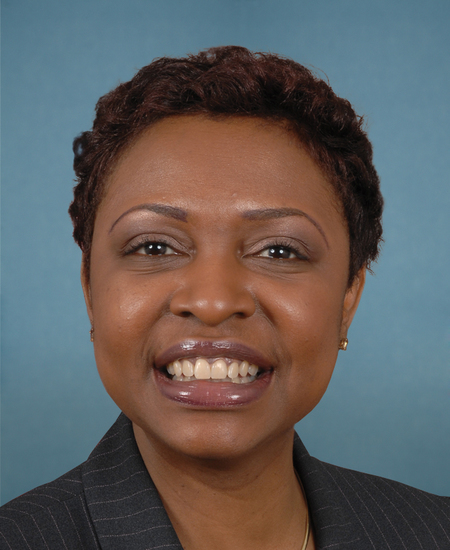
Rep. Yvette D. Clarke
Sponsored bills
Maddy summaryThe Menstrual Equity For All Act of 2025 requires schools, colleges, correctional facilities, and federal buildings to provide free menstrual products to those who need them. It makes menstrual products covered by Medicaid, prohibits states from taxing these products, and creates grant programs to support low-income individuals. Key provisions include mandating free products in educational settings, requiring employers with 100+ employees to provide them, and expanding Medicaid coverage for these items. The bill directly affects students, incarcerated individuals, homeless people, Medicaid beneficiaries, and low-income families by addressing period poverty through concrete access requirements.
Maddy summaryThis bill reorganizes collective bargaining rules for Veterans Health Administration (VHA) employees by removing existing subsections (b), (c), and (d) from Section 7422 of Title 38 and redesignating the current subsection (e) as (b). It directly affects VA health care employees by altering the structure of their collective bargaining framework. The bill explicitly states it does not change the Secretary of Veterans Affairs' existing authorities over incentive pay or expedited hiring under Section 706 of Title 38. The change is purely procedural, focusing on the internal organization of bargaining rules without introducing new employee benefits or obligations.
Maddy summaryHRES 445 is a non-binding resolution designating May as "Sex Ed For All Month" to promote comprehensive sex education. It urges public officials, schools, and health organizations to prioritize evidence-based programs that address racial and gender inequities, reduce unintended pregnancies and STIs, and support all young people - including LGBTQ+ youth and those with disabilities. The resolution emphasizes that inclusive sex education delays sexual activity, increases contraceptive use, and fosters healthy relationships, citing research on its benefits. As a symbolic statement, it does not create new laws or allocate funds but calls for action to ensure equitable access to medically accurate, culturally responsive education.
Maddy summaryHR 3607, the MARSHALS Act, restructures the U.S. Marshals Service by moving it from the Department of Justice to the judicial branch of the federal government. It requires the Chief Justice, in consultation with a new oversight Board, to appoint marshals for each judicial district (with four-year terms) and establishes a Director to lead the Service. The bill expands the Marshals Service’s duties to include protecting judges, court officers, and witnesses from intimidation, and adds specific roles in assisting with sex offender investigations and locating missing children at the Attorney General’s request. These changes directly affect federal marshals, judicial branch operations, and law enforcement coordination with the Department of Justice.
Maddy summaryThe Strength in Diversity Act of 2025 provides federal grants to schools and districts with racial or socioeconomic isolation to develop and implement strategies increasing diversity. It authorizes planning grants (up to 2 years) for assessments and community engagement, and implementation grants (up to 3 years) for activities like transportation plans, teacher recruitment, innovative school assignments, and equitable enrollment systems. Recipients must track measurable progress on academic outcomes (e.g., graduation rates, achievement gaps) and diversity metrics, including reducing isolation in covered schools (public K-12 schools and publicly-funded early childhood programs). The bill requires robust community input, data-driven evaluation, and plans for sustainability beyond the grant period, with funding authorized for fiscal years 2025-2029.
Maddy summaryThis bill prohibits the U.S. military from discriminating against service members or applicants based on gender identity. It bans policies that would deny service, involuntarily separate members, deny medically necessary healthcare, or require service in a gender different from one's identity. The law defines "gender identity" broadly to include a person's internal sense of gender, appearance, and mannerisms, regardless of sex assigned at birth. It directly affects transgender and gender-diverse individuals currently serving or seeking to serve in the Armed Forces.
Maddy summaryThis bill amends federal education law to require K-12 schools to include Asian American, Native Hawaiian, and Pacific Islander (AANHPI) history in American history and civics education. It directs the Department of Education to update curriculum standards, teacher training programs, and national assessments to ensure AANHPI contributions and experiences are integrated into existing history lessons. The policy affects all public schools receiving federal education funding by mandating specific inclusion of AANHPI history alongside traditional American history content. This change aims to address historical gaps in curricula that have excluded these communities' diverse roles and experiences.
Maddy summaryThe College for All Act of 2025 would eliminate tuition and required fees for eligible students at public community colleges and 4-year institutions through a federal-state partnership. The federal government would cover 100% of costs in the first year (2026-2027), gradually decreasing to 80% by 2030-2031, while states would start with 0% and increase to 20% by 2030-2031. Eligible students would include those with family income below $150,000 for single parents or $300,000 for married parents, regardless of immigration status. The bill also includes requirements to maintain instruction funding, improve transfer pathways between community colleges and 4-year institutions, and provide additional support for students after tuition elimination.
Maddy summaryThis bill would establish 18-year fixed terms for all Supreme Court justices, replacing lifetime appointments. It requires the President to nominate one justice every two years (during first and third years after presidential elections), with Senate confirmation within 90 days, and prohibits reappointments after a single term. Current justices would be phased out in order of seniority as new justices are appointed under this schedule. The bill directly affects all sitting and future Supreme Court justices by mandating term limits and a structured appointment process.