

Maddy summaryThe Extinction Prevention Act of 2026 establishes four separate conservation funds to provide financial assistance for protecting threatened and endangered species in specific regions. The bill creates funds for butterflies in North America, plants in the Pacific Islands, freshwater mussels in the United States, and desert fish in the Southwest, with each fund managed by the Secretary of the Interior. Eligible applicants, such as state agencies, nonprofits, and research institutions, can apply for competitive grants to support habitat protection, research, and management plans, while federal agencies are restricted to partnering roles rather than leading projects. Each fund is authorized to receive $5 million annually from 2027 through 2032, and the Secretary must submit annual reports to Congress detailing project outcomes and the status of the species.
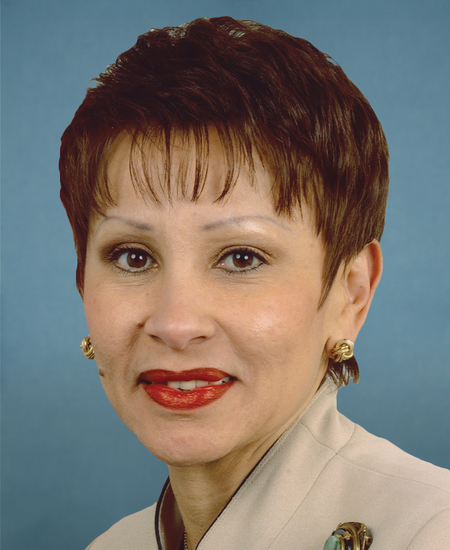
Rep. Nydia M. Velázquez
Sponsored bills
Maddy summaryThis resolution expresses the House of Representatives' preference for a trade policy that prioritizes American workers, consumers, independent farmers, small businesses, and the environment over corporate interests. It calls for trade agreements to include binding labor and environmental standards, fair wage guarantees, and strict rules of origin to prevent companies from moving jobs overseas. The measure also supports strengthening domestic manufacturing requirements, maintaining tariffs against unfair trade practices, and ensuring that public procurement favors American-made goods. Additionally, it urges the inclusion of provisions to protect data privacy, regulate artificial intelligence, and ensure affordable access to medicine while preventing monopolies.
Maddy summaryThis non-binding resolution expresses the House of Representatives' view that the FDA should regulate mifepristone, a medication used for abortion, based on scientific evidence rather than political pressure. It highlights over 25 years of data showing the drug is safe and effective when prescribed via telemedicine or dispensed by mail and pharmacy. The bill advocates for policies that ensure equitable access to this care, particularly for marginalized communities facing barriers due to state-level restrictions. By citing numerous studies and medical organizations, the resolution calls for transparent, science-based decisions to maintain current access methods.
Maddy summaryThe Protecting Our Democracy Act is a comprehensive legislative bill designed to prevent abuses of presidential power, restore checks and balances, and defend elections against foreign interference. Key provisions include prohibiting the President from granting self-pardons, requiring congressional oversight for pardons involving the President or their family, and banning the President from accepting payments from individuals who have received clemency. The bill also strengthens enforcement of the Hatch Act and ethics rules for political appointees, mandates greater transparency in presidential tax returns and campaign finances, and restricts the use of federal property for political conventions. Additionally, it expands reporting requirements for foreign contacts in federal campaigns and imposes stricter penalties for violations of election laws.
Maddy summaryThis bill, known as the HUD Data Privacy Act of 2026, restricts how the Department of Housing and Urban Development can share personal information with other agencies or third parties. It mandates that data collected from individuals receiving federal housing assistance be used solely to verify their eligibility for benefits or to determine the amount of aid they receive. The law includes specific exceptions for sharing deidentified data for research, ongoing criminal investigations, or preventing immediate threats to life, while explicitly prohibiting the use of this information for immigration enforcement purposes.
Maddy summaryThe Universal School Meals Program Act of 2026 mandates that all public schools provide free breakfast and lunch to every enrolled student, regardless of income. It establishes specific funding rates for these meals, adjusts payments based on the use of locally sourced food, and eliminates the ability of schools to collect debt for unpaid charges. Additionally, the bill expands free meal access to summer programs, afterschool care, and incarcerated juveniles while updating poverty measurement standards across various federal education and nutrition laws.
Maddy summaryThis concurrent resolution directs the President to end the use of U.S. Armed Forces in active hostilities against Iran unless Congress explicitly authorizes a declaration of war or specific military force. The measure allows the President to keep troops in the region for defensive purposes and to protect against imminent attacks, while also preserving intelligence collection and sharing activities. It clarifies that the resolution does not authorize new military force but rather terminates ongoing combat operations under the War Powers Resolution.
Maddy summaryThis resolution formally recognizes that the struggles faced by marginalized communities globally are interconnected and calls for a renewed focus on human rights. It defines key concepts such as intersectionality, the global majority, and systemic oppressions like racism and capitalism to frame its arguments. The text asserts that issues ranging from mass incarceration and housing insecurity in the United States to displacement and war abroad share common roots in unaccountable leadership and corporate exploitation. While it does not enact new laws, it declares that the United States must end inhumane immigration policies, dismantle specific government departments, and redirect military funding toward peace initiatives. Additionally, the resolution demands the creation of a Human Rights Commission and advocates for universal healthcare, land rights, and the preservation of cultural history for all people.
Maddy summaryH.Res. 1267 is a non-binding resolution that expresses the House of Representatives' view that small business owners deserve fundamental rights when seeking financing. It outlines specific protections such as clear pricing, fair underwriting, and respectful debt collection practices for entrepreneurs. While the bill does not create new laws, it encourages Congress to use these principles as a guide for future legislation aimed at protecting small businesses.
Maddy summaryThis bill prohibits the U.S. government from spending money on military actions against Iran between its enactment and December 31, 2026, unless Congress explicitly approves the use of force. It allows for military action only if Congress declares war, passes a specific authorization, or if the action is necessary to defend the United States or its allies from an imminent attack while following reporting requirements. The law directly restricts the President's ability to deploy troops without legislative approval during the specified timeframe.