

Maddy summaryThis bill creates annual emergency grants for farm workers affected by covered disasters. It directly helps migrant and seasonal farm workers who lose income or cannot work due to events like hurricanes, wildfires, pandemics, or extreme weather. Grants fund immediate relief (food, shelter), rebuild community capacity, and support long-term resilience against future disasters. Eligible organizations, including farm worker groups or qualified nonprofits, receive funds to distribute aid without time limits.
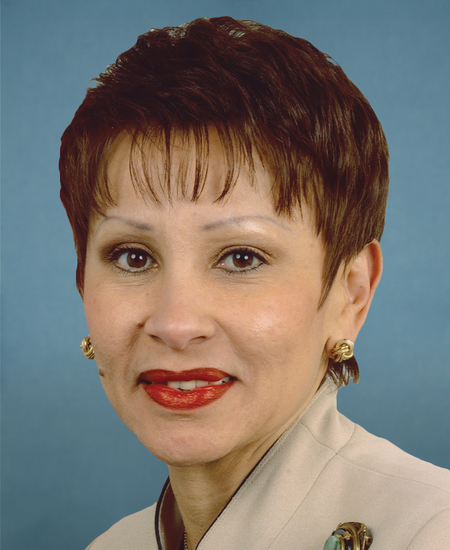
Rep. Nydia M. Velázquez
Sponsored bills
Maddy summaryHouse Resolution 388 designates the first week of April as "Adolescent Immunization Action Week" to promote vaccination for teens and young adults. The resolution calls on communities, health providers, and organizations to support immunization efforts, particularly addressing vaccine misinformation and low uptake in rural and underserved areas. It does not create new laws or funding but encourages collaborative action to improve vaccination rates for adolescents.
Maddy summaryHRES 384 is a non-binding House resolution recognizing Cinco de Mayo's cultural and historical significance. It commemorates Mexico's 1862 victory at the Battle of Puebla against French forces, highlighting its role in Mexico's fight for independence and freedom. The resolution encourages U.S. citizens to observe Cinco de Mayo through ceremonies and activities, acknowledging its importance to Mexican and Mexican-American communities. As a ceremonial resolution, it has no legal effect or policy changes.
Maddy summaryHR 3196, the Improving Helicopter Safety Act of 2025, prohibits civil helicopter flights within a 20-mile radius of the Statue of Liberty National Monument, effective 60 days after enactment. This directly affects helicopter tour operators and commercial flight services near the monument, with exceptions for emergency response (law enforcement, medical services), infrastructure maintenance, and certain news/media flights. The bill requires the FAA to issue implementing regulations within 90 days to enforce the no-fly zone. The law aims to enhance safety and reduce disruptions in this high-traffic tourist area while allowing essential operations.
Maddy summaryHRES 372 is a symbolic resolution designating May as "National Menstrual Health Awareness Month" to address stigma around menstruation. It does not create new laws but formally recognizes how menstrual stigma impacts women, girls, and people who menstruate in areas like education, health, and daily life. The resolution supports efforts to normalize menstruation, improve access to menstrual products and sanitation facilities, and promote research on menstrual health conditions. It urges awareness and education to advance gender equity but has no legal force or direct policy changes.
Maddy summaryThis resolution urges the Secretary of Health and Human Services (HHS) to withdraw a March 2025 Federal Register notice (90 Fed. Reg. 11029) that would have reduced public notice and comment periods for proposed regulations. It specifically asks HHS to restore the pre-February 27, 2025 process, which required public input on rulemaking. The resolution emphasizes that public participation in HHS rulemaking - impacting millions through health and human services regulations - is essential for fair policy. As a non-binding resolution, it does not change law but expresses congressional preference for maintaining transparency in the regulatory process.
Maddy summaryThe SBIR/STTR Reauthorization Act of 2025 extends the Small Business Innovation Research and Small Business Technology Transfer programs through 2032, requiring federal agencies to dedicate increasing percentages of their budgets to these programs (starting at 4% through 2025, rising to 7% by 2032). The bill introduces new provisions including fellowships for researchers, enhanced outreach to increase participation from women and disadvantaged groups, and improved technical assistance for small businesses. It also establishes new reporting requirements on commercialization outcomes and adds safeguards to ensure small business concerns owned by venture capital or private equity firms meet specific criteria. The bill extends several pilot programs, including those related to direct Phase II awards and commercialization readiness, through 2030.
Maddy summaryThis resolution expresses congressional support for designating April 30, 2025, as "National Adult Hepatitis B Vaccination Awareness Day." It highlights that only 30% of U.S. adults are vaccinated against hepatitis B despite the vaccine being 95% effective, and emphasizes the need to increase adult vaccination rates - particularly among high-risk groups like people who inject drugs and communities disproportionately affected by the virus. The resolution encourages adults to get tested and vaccinated, links diagnosed individuals to care, and promotes awareness to reduce hepatitis B-related liver cancer and death. It does not create new laws but aims to raise public and provider awareness about existing vaccination recommendations.
Maddy summaryHR 3128, the Improving Diaper Affordability Act of 2025, makes diapers eligible as qualified medical expenses under tax-advantaged health accounts (like HSAs and health flexible spending arrangements) and prohibits states or localities from imposing sales taxes on diaper purchases. This directly affects families with young children - particularly low-income households, where 46% report struggling to afford diapers - who currently spend hundreds annually on diapers. The bill changes existing tax rules so families can use pre-tax dollars from health savings accounts to cover diaper costs, and bans sales taxes on diaper purchases starting in 2025. It does not create new government assistance programs but adjusts tax treatment to reduce out-of-pocket costs for diapers.
Assault Weapons Ban of 2025 This bill makes it a crime to knowingly import, sell, manufacture, transfer, or possess a semiautomatic assault weapon (SAW) or large capacity ammunition feeding device (LCAFD). The prohibition does not apply to a firearm that is (1) manually operated by bolt, pump, lever, or slide action, except for certain shotguns; (2) permanently inoperable; (3) an antique; (4) only capable of firing rimfire ammunition; or (5) a rifle or shotgun specifically identified by make and model. The bill also exempts from the prohibition the following, with respect to a SAW or LCAFD: importation, sale, manufacture, transfer, or possession related to certain law enforcement efforts, or authorized tests or experiments; importation, sale, transfer, or possession related to securing nuclear materials; and possession by a retired law enforcement officer. The bill permits continued possession, sale, or transfer of a grandfathered SAW, which must be securely stored. A licensed gun dealer must conduct a background check prior to the sale or transfer of a grandfathered SAW between private parties. The bill permits continued possession of, but prohibits sale or transfer of, a grandfathered LCAFD. Newly manufactured LCAFDs must display serial number identification. Newly manufactured SAWs and LCAFDs must display the date of manufacture. The bill also allows a state or local government to use Edward Byrne Memorial Justice Assistance Grant Program funds to compensate individuals who surrender a SAW or LCAFD under a buy-back program.