

Maddy summaryHR 5604, the National Guard Proper Use Act, prohibits military and National Guard personnel from being ordered to enforce federal immigration laws. It adds new sections to military law (Title 10 for active forces and Title 32 for the National Guard), explicitly stating members cannot be directed to perform duties related to immigration enforcement. This directly affects military commanders who might attempt to assign such tasks and ensures National Guard members remain focused on their core missions, not civilian immigration enforcement. The bill references the Posse Comitatus Act (18 U.S.C. §1385), a longstanding law that limits military involvement in domestic law enforcement. It clarifies existing legal boundaries without creating new programs or funding.
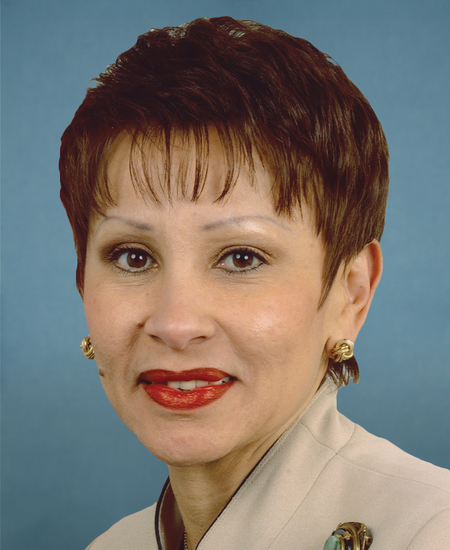
Rep. Nydia M. Velázquez
Sponsored bills
Maddy summaryHCONRES 51 directs the President to withdraw U.S. military forces from hostilities against Venezuela and designated terrorist organizations (transnational criminal groups listed as Foreign Terrorist Organizations or Specially Designated Global Terrorists) without congressional authorization. It applies to military actions since February 20, 2025, including recent Caribbean operations referenced in the bill's findings. The resolution invokes the War Powers Resolution, requiring removal of forces when no declaration of war or specific statutory authorization exists. It explicitly excludes self-defense against sudden attacks but mandates withdrawal for unapproved military engagement.
Maddy summaryThis resolution (HRES 757) is a symbolic gesture by the U.S. House of Representatives to support designating September 22, 2025, as "National Hispanic Nurses Day" and to formally recognize the National Association of Hispanic Nurses (NAHN) as the leading organization representing Hispanic nurses. It does not create new laws or policies but expresses official congressional support for honoring Hispanic nurses' contributions to healthcare equity and cultural competence. The resolution acknowledges NAHN's role since 1975 in advancing health outcomes for Hispanic communities and reducing disparities. As a non-binding resolution, it has no direct legal effect but aims to raise public awareness of Hispanic nurses' work.
Maddy summaryThis resolution condemns the use of federal regulatory agencies (like the FCC) or lawsuits to suppress lawful speech critical of political parties or the President, specifically referencing concerns about tactics mirroring authoritarian practices. It does not create new laws but formally warns that such actions undermine First Amendment protections and democratic norms. The resolution directly affects media organizations, journalists, and public discourse by calling on government agencies to avoid using their power for political retaliation. It reaffirms the House’s commitment to protecting free expression and urges officials to refrain from pressuring media to silence criticism.
Maddy summaryHR 5503 creates a new FEMA program to improve disaster recovery in U.S. territories (Puerto Rico, Guam, U.S. Virgin Islands, American Samoa, Northern Mariana Islands) by addressing their unique challenges. The program requires FEMA to identify and address capability gaps - such as outdated infrastructure, limited local expertise, remote location barriers, and cultural/language differences - that hinder territories from effectively using federal recovery funds after disasters. FEMA must provide tailored technical assistance, develop specialized training for local entities, and establish best practices for managing recovery projects under the Stafford Act. This directly affects territories' local governments and organizations responsible for disaster recovery, aiming to streamline access to federal aid and improve outcomes after events like Hurricanes Maria or Fiona.
Maddy summaryThe AirFAIR Act (HR 5502) prohibits airlines and ticket sellers from raising airfare prices by 30% or more during declared disasters or emergencies. It directly affects airlines, ticket agents, and other sellers of air transportation during events like hurricanes or wildfires, which states or the federal government have officially designated as disasters. The bill requires the Transportation Secretary to create rules defining "excessive" price hikes and mandates a one-year FAA study to investigate unfair pricing practices during such events. The law aims to prevent exploitative price surges while giving the government authority to enforce the 30% cap.
Maddy summaryHRES 734 is a symbolic resolution designating the third week of September as "Latino Conservation Week." It recognizes the Latino community's longstanding engagement in outdoor recreation and conservation activities, such as hiking, stewardship events, and environmental justice efforts on public lands. The resolution affirms that including Latino voices strengthens public lands protection and climate resilience, highlighting their role as a growing force in the outdoor economy. It does not create new laws or funding but formally supports the annual observance initiated by the Hispanic Access Foundation.
Maddy summaryHRES 746 is a non-binding resolution passed by the U.S. House of Representatives condemning all political violence - including attacks on elected officials, candidates, and public figures - and rejecting rhetoric that dehumanizes opponents. It specifically urges law enforcement to investigate and prosecute such violence, calls on public officials and media to avoid inflammatory language, and references recent incidents like the 2025 assassination of activist Charlie Kirk and targeted shootings of Minnesota legislators. The resolution does not create new laws but formally expresses the House’s commitment to protecting public servants and promoting peaceful political discourse. It directly affects the House’s public stance and serves as a call to action for officials, media, and communities to foster civil engagement.
Maddy summaryThis bill creates a new federal tax credit for homeowners who pay for flood insurance on their primary residence. It allows a credit equal to up to $1,500 for federal flood insurance, up to $3,000 (50% of private insurance costs), and up to $600 for contents coverage, with income-based phaseouts reducing the credit for higher earners. The credit applies only to insurance for a taxpayer's main home and takes effect for tax years beginning after December 31, 2025. It directly affects homeowners in flood-prone areas who purchase qualifying flood insurance policies.
Maddy summaryThis bill requires most health insurance plans, Medicare Part D, Medicaid, and CHIP to cover vaccines recommended by the CDC's Advisory Committee on Immunization Practices (ACIP) without cost-sharing (like copays or deductibles). It applies to vaccines recommended as of October 25, 2024, including updates through 2029, and covers all such vaccines for the period starting when the bill is enacted until December 31, 2029. The requirement excludes vaccines given within minimum recommended intervals. It directly affects patients, insurers, and government health programs by ensuring no out-of-pocket costs for covered vaccines during this timeframe.