

Maddy summaryThis bill, HR 5973, requires federal immigration enforcement personnel to follow strict limits on force use, including proportional application, mandatory de-escalation efforts, and prohibitions on equipment like flash bangs or rubber bullets except for specific public safety threats. It mandates body-worn and vehicle cameras for all operations, with footage retained for one year (three years for force incidents or complaints), and grants affected individuals the right to inspect recordings. The law also requires annual training on force policies, First Amendment compliance, and racial bias avoidance, while demanding detailed quarterly reports to Congress on force usage, assaults on agents, and equipment approvals. These provisions directly affect all federal immigration agents conducting enforcement actions, aiming to increase transparency and accountability during operations.
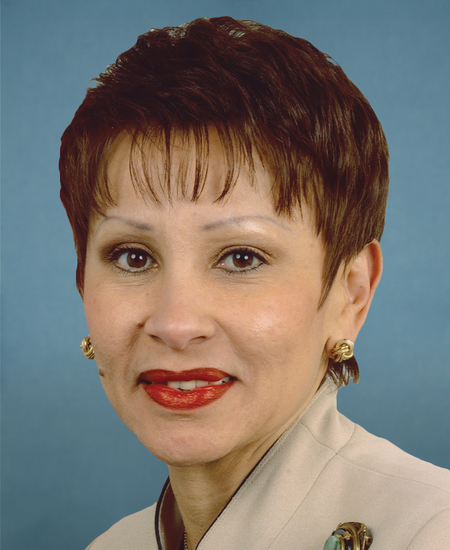
Rep. Nydia M. Velázquez
Sponsored bills
Maddy summaryHRES 846 is a symbolic resolution designating October 2025 as National Domestic Violence Awareness Month. It expresses the House's support for raising awareness about domestic violence and its impacts, and calls for continued congressional attention to ending domestic violence through existing programs. The resolution does not create new laws, allocate funding, or directly affect any specific groups - it is purely a statement of support. It references statistics on domestic violence prevalence but focuses on awareness rather than policy changes.
Maddy summaryHouse Resolution 838 recognizes Día de los Muertos (Day of the Dead) as an annual celebration honoring deceased loved ones, particularly within Mexican-American, Latino, and Indigenous communities. The resolution acknowledges the holiday's cultural significance, including its historical roots and role in fostering family bonds, and expresses solidarity with families who have lost loved ones, especially those who died in immigration custody. It urges federal agencies to ensure humane treatment of individuals in immigration custody during cultural observances but does not create new legal requirements or policy changes. As a commemorative resolution, it serves only to symbolically affirm the holiday's importance without altering laws or funding.
Maddy summaryHR 5867, the Plant-Powered School Meals Pilot Act, creates a federal grant program to help schools serve 100% plant-based meal options. It authorizes $10 million for grants to school food authorities (specifically those serving 50%+ students eligible for free/reduced-price meals) over three years to cover staff training, meal preparation, community partnerships, and procurement from underserved farmers. The bill also establishes a separate $2 million pilot to reimburse schools for nondairy beverage substitutions for students with dietary needs, prioritizing schools with high lactose intolerance rates. Both pilots require annual reporting on participation, meal counts, and fund usage, with final reports submitted to Congress.
Maddy summaryThe GRAD Act (HR 5850) prevents colleges from changing or ending a student's enrollment status if federal financial aid under Title IV is delayed due to a government shutdown. It directly affects students receiving federal aid and the institutions that award it. The bill amends the Higher Education Act to require schools to maintain enrollment status during disruptions caused by lapses in government funding. This ensures students aren’t penalized for aid delays beyond their control during shutdowns.
Maddy summaryHR 5816, the HELP FEDs Act, protects federal employees from student loan penalties during government shutdowns. It prevents late fees, additional interest, and credit damage on qualified education loans (like federal student loans) when employees miss payments due to a funding lapse causing government operations to halt. The law requires the Department of Education to coordinate with loan servicers and credit agencies to remove any inaccurate negative credit reports from these missed payments, applying retroactively to shutdowns after October 1, 2025. The bill does not eliminate the need to repay loans but pauses penalties and credit impacts during covered disruptions.
Head Start Shutdown Protection Act of 2025 This bill requires the Department of Health and Human Services to reimburse a state, local government, or school district that uses its funds to maintain participation in the Head Start program or the Early Head Start program during a government shutdown in which there is a lapse in federal appropriations for the programs. The Head Start programs provide comprehensive early childhood education and development services to low-income children. The programs seek to promote school readiness through the provision of educational, health, nutritional, social, and other services.
Maddy summaryThis bill restores the pre-January 20, 2025, administrative structure of the Head Start program within the Department of Health and Human Services. It establishes a central Office of Head Start with 12 regional offices, requiring the Secretary to maintain all prior staffing levels, organizational structure, and functions. The bill prohibits the Secretary from restructuring the office or reducing staff without providing 60 days' notice to Congress and the public, ensuring continuity in program oversight. It directly affects the Office of Head Start, its regional offices, and HHS staff managing Head Start operations.
Maddy summaryThis bill prohibits the Department of Veterans Affairs (VA) from discriminating against transgender veterans in healthcare, specifically requiring the VA to provide medically necessary treatments for gender dysphoria. It directly affects transgender veterans seeking VA health services by mandating that the VA cannot deny such care or misgender patients based on gender identity. The law adds a new section to VA healthcare law explicitly banning gender identity discrimination and ensuring access to gender dysphoria treatments, aligning with existing protections under the Affordable Care Act. Additionally, it requires the VA to provide quarterly reports to Congress on how transgender veterans receive healthcare services under this new standard.
Maddy summaryThis bill establishes the New York-New Jersey Watershed Restoration Program to coordinate and fund habitat restoration and water quality improvements across the shared watershed region. It creates a competitive grant program providing federal matching funds (up to 90% for small/rural/disadvantaged communities) to state/local governments, nonprofits, and tribes for projects advancing habitat restoration, climate resilience, and public access. The program prioritizes communities facing environmental injustice and requires coordination with existing regional conservation plans like the Hudson River Estuary Program. Funding of $20 million annually (2026-2031) will support these activities, with 75% dedicated to the grant program and all projects supplementing existing conservation efforts.