

Maddy summaryThis bill (HR 9255) is a simple naming resolution that renames a specific U.S. Postal Service facility. It designates the post office at 114 John Street in New York, New York, as the "Jack Greenberg Post Office." The bill requires all federal references to the building (in laws, maps, documents, etc.) to use the new name. This is a procedural change affecting only the official name of that single post office location.
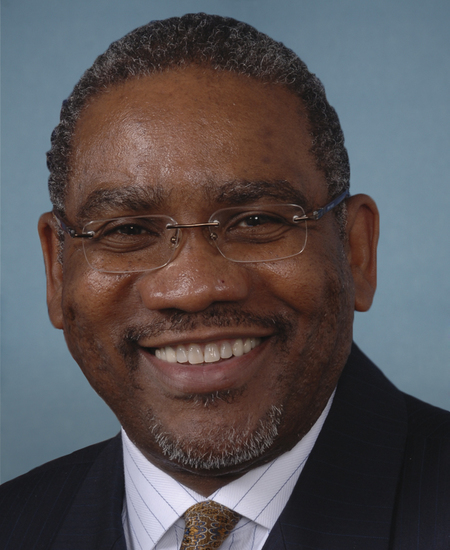
Rep. Gregory W. Meeks
Sponsored bills
Maddy summaryHRES 1396 is a non-binding resolution recognizing the 50th anniversary of Cabo Verde's independence from Portugal (July 5, 1975) and celebrating the contributions of Cabo Verdean-Americans to democracy in both Cabo Verde and the United States. The resolution expresses support for Cabo Verde's democratic governance and commends its recent support for Ukraine's sovereignty, while highlighting historical ties like Cabo Verdean-American roles in U.S. civil rights movements and cultural bridges. As a symbolic gesture, it does not create new laws or obligations but formally honors the shared history and diaspora connections between the two nations.
Maddy summary# Summary of Proposed Workplace Discrimination and Harassment Prevention Bill This comprehensive legislative proposal aims to strengthen protections against workplace discrimination and harassment through multiple interconnected provisions: 1. **Expanded Protections**: Broadens coverage to include sexual orientation, gender identity, and other protected categories in workplace discrimination laws. 2. **Nondisclosure Agreement Restrictions**: Prohibits employers from requiring nondisclosure or nondisparagement clauses that would prevent workers from reporting harassment or discrimination, with limited exceptions for settlement agreements meeting specific requirements. 3. **Arbitration Prohibition**: Bans mandatory pre-dispute arbitration agreements for work-related disputes and imposes strict requirements for post-dispute agreements. 4. **Federal Contractor Requirements**: Mandates that federal contractors disclose labor and civil rights violations from the previous three years and requires corrective actions for violations. 5. **Grant Programs**: - National grants to prevent and address workplace discrimination through education, outreach, and complaint assistance - Grants for legal assistance to low-income workers facing employment discrimination - State-level advocacy systems with funding allotments to support worker rights protection 6. **Enforcement Mechanisms**: Establishes clear enforcement procedures, with the Equal Employment Opportunity Commission (EEOC) having authority to enforce these provisions with powers similar to those under existing civil rights laws. The bill also includes definitions, implementation details, and provisions for state and federal coordination to create a comprehensive system for preventing and addressing workplace discrimination and harassment across all sectors of employment.
Maddy summaryH.J. Res. 193 proposes a constitutional amendment to eliminate legal immunity for federal officials, including the President, from criminal prosecution for actions taken while performing official duties. It also prohibits the President from granting a pardon to themselves. The amendment would apply to all federal officers (such as the President, Vice President, and members of Congress) except for Congress members acting in their legislative role as defined in the Constitution. If ratified by 38 states, this change would become part of the U.S. Constitution, requiring no further congressional action.
Maddy summaryThe 9/11 Responder and Survivor Health Funding Correction Act of 2024 makes several key changes to the World Trade Center Health Program that serves 9/11 responders and survivors. It allows licensed mental health providers (not just physicians) to conduct mental health evaluations for program participants and extends the time period for adding new health conditions from 90 to 180 days. The bill also adjusts enrollment calculations by removing deceased individuals from program counts and provides $2.97 billion in new funding for fiscal year 2024 with a minimum annual funding level of $20 million for 2025. These changes aim to improve access to care while ensuring stable, long-term funding for the program that provides medical services to those affected by the 9/11 attacks.
Maddy summaryThis bill expands the U.S. Secret Service's authority to investigate cybercrime-related money laundering by adding Section 1960 (money laundering) to its jurisdiction and updating definitions for financial institutions. It requires financial institutions to report suspicious activity for 10 years (up from 5) under FinCEN rules and increases the number of international financial institutions targeted for cooperation from 5 to 10. The law directly affects financial institutions, law enforcement agencies, and international financial bodies by modifying reporting timelines, investigative powers, and cross-border collaboration requirements. These changes aim to strengthen efforts against cybercrime money laundering through updated legal frameworks and extended oversight periods.
Maddy summaryThis bill authorizes the award of a single Congressional Gold Medal to Jens Stoltenberg, former Secretary General of NATO, recognizing his leadership of the Alliance. The medal, to be struck by the U.S. Mint, commemorates his role in strengthening NATO's defense capabilities, promoting burden sharing among members, overseeing NATO expansion (including Finland and Sweden), and coordinating support for Ukraine after Russia's 2022 invasion. It does not create new policy or funding but formally honors Stoltenberg's service through a ceremonial medal. The bill specifies the medal's design, allows for bronze duplicates to be sold to cover costs, and directs proceeds to the U.S. Mint's fund.
Maddy summaryThe Rohingya GAP Act establishes a U.S. Special Coordinator for Rohingya Atrocities Prevention and Response to coordinate U.S. government efforts on Rohingya issues. It authorizes $10 million annually for atrocity investigations and $8 million for a Burma-focused conflict observatory to document human rights violations. The bill directs U.S. agencies to support Rohingya refugees' protection, education, and livelihoods in Bangladesh while promoting durable solutions including safe return to Myanmar with full citizenship rights when conditions allow. It requires annual reporting on U.S. efforts to address atrocity risks, protect Rohingya, and advance accountability for crimes against them. The legislation aims to address root causes of violence against Rohingya through empowerment, inclusion in decision-making, and support for transitional justice mechanisms.
Maddy summaryThe DFC Modernization and Reauthorization Act of 2024 updates the United States International Development Finance Corporation (DFC) framework by redefining country classifications (including "less developed country" and "wealthy country"), prioritizing support for less developed countries, and increasing the DFC's maximum contingent liability from $60 billion to $120 billion. The bill allows the DFC to accept subordinate creditor status (meaning it would be a lower priority for repayment than other creditors), reduces the board size from 5 to 3 members, and creates a new Vice President for Foreign Policy and National Security position. It also repeals the European Energy Security and Diversification Act of 2019. These changes aim to modernize the DFC's operations to better align development financing with U.S. foreign policy goals. The bill directly affects how the DFC operates and where it provides financing for development projects.
Maddy summaryHR 3042 updates the eligibility rules for countries seeking to become "candidate countries" under the Millennium Challenge Corporation (MCC) program. It revises the income threshold to align with World Bank graduation standards and clarifies that U.S. waivers or suspensions of foreign aid restrictions no longer disqualify countries. The bill specifies that the MCC Board will make the final determination on candidate country status. This directly affects countries aiming to qualify for U.S. economic aid through the MCC program.