

Maddy summaryThe Overseas CRISIS Act establishes a Crisis Management and Strategy Unit within the Department of State to coordinate international crisis responses, including noncombatant evacuations. It requires annual tabletop exercises simulating crisis scenarios, creates a Department of State Reserve Corps of trained personnel who can be quickly deployed during emergencies, and mandates updates to Foreign Service Institute training on crisis management. The bill also establishes a Coordinator for Crisis Communication, enhances protections for locally employed staff during emergencies, and creates a clearinghouse for sharing lessons learned from past crisis responses. These provisions aim to improve the Department of State's preparedness and response capabilities for international crises affecting U.S. citizens, government personnel, and partners worldwide. The bill directly affects Department of State operations, diplomatic personnel, and locally employed staff at U.S. embassies and consulates.
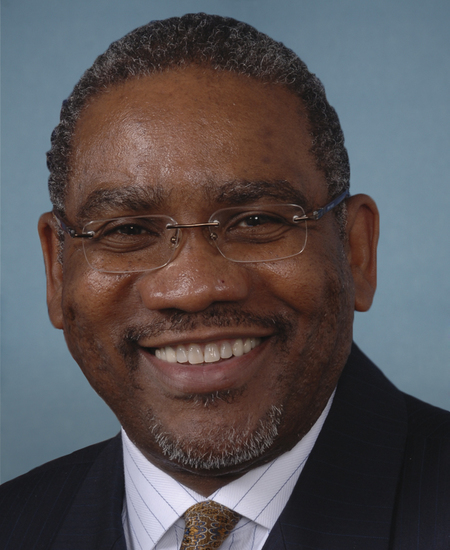
Rep. Gregory W. Meeks
Sponsored bills
Maddy summaryHRES 1473 is a non-binding resolution passed by the U.S. House of Representatives that condemns racism, bigotry, and misinformation targeting Haitian people and their descendants. It celebrates the historical contributions of Haitian Americans to U.S. society, including founding cities (like Chicago via Jean Baptiste Point du Sable), advancing civil rights (W.E.B. Du Bois), and enriching healthcare, education, and culture. The resolution specifically calls on all Americans to reject racist tropes and misinformation, and urges elected officials to promote inclusivity and responsible communication. It was introduced in response to recent false claims that fueled threats against Haitian communities, such as the bomb threats in Springfield, Ohio.
Maddy summaryThis bill requires the FEMA Administrator to reimburse public employee retirement systems for costs related to accidental disability retirements and deaths of workers who participated in 9/11 rescue, recovery, or cleanup efforts. It specifically authorizes $3.4 billion in FY2024 funding for these reimbursements, which must be used solely by eligible retirement systems (those with members who worked at the World Trade Center site). The funds cannot be diverted to other purposes or entities. This policy change directly affects retirement systems managing benefits for first responders and workers injured or killed during the 9/11 operations.
Maddy summaryThe Enhancing Subnational Diplomacy Act authorizes the U.S. State Department to provide direct support to state and local governments (including elected officials and staff) for international engagement that aligns with U.S. foreign policy goals. It allows the State Department to fund travel for state and local officials to attend international meetings, assist in hosting major global events, and cover costs for staff training and memberships in international organizations. The bill also creates a grant program for state and local governments to fund public diplomacy, commercial diplomacy, and technical assistance projects in collaboration with federal agencies. These provisions aim to strengthen the role of subnational governments in U.S. foreign policy efforts through formalized support mechanisms.
Maddy summaryThis bill imposes U.S. sanctions on foreign individuals or entities that build, maintain, or repair tunnels or bridges connecting Russia to Crimea. It requires blocking their U.S. assets and banning visas for those involved, with exceptions for humanitarian aid, national security activities, and international obligations. The bill targets infrastructure supporting Russia’s control over Crimea, which the U.S. considers illegally occupied Ukrainian territory following Russia’s 2014 annexation and 2022 invasion of Ukraine.
Maddy summaryHR 7159, the Pacific Partnership Act, mandates the U.S. government to develop a comprehensive strategy for engagement with Pacific Island nations. It requires the President, by January 1, 2026, and every four years thereafter, to submit a detailed strategy to Congress outlining U.S. diplomatic, defense, and economic goals in the region, including assessments of threats like natural disasters, illegal fishing, and foreign military activity. The strategy must detail plans to address these threats, coordinate with Pacific Island governments and regional organizations like the Pacific Islands Forum, and outline required resources and staffing. This bill directly affects U.S. foreign policy operations and shapes how the federal government engages with Pacific Island nations on shared security, economic, and environmental priorities.
Maddy summaryHRES 1056 is a non-binding House resolution recognizing recent trilateral cooperation among the United States, Japan, and South Korea. It formally acknowledges specific collaborative efforts, including resumed summitry, joint military exercises, shared missile warning systems, economic partnerships, and coordinated responses to regional challenges like North Korea and crises in Sudan and Israel. The resolution does not create new policies or funding but expresses congressional support for strengthening this alliance framework. It highlights the importance of continued cooperation across diplomatic, security, and economic domains to promote stability in the Western Pacific. The resolution was introduced by multiple House members and referred to the Foreign Affairs Committee.
Maddy summaryHR 3507, the "Yes In My Backyard Act," requires local governments receiving certain federal Community Development Block Grants (CDBG) to report on their progress toward adopting specific housing-friendly land use policies. It directly affects cities and counties that administer CDBG funds by mandating they submit plans tracking 22+ policy changes, such as allowing duplexes in single-family zones, reducing parking requirements, or streamlining permits. The bill does not require local governments to adopt these policies but requires them to document their current status and plans for implementation. This reporting mechanism aims to identify barriers to affordable housing without binding local governments to specific actions. The requirement applies to CDBG recipients starting one year after the bill's enactment.
Maddy summaryHR 9414 creates a two-year pilot program allowing local governments to purchase a single, community-wide flood insurance policy under the National Flood Insurance Program. This policy would cover all residential properties in a participating community, meeting federal flood insurance requirements without requiring individual homeowners to buy separate policies. Communities must voluntarily join the pilot, partner with private insurers to share risk, and may use flood mitigation grant funds for implementation. The program aims to simplify coverage while preventing duplicate insurance claims, with FEMA establishing it within 360 days of enactment and ending after two years.
Maddy summaryHR 9247, the BIS IT Modernization Act, requires the Bureau of Industry and Security (BIS) to replace outdated information technology systems with a unified environment by 2029. The bill mandates adopting advanced data tools to streamline export license reviews, improve tracking of military end uses in countries of concern, and enhance data sharing with industry and partners. It specifically directs BIS to reduce manual processing, strengthen cybersecurity, and facilitate easier access for U.S. exporters using its systems. The act authorizes $25 million annually (2025-2028) to fund these modernization efforts.