

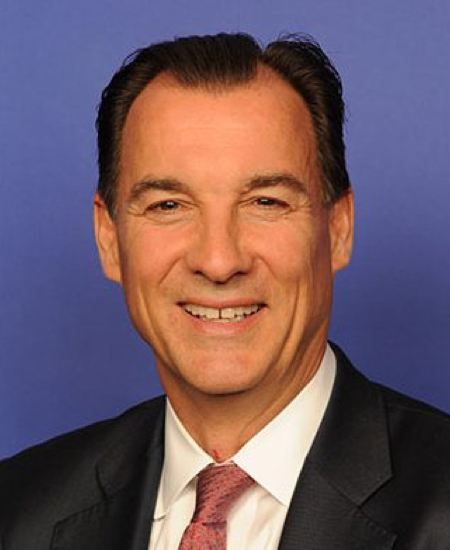
Photo of Thomas R. Suozzi
D United States House · District 3 · New York On the 2026 ballot

Rep. Thomas R. Suozzi

Compare
Total votes
2,089
all sessions
Attendance
98%
44 missed
Near the chamber average
With party
94%
of cast votes
Lower than 95% of chamber peers
Bipartisan score
3%
crosses aisle rarely
Higher than 94% of chamber peers
Sponsored
1,746
bills & resolutions
Higher than 92% of chamber peers
Committees
3
assignments
1,746 bills and resolutions

Sponsored bills

Total
1,746
Primary
52
Co-sponsor
1,694
This page
1,746
matching current filters
Co-sponsor HR 1990
In committee · Indiana House · Co-sponsor
American Innovation and R&D Competitiveness Act of 2025

Maddy summaryHR 1990, the American Innovation and R&D Competitiveness Act of 2025, amends tax rules for businesses to make research and development (R&D) costs more flexible. It allows companies to deduct R&D expenses immediately as business costs (instead of capitalizing them) or to spread these costs over a minimum 60-month period. The bill clarifies which R&D expenses qualify, excludes land improvements and mineral exploration costs, and ensures companies can claim R&D tax credits without conflict with expense treatment. This directly affects businesses that conduct R&D, changing how they account for these costs on tax returns starting for 2022 taxable years.

In committee Mar 10, 2025 1 co-sponsor
Co-sponsor HR 2002
In committee · Indiana House · Co-sponsor
MATCH IT Act of 2025

Maddy summaryThe MATCH IT Act of 2025 establishes national standards to improve patient matching accuracy in healthcare, directly affecting hospitals, clinics, health IT vendors, and federal agencies like CMS and HHS. It requires the Secretary of Health and Human Services to develop a uniform definition for measuring patient match rates within 180 days, accounting for duplicate records, overlaid records, and mismatch rates. The bill mandates health IT vendors to incorporate a standardized data set into their systems to support 99.9% matching accuracy, with Medicare providers earning voluntary bonus payments for achieving at least 90% matching accuracy through anonymous reporting. This aims to reduce medical errors, prevent unnecessary tests, and cut costs linked to patient misidentification, which currently cost the healthcare system over $6.7 billion annually.

In committee Mar 10, 2025 1 co-sponsor
Co-sponsor HR 1902
In committee · Indiana House · Co-sponsor
HERO Act

Maddy summaryHR 1902, the HERO Act, creates a national data system to track suicide rates among public safety officers (including firefighters, EMTs, police, and telecommunicators) and requires annual reports to Congress with detailed breakdowns by age, gender, occupation, and employment status (volunteer, career, etc.). The bill funds peer-support mental health programs for fire departments and EMS agencies, establishes confidential wellness services for healthcare providers, and develops resources to train mental health professionals on first responder-specific stressors and PTSD. It prohibits using suicide data to deny life insurance or benefits to survivors and mandates that all collected data be kept confidential and secure. This legislation directly affects all public safety officers nationwide by improving data collection, access to mental health resources, and evidence-based interventions to address suicide and trauma.

In committee Mar 6, 2025 1 co-sponsor
Co-sponsor HR 1911
In committee · Indiana House · Co-sponsor
To amend the Internal Revenue Code of 1986 to provide that certain payments to foreign related parties subject to sufficient foreign tax are not treated as base erosion payments.

Maddy summaryThis bill modifies U.S. tax rules to exclude certain payments made to foreign subsidiaries or affiliates from being classified as "base erosion payments" (payments that reduce U.S. tax revenue). It applies specifically to multinational corporations making cross-border payments to foreign entities that pay at least 15% effective foreign income tax. To qualify, companies must prove the foreign entity’s tax rate meets the threshold using standard financial statements with adjustments for items like dividends or currency gains. The policy change aims to prevent double taxation on such payments while maintaining anti-avoidance safeguards.

In committee Mar 6, 2025 1 co-sponsor
Co-sponsor HR 1954
In committee · Indiana House · Co-sponsor
Do No Harm Act

Maddy summaryHR 1954, the "Do No Harm Act," amends the Religious Freedom Restoration Act (RFRA) to clarify that RFRA does not override specific federal laws protecting against harm. It explicitly exempts provisions related to anti-discrimination (like the Civil Rights Act), workplace protections (wages, leave, collective activity), child safety, and healthcare access from RFRA's requirements. The bill ensures RFRA cannot be used to challenge government programs or contracts that provide these essential protections. It also clarifies that RFRA applies only to disputes involving government as a party, not private disputes between individuals. This change preserves existing legal safeguards while modifying RFRA's scope.

In committee Mar 6, 2025 1 co-sponsor
Co-sponsor HR 1922
In committee · Indiana House · Co-sponsor
Ensuring Access to Essential Drugs Act

Maddy summaryThis bill exempts certain orally administered drugs from Medicare Part D's manufacturer discount program. Specifically, it excludes drugs that: (1) received FDA approval under the standard new drug application process, and (2) have been granted a narrow CMS exception allowing them to be treated as noninnovator drugs under Medicaid rebates. The exemption applies directly to these specific drugs meeting both criteria, altering how their costs are calculated under Medicare Part D. This change affects drug manufacturers and Medicare beneficiaries by modifying the discount structure for these particular medications.

In committee Mar 6, 2025 1 co-sponsor
Co-sponsor HR 471
Passed · Indiana House · Co-sponsor
Fix Our Forests Act

Maddy summaryHR 471, the Fix Our Forests Act, establishes a new system for identifying and managing high-risk wildfire areas called "firesheds" and creates a centralized Fireshed Center to coordinate wildfire risk management across federal agencies. The bill streamlines environmental reviews for wildfire risk reduction projects, allowing for faster implementation of hazardous fuels management activities in designated areas. It includes provisions for community wildfire risk reduction programs, water source protection, and specific initiatives for restoring white oak forests. The legislation also includes litigation reforms to expedite forest management projects and reduce delays from legal challenges. These provisions aim to reduce wildfire risk and improve forest health through more coordinated, data-driven management approaches.

Passed Mar 6, 2025 1 co-sponsor
Co-sponsor HR 1868
In committee · Indiana House · Co-sponsor
Stop Tax Penalties on American Hostages Act of 2025

Maddy summaryHR 1868 creates tax relief for U.S. citizens wrongfully detained or held hostage abroad. It postpones tax filing deadlines and prevents penalties for tax liabilities during the period of detention, treating that time as if it did not occur for IRS purposes. The bill also establishes a refund program by January 2026 to return penalties and interest already paid during detention, covering taxpayers from 2021 through the bill's enactment date. Eligibility is determined by the State Department or Hostage Recovery Fusion Cell, with the Treasury required to update systems and notify affected individuals. This directly affects U.S. nationals held captive or wrongfully detained, ensuring they aren't penalized for missed tax deadlines due to circumstances beyond their control.

In committee Mar 5, 2025 1 co-sponsor
Co-sponsor HR 1867
In committee · Indiana House · Co-sponsor
To amend title XVIII of the Social Security Act to remove in-person requirements under Medicare for mental health services furnished through telehealth and telecommunications technology.

Maddy summaryThis bill removes the requirement for an initial in-person visit before Medicare beneficiaries can receive mental health services via telehealth. It eliminates geographic restrictions that previously limited telehealth access, allowing services to be provided from home or other locations without travel. The change applies immediately to mental health care and substance use disorder treatment, and permanently removes a 2025 deadline that would have ended expanded telehealth access for rural clinics and health centers. This directly affects Medicare patients seeking mental health support, particularly those in rural areas or with mobility challenges.

In committee Mar 5, 2025 1 co-sponsor
Co-sponsor HR 1877
In committee · Indiana House · Co-sponsor
Protecting Americans’ Social Security Data Act

Protecting Americans’ Social Security Data Act This bill prohibits political appointees and special government employees from accessing Social Security data systems that contain personally identifiable information about Social Security beneficiaries. Specifically, political appointees and special government employees may not access systems maintained by the Social Security Administration (SSA) that issue or record Social Security account numbers, that are used to determine eligibility for or to pay Social Security benefits, or that otherwise contain personally identifiable information about individuals receiving or applying for benefits.  The bill also establishes a civil right of action for an individual whose information was negligently accessed or disclosed in violation of these provisions. The individual may bring suit against the United States if the violator was a U.S. employee or officer, or against the violator if they were not a U.S. employee or officer. Such a claim must be brought within two years of the affected individual’s discovery of the violation. Upon a finding of liability, defendants are liable for specified monetary damages.  If an individual is criminally charged or subject to proposed disciplinary or adverse action by a federal or state agency for having accessed or disclosed information in violation of these provisions, SSA must notify the individual whose information was accessed or disclosed of the violation as soon as practicable.  Finally, the bill requires the SSA Office of the Inspector General to investigate and report to Congress on any unauthorized access to or disclosure of information in a beneficiary data system.

In committee Mar 5, 2025 1 co-sponsor
Showing 521 to 530 of 1,746 bills
Previous 1 … 52 53 54 … 175 Next