

Maddy summaryHR 3204, the BASIC ACT, increases tax incentives for semiconductor manufacturing. It raises the advanced manufacturing investment credit from 25% to 35% for qualifying semiconductor production facilities and extends the deadline for claiming the credit from 2026 to 2030. The bill directly affects companies building or expanding semiconductor manufacturing plants in the U.S. The changes apply to property placed in service after the bill's enactment date. This provides longer-term financial support for domestic semiconductor investment.
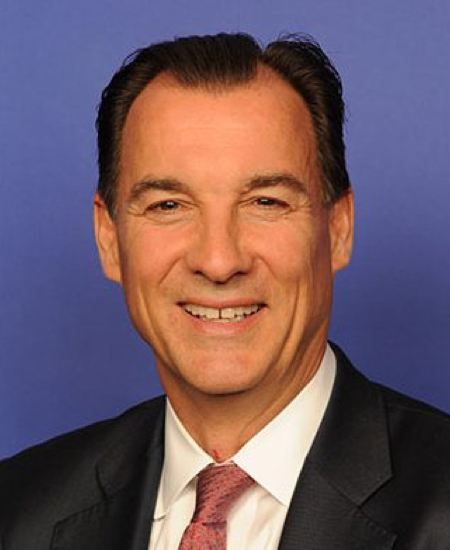
Rep. Thomas R. Suozzi
Sponsored bills
Maddy summaryHR 3178, the Save Healthcare Workers Act, creates a new federal crime for assaulting hospital staff while they are performing their duties, with penalties including fines and up to 10 years in prison (up to 20 years for aggravated cases involving weapons or injuries). The bill directly affects hospital employees - including nurses, doctors, and support staff - across all covered facilities (such as emergency rooms, long-term care centers, and children’s hospitals) by criminalizing violence that disrupts patient care. It also establishes a $25 million annual grant program (2025-2034) to help hospitals implement safety measures like staff de-escalation training, security technology, and coordination with local law enforcement. These provisions aim to address workplace violence in healthcare settings, which the bill cites as a growing problem affecting service delivery and staff retention.
Maddy summaryThis bill creates a federal grant program to help cover medical costs for retired Federal working dogs (like police or military K9s). It authorizes $1 million annually (2026-2030) for eligible nonprofits with a two-year history of providing such care to dogs that have received official retirement letters and are now with their handlers. The grants allow these organizations to pay for veterinary expenses, directly supporting retired service dogs and their handlers. The program is administered through the Department of Homeland Security under existing grant authority.
Maddy summary# Summary of the SHIPS for America Act This comprehensive legislation focuses on strengthening the U.S. maritime industry, shipbuilding capacity, and maritime workforce to enhance national security and economic competitiveness. ## Key Areas of Focus 1. **Shipbuilding & Maritime Infrastructure** - Establishes a United States Center for Maritime Innovation to accelerate adoption of commercial technologies - Creates a National Shipbuilding Research Program - Requires an annual survey of anticipated commercial vessel construction - Includes provisions for streamlined environmental reviews of maritime infrastructure 2. **Workforce Development** - Establishes the United States Merchant Marine Career Retention Program to maintain mariner qualifications - Creates Centers of Excellence for Domestic Maritime Workforce Training and Education - Implements military-to-maritime transition programs - Establishes a Maritime Career and Technical Education Advisory Committee 3. **Education & Training** - Expands educational assistance for merchant mariners - Creates eligibility for Naval Postgraduate School for merchant mariners - Establishes maritime education programs from K-12 through higher education - Provides for international exchanges for mariners and naval architects 4. **National Security & Strategic Readiness** - Requires reports on National Defense Reserve Fleet utilization - Includes measures to de-risk the maritime sector from Chinese influence - Enhances shipbuilding capacity for national security needs - Establishes programs to ensure sufficient mariner workforce for national defense 5. **Funding Mechanisms** - Authorizes appropriations from the Maritime Security Trust Fund - Includes funding for workforce programs, education, and shipbuilding initiatives - Establishes specific funding levels for various programs over multiple fiscal years The legislation aims to create a sustainable domestic maritime industrial base that supports both commercial shipping and national defense requirements, with a particular emphasis on developing and retaining a skilled U.S. maritime workforce.
Maddy summaryThe PREVAIL Act (HR 3160) reforms U.S. patent procedures to strengthen patent protection and reduce inefficiencies in the patent system. It requires 3-member panels for patent reviews, establishes a code of conduct for Patent Trial and Appeal Board members, and introduces new certification requirements for petitioners to prevent frivolous challenges. The bill also aims to eliminate repetitive patent challenges by requiring transparency about financial contributors to patent challenges and preventing duplicate proceedings across courts. This affects patent owners, challengers, and the USPTO, with the goal of making the patent system more reliable for innovators. Additionally, it changes how patent fees are handled, creating a dedicated fund to support patent and trademark operations.
Maddy summaryHR 3112, the Better CARE for Animals Act of 2025, strengthens enforcement of the federal Animal Welfare Act by requiring dealers and exhibitors to hold valid licenses for animal sales or transport (Section 4). It expands enforcement authority by allowing the Attorney General to sue violators for up to $10,000 per day, seize animals, and seek injunctions (Section 20), while clarifying that courts can address violations of related rules and regulations. The bill directly affects animal dealers, exhibitors, the USDA, and the Department of Justice, creating clearer pathways for holding violators accountable. Key provisions include updating definitions, broadening inspection powers to cover all regulations, and directing penalty funds toward temporary animal care costs during legal proceedings.
Maddy summaryThis bill expands access to employee ownership by modifying the Small Business Act to allow S corporations owned by employee stock ownership plans (ESOPs) to retain small business status, even when an ESOP owns over 49% of the company. It creates a new Treasury Department office to provide education and technical assistance for S corporations establishing ESOPs, and establishes a Labor Department Advocate for Employee Ownership to coordinate outreach and resolve disputes. These changes directly affect S corporations transitioning to ESOP ownership and their employees, who gain retirement benefits through ESOP accounts. The bill aims to increase employee ownership by removing eligibility barriers and improving support for businesses adopting this model.
Maddy summaryThis bill amends a provision of the 2023 federal law governing SNAP (Supplemental Nutrition Assistance Program) to ensure victims of EBT skimming receive full replacement of stolen benefits. It requires that replaced benefits equal the exact amount stolen from a household, directly affecting SNAP recipients who have been victims of benefit theft. The key change replaces the previous wording to specify the replacement amount must match the stolen value, removing ambiguity. This policy change ensures affected households receive the full benefit amount they lost due to criminal activity, without requiring them to prove additional hardship.
Ukrainian Adjustment Act of 2025 This bill provides a streamlined process for certain Ukrainian nationals (including accompanying spouse and children) who are living in the United States to receive lawful permanent resident status. Specifically, the bill permits Ukrainian nationals who have been paroled into the United States after February 20, 2014, to apply for and receive lawful permanent resident status. Additionally, the Department of Homeland Security (DHS) may waive grounds for inadmissibility (excluding certain crimes or security related grounds) for individuals who apply for status adjustment. DHS must establish vetting requirements (including an interview) for applicants that are equivalent to those under the United States Refugee Admissions Program. The bill also preserves eligibility for the status adjustment of certain battered spouses whose eligibility for such status stemmed from a marriage that has terminated. Finally, the bill requires DHS to issue guidance to implement these requirements and establishes a deadline for eligible individuals to apply for adjustment.
Maddy summaryThis bill designates the U.S. Postal Service facility at 216 Cumberland Street in Rochester, New York, as the "Minister Franklin Florence Memorial Post Office." It updates all official references in federal laws, maps, regulations, and documents to reflect this new name. The bill does not create new policies, funding, or services - it solely changes the facility's official designation for commemorative purposes. It directly affects how the location is identified in government records but has no broader policy impact.