

Maddy summaryThe Fiscal Commission Act establishes a 16-member commission to address the federal government's fiscal challenges, including reducing debt and deficit while aiming for a debt-to-GDP ratio of 100% by 2039. The commission must educate the public about fiscal issues, identify policy recommendations, and submit a detailed report with legislative language by November 2026 (with possible extension to April 2027). This report requires bipartisan approval, needing at least two Republican and two Democratic members for majority support. If approved, the recommended legislation would become an "implementing bill" considered under expedited procedures in both congressional chambers. The commission's work directly affects federal budget decisions and public awareness of fiscal policy, with hearings required to gather input from experts and government officials.
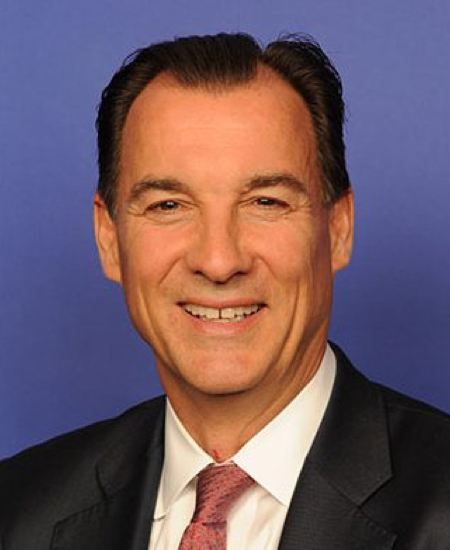
Rep. Thomas R. Suozzi
Sponsored bills
Maddy summaryHR 3277, the Ensuring Lasting Smiles Act, requires group health plans and health insurance issuers to cover medically necessary outpatient and inpatient treatments for congenital anomalies or birth defects primarily affecting the eyes, ears, teeth, mouth, or jaw. This includes reconstructive procedures, dental/orthodontic support during treatment, and follow-up care, but excludes purely cosmetic surgery not tied to a medical diagnosis. Cost-sharing (like copays) for these services must not be stricter than for other medical benefits. The law takes effect for plan years beginning January 1, 2026, and mandates insurers to provide notice about this coverage to beneficiaries.
Maddy summaryHR 2623, the Innovative Therapies Centers of Excellence Act of 2025, directs the Department of Veterans Affairs to establish at least five specialized medical centers focused on treating veterans with specific conditions like PTSD, depression, chronic pain, and substance use disorders using innovative therapies. These centers must meet strict criteria, including academic partnerships with medical schools, research capabilities, veteran advisory committees, and data-sharing systems for evaluating treatment effectiveness. The bill authorizes $30 million annually for these centers' research and education activities and requires the VA to submit annual reports to Congress on their operations and findings. It directly affects veterans seeking advanced treatments for covered conditions through VA facilities and establishes a peer review process to select designated centers based on scientific merit.
Maddy summaryHR 3243, the Therapeutic Fraud Prevention Act of 2025, bans the provision of paid conversion therapy aimed at changing a person's sexual orientation or gender identity, and prohibits advertising such therapy as effective, safe, or without risk. It directly affects LGBTQ+ individuals and their families who might be targeted by these practices, as professionals have determined conversion therapy is ineffective and harmful. The law treats violations as deceptive acts under consumer protection laws, empowering the Federal Trade Commission and state attorneys general to enforce it through civil actions. It explicitly excludes legitimate gender transition support and non-discriminatory counseling from the ban.
Maddy summaryHR 3264 requires the U.S. Treasury to determine within 180 days if Hong Kong should be designated as a "jurisdiction of primary money laundering concern" under U.S. law. It also mandates a 360-day report from the State Department (with Treasury and Commerce) assessing Hong Kong's role in facilitating exports and financial transactions that violate U.S. sanctions on Russia, Iran, and other adversaries. The report must evaluate how Hong Kong enables illegal transfers of goods/technology, assess impacts of Hong Kong's National Security Law on anti-money laundering efforts, and detail U.S.-Hong Kong cooperation on enforcement. This bill directly affects U.S. financial institutions operating in Hong Kong and aims to strengthen oversight of Hong Kong's compliance with U.S. sanctions and export controls.
Maddy summaryThis bill clarifies liability for payroll tax errors when third-party payroll services (like professional employer organizations) rely on employer certifications. It allows these services to depend on employer-provided information unless they knew or should have known of an error. If an error is discovered, the employer bears full liability unless the third party had "constructive knowledge" of the error, in which case liability is shared based on the portion of the error the third party knew about. The bill also prevents the IRS from delaying payroll tax credits or auditing employers solely because a third party relied on an erroneous certification from that employer. It directly affects third-party payroll services and the businesses that use their services for tax filings.
Maddy summaryHR 3206, the Protecting America's Property Rights Act, requires Fannie Mae and Freddie Mac (the "Enterprises") to use third-party insurance products regulated by state authorities for mortgage lien and title protection. It mandates that any mortgage purchased by these entities must involve products regulated by state insurance or financial authorities, as defined in existing federal law. To enforce this, the bill adds a 1.00% capital requirement on the unpaid principal balance of mortgages that don’t meet this standard. The Director of the Federal Housing Finance Agency must issue implementing regulations within 180 days of the bill’s enactment.
Maddy summaryHR 3184, the PFAS Alternatives Act, funds research to develop turnout gear (firefighter safety clothing) without harmful PFAS chemicals, directly affecting firefighters who wear this gear. It authorizes $25 million annually (2025-2029) for grants to eligible organizations to research and test PFAS-free gear, requiring partnerships with firefighting groups to translate findings into practice. The bill also allocates $2 million yearly (2027-2031) for training programs on safe gear use and decontamination. Its goal is to reduce firefighters' exposure to chemicals linked to occupational illnesses during operations.
Maddy summaryThis bill amends the TAIPEI Act to clarify that UN Resolution 2758 does not address Taiwan's representation in international organizations or Taiwan's sovereignty. It directs U.S. officials in international bodies to actively resist China's efforts to distort policies affecting Taiwan's participation and to advocate for Taiwan's meaningful engagement. The bill also requires the U.S. government to report on China's attempts to undermine Taiwan's international partnerships and observer status. These provisions aim to strengthen Taiwan's ability to participate in global organizations without altering its political status.
Maddy summaryHR 3196, the Improving Helicopter Safety Act of 2025, prohibits civil helicopter flights within a 20-mile radius of the Statue of Liberty National Monument, effective 60 days after enactment. This directly affects helicopter tour operators and commercial flight services near the monument, with exceptions for emergency response (law enforcement, medical services), infrastructure maintenance, and certain news/media flights. The bill requires the FAA to issue implementing regulations within 90 days to enforce the no-fly zone. The law aims to enhance safety and reduce disruptions in this high-traffic tourist area while allowing essential operations.