

Maddy summaryHR 6379, the Shadow Wolves Improvement Act, amends the Homeland Security Act to establish new requirements for ICE's Shadow Wolves Program, which partners with tribal nations like the Tohono O'odham Nation. The bill requires ICE to define the program's mission, set staffing needs for special agents, create a recruitment/retention strategy with specific goals and timelines, and provide current Tactical Officers with clear details about reclassifying as special agents (including pay and training impacts). It also mandates a plan for filling vacancies due to retirements and outlines criteria for expanding the program to new tribal lands. The bill specifies no new funding is authorized for these changes and requires ICE to submit an implementation report to Congress within one year.
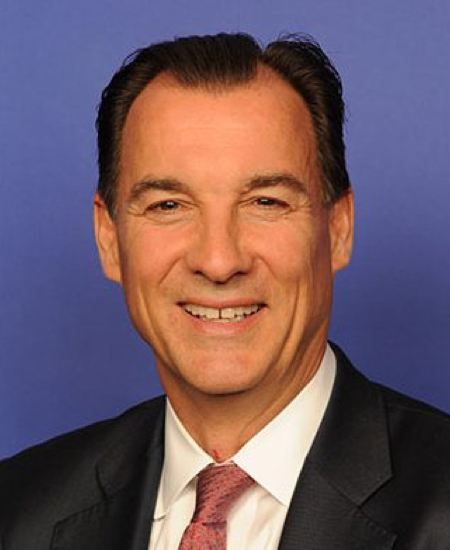
Rep. Thomas R. Suozzi
Sponsored bills
Maddy summaryHRES 925 is a non-binding resolution condemning the Iranian government's ongoing persecution of the Baha'i religious minority. It directly affects Baha'is in Iran, who face systemic discrimination, imprisonment, denial of education and employment, and violence due to their faith. The resolution calls on Iran to immediately release Baha'i prisoners, end hate propaganda targeting them, and reverse policies banning their access to education and jobs. It also urges the U.S. President and Secretary of State to demand Iran's compliance and use existing sanctions authorities against officials responsible for human rights abuses against Baha'is.
Maddy summaryThis bill establishes a new interagency Task Force to dismantle foreign scam operations targeting Americans, particularly through "pig butchering" scams in Southeast Asia. The Task Force, chaired by the Secretary of State, will coordinate efforts across multiple agencies to shut down scam centers, impose sanctions on perpetrators, and support victims of trafficking. It requires a detailed strategy within 180 days and annual reports to Congress on progress, including sanctions imposed and funds recovered. The bill authorizes $30 million for these efforts in fiscal years 2026-2027, focusing on countries like Cambodia, Laos, and Burma where scam centers operate with forced labor.
Maddy summaryThis bill would amend the Anti-Terrorism Act of 1987 to designate the Muslim Brotherhood as a terrorist organization and prohibit its operations within the United States. It would require the President to designate the Muslim Brotherhood as a foreign terrorist organization under immigration law and impose new visa restrictions, including immediate revocation of current visas, for individuals identified as members. The bill mandates annual reports from the Secretary of State identifying Muslim Brotherhood branches worldwide and determining which should be designated as terrorist organizations under existing laws. These provisions would directly affect Muslim Brotherhood members, branches, and affiliated organizations seeking entry to or operating within the United States.
Maddy summaryHRES 920 is a ceremonial resolution celebrating the 50th anniversary of the Individuals with Disabilities Education Act (IDEA) on November 29, 2025. It recognizes IDEA’s historical impact - establishing the right to free, appropriate public education in the least restrictive environment for children with disabilities - and notes how it transformed access to education after over 1 million children were previously excluded from schools. The resolution does not create new policy or funding; it solely commemorates IDEA’s legacy, honors the students and families it has served, and acknowledges educators and advocates who advanced its implementation. This is a symbolic gesture with no direct effect on current law or services.
Maddy summaryThe Claiming Age Clarity Act (HR 5284) requires the Social Security Administration to update its official terminology by January 1, 2027. It directs the replacement of specific terms: "early eligibility age" becomes "minimum monthly benefit age," "full retirement age" and "normal retirement age" become "standard monthly benefit age," and "delayed retirement credit" is eliminated, with "maximum monthly benefit age" used instead of age 70 references. This change applies to all Social Security Administration rules, regulations, guidance, and materials, both online and in print, affecting how the agency communicates retirement benefit rules to the public.
Give Kids a Chance Act of 2025 This bill expands the Food and Drug Administration’s (FDA’s) authority with respect to research on rare pediatric diseases, including by permitting the FDA to take enforcement action against drug sponsors that fail to satisfy pediatric study requirements and by reauthorizing programs that support pediatric research. Specifically, the bill modifies requirements relating to molecularly targeted pediatric cancer investigations to permit research on new drugs in combination with active ingredients that have already been approved, provided certain conditions are met; permits the FDA to take enforcement action against drug sponsors that fail to comply with pediatric study requirements, if such sponsors demonstrated a lack of due diligence in satisfying the requirement; renews the FDA’s authority to award priority review vouchers to sponsors of new products intended to treat rare pediatric diseases through September 30, 2029; and reauthorizes through FY2027 certain funding for the National Institutes of Health to support priority pediatric research. The bill also provides statutory authority for the FDA’s interpretation of the orphan drug exclusivity period. The bill specifies, consistent with FDA regulations, that the seven-year market exclusivity period for drugs for rare diseases or conditions (i.e., orphan drugs) prohibits the approval of the same drug for the same approved use or indication with respect to the disease or condition. (In Catalyst Pharmaceuticals, Inc. v. Becerra , a court rejected the FDA’s interpretation and held that orphan drug exclusivity extends to all uses or indications for the disease or condition.)
Maddy summaryHR 5735, the Coastal Infrastructure Improvement Act, establishes a 6-year federal research program to develop nature-inspired erosion control technologies for coastal areas. The bill directly affects coastal communities vulnerable to flooding and erosion by funding research into alternatives to traditional hard structures like seawalls. Key provisions require the Army Corps of Engineers to study biomimetic methods (such as systems mimicking natural processes) that protect shorelines while supporting ecosystems, with research conducted across diverse geographic locations. The program mandates annual reports to Congress evaluating outcomes and recommending future action, focusing on cost-effective, habitat-friendly solutions.
Student Compensation and Opportunity through Rights and Endorsements Act or the SCORE Act This bill provides a framework for the compensation of student athletes for the use of their name, image, or likeness (NIL). This includes addressing certain elements of the court approved agreement to settle the In re College Athlete NIL Litigation (i.e., House settlement ). Specifically, the bill statutorily prohibits institutions, conferences, or interstate intercollegiate athletic associations (e.g., the National Collegiate Athletic Association (NCAA)) from restricting the ability of a student athlete to enter an NIL agreement. The bill also requires institutions of higher education that generate $20 million or more in annual revenue from the institution's intercollegiate athletics activities to (1) provide counseling and medical benefits to student athletes, and (2) establish and maintain at least 16 varsity sports teams. Further, the bill authorizes interstate intercollegiate athletic associations to establish rules with respect to athletic eligibility, transfers, recruitment, and the disclosure of NIL agreements. Under the bill, student athletes may not be considered employees of an institution, conference, or interstate intercollegiate athletic association. The bill also preempts state laws with respect to compensation, payments, benefits, employment status, eligibility, and academic standards applicable to student athletes. Compliance with the provisions of this bill is considered lawful under federal and state antitrust laws.
Maddy summaryHRES 915 formally recognizes the 1932-1933 Ukrainian famine, known as the Holodomor, as a genocide perpetrated by the Soviet Union. The resolution directly affects Ukrainian victims, survivors, and communities by affirming historical truth and condemning Soviet policies that intentionally starved millions. Key provisions include declaring the Holodomor a genocide, commemorating its victims, and condemning ongoing Russian aggression against Ukraine, including Vladimir Putin’s denial of Ukrainian sovereignty. This symbolic resolution aims to educate the public and align U.S. policy with historical facts about Soviet repression.