

Maddy summaryHR 6575, the CommonGround for Affordable Health Care Act, extends enhanced premium tax credits for health insurance through 2026, directly benefiting millions of lower and middle-income Americans purchasing coverage through the ACA marketplace. The bill modifies income thresholds for premium subsidies, creating new income tiers that maintain or increase financial assistance for households earning up to 1,000% of the poverty level. It includes provisions to prevent fraud in health insurance exchanges by imposing civil penalties on agents and brokers who provide false information, and requires transparency in pharmacy benefit manager contracts to improve drug pricing accountability. The legislation also extends the annual open enrollment period for health insurance exchanges for the 2026 plan year, allowing more time for people to enroll or change coverage.
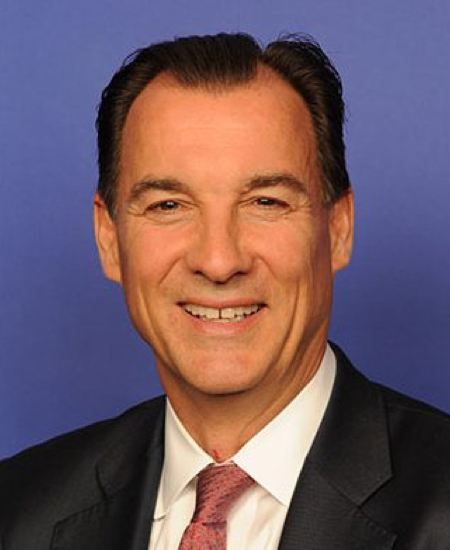
Rep. Thomas R. Suozzi
Sponsored bills
Maddy summaryHR 6597, the LET’S Protect Workers Act, increases civil penalties for employers violating key labor laws to strengthen worker protections. It raises fines for child labor violations to up to $700,000 per incident causing death or serious injury, and doubles penalties for repeated wage/hour violations (up to $50,000 per violation). The bill also significantly boosts OSHA penalties (e.g., up to $800,000 for serious violations), adds new retaliation penalties for mine safety violations (up to $200,000 for repeat offenses), and clarifies that recordkeeping violations continue until corrected. These changes apply to employers across sectors, including manufacturing, agriculture, and mining, under the Fair Labor Standards Act, Occupational Safety and Health Act, and Mine Safety Act.
Maddy summaryThis bill authorizes the placement of a memorial honoring women who supported the U.S. war effort during World War II (including those working as pilots, engineers, and in factories) on federal land in Washington, D.C. It specifies two locations: Area I on the National Mall map or the National Mall Reserve, as defined in existing law. The memorial was previously authorized by Section 702 of the 2023 Consolidated Appropriations Act (Public Law 117-328), and this bill clarifies its permitted locations.
Maddy summaryThe Bipartisan Health Insurance Affordability Act extends and modifies premium tax credit rules to make health insurance more affordable for people with household incomes up to 700% of the poverty line, with specific provisions for different income tiers. The bill requires pharmacy benefit managers to pass through 100% of rebates to health plans, establishes transparency requirements for drug pricing, and creates mechanisms to prevent fraud in health insurance exchanges. It also extends the annual open enrollment period for 2026 and allows qualified Exchange enrollees to establish health savings accounts, with options to prepay annual premiums or direct part of their premium tax credit into a health savings account.
Maddy summaryThis bill directs the American Battle Monuments Commission to correct historical errors by identifying Jewish World War I and II veterans buried overseas under incorrect Christian markers (Latin crosses) and replacing them with appropriate markers. It establishes a 10-year program to contact families of affected veterans, with the Commission funding the effort at $500,000 annually through nonprofit contracts. The program specifically targets veterans buried in foreign U.S. military cemeteries with markers indicating non-Jewish faith, addressing a documented mistake affecting approximately 900 Jewish servicemembers. This directly affects Jewish veterans' families by honoring their heritage and correcting past burial inaccuracies.
Skinny Labels, Big Savings Act This bill provides a statutory safe harbor from patent infringement claims for generic or biosimilar manufacturers that seek or obtain approval for skinny labels of their drugs. Under current law, the Food and Drug Administration (FDA) may approve generic and biosimilar drugs through a process known as skinny labeling, which allows a generic manufacturer to seek approval only for approved uses of the drug that are no longer protected by patents. However, in GlaxoSmithKline LLC v. Teva Pharmaceuticals USA, Inc. , a court held that a generic manufacturer may sometimes be liable for patent infringement when it markets skinny label generics. The bill specifically lists the following as actions that are not considered infringement of a method of use claim in a patent under the Federal Food, Drug, and Cosmetic Act: submitting or seeking approval of a skinny label for a generic or biosimilar drug; promoting or commercially marketing a drug with skinny labeling approved by the FDA; or describing a drug product approved by the FDA as a generic of, or therapeutically equivalent to, the branded drug. The bill also applies the safe harbor to similar actions under the Public Health Service Act.
Maddy summaryHRES 930 is a symbolic resolution designating December 8, 2025, as "Jimmy Lai Day" to honor Jimmy Lai's advocacy for free press, religious freedom, and democracy in Hong Kong. It calls on the People's Republic of China and Hong Kong authorities to release Jimmy Lai and other Hong Kong prodemocracy advocates detained under Hong Kong's National Security Law. The resolution does not create new laws or policies but expresses congressional support for Lai's work and condemns the imprisonment of those advocating for Hong Kong's freedoms. It directly affects U.S. diplomatic messaging toward China, not Hong Kong's legal system or residents.
Maddy summaryHR 6475, the Preventing Child Trafficking Act of 2025, requires the Department of Justice's Office for Victims of Crime and the Administration for Children and Families' Office on Trafficking in Persons to implement the 2023 Government Accountability Office's recommendations for preventing child trafficking and supporting survivors. The bill mandates these agencies to collaborate using established best practices, develop measurable performance goals for child trafficking programs, and base these targets on existing grantee data. It directly affects federal agencies managing anti-trafficking programs and the children and survivors served by those programs. The bill requires a report to Congress within 180 days detailing how these implementation steps were carried out.
Maddy summaryHR 6458 requires the IRS to implement a fully automated electronic filing system for employment tax returns (like Form 941) within one year of enactment, starting with the adjusted quarterly return (Form 941-X). Employers who file all employment taxes electronically for the first time in a quarter receive a $1,000 tax credit, with an additional $1,000 available in the following year for continued electronic filing. Employers filing paper returns face a $250 user fee (effective two years after enactment), though exceptions apply for rural access issues, emergencies, or first-time filers. The bill directly affects businesses required to file employment tax returns, aiming to replace paper-based processes with electronic filing as the standard.
Maddy summaryHR 6423, the HELP Copays Act, requires health insurance plans and coverage to count financial assistance from non-profits or drug manufacturers toward patient cost-sharing limits like deductibles and copayments. This directly affects patients enrolled in health insurance who receive such assistance for prescription drugs, ensuring the help they get reduces their out-of-pocket costs faster. The bill amends key health laws to mandate that these payments are included when calculating whether a patient has met their deductible or copayment threshold. The change applies to all prescription drugs, including specialty drugs and those subject to prior authorization, but does not alter how insurers manage drug access through tools like step therapy. It takes effect for plan years starting in 2026.