

Maddy summaryThis bill requires most employers to provide workers with earned paid sick leave. Employees would earn 1 hour of paid sick time for every 30 hours worked, up to 56 hours per year, which can be used for their own illness, medical care, caring for family members (including children, parents, spouses, domestic partners, or other family-like relationships), or addressing domestic violence, sexual assault, or stalking situations. The bill prohibits employers from retaliating against workers who use this leave and requires employers to inform employees about their rights. It ensures that workers who leave and return to the same employer within a year can reinstate their unused sick leave. This law would not override more generous state or local paid leave policies.
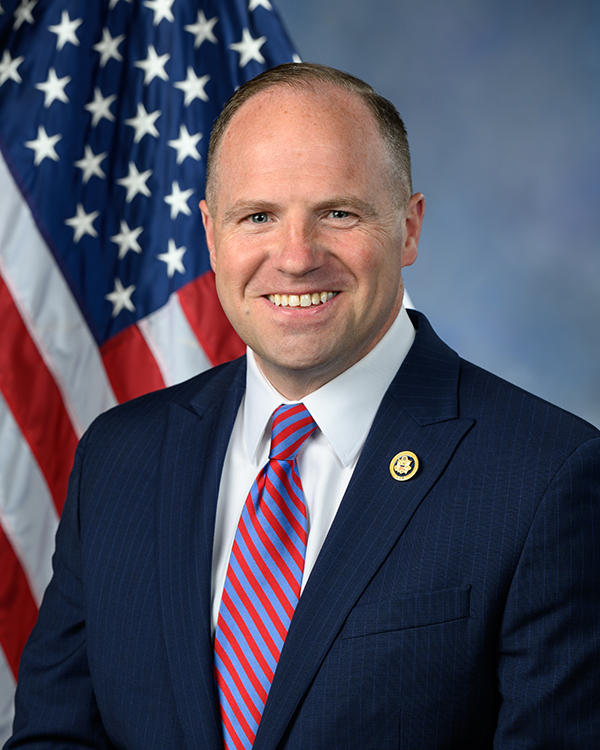
Rep. Timothy M. Kennedy
Sponsored bills
Maddy summaryHR 7501, the "Safe Flights for Passengers and Flight Crews Act," requires commercial operators running passenger-carrying scheduled charter flights with more than 9 passenger seats (excluding crew seats) to be regulated as domestic or flag operations under existing FAA Part 121 rules. This directly affects public charter airlines that offer fixed departure locations, times, and arrival points in advance. The bill mandates this regulatory change 90 days after enactment, regardless of whether the FAA issues implementing rules. It shifts oversight for these specific charter operations from potentially less stringent rules to the standard Part 121 safety and operational requirements.
Department of Homeland Security Appropriations Act, 2026 This bill provides FY2026 appropriations for various agencies and offices within the Department of Homeland Security (DHS), except for U.S. Immigration and Customs Enforcement (ICE), U.S. Customs and Border Protection (CBP), and management and oversight activities of the Office of the Secretary. Specifically, the bill provides appropriations to DHS for the Federal Protective Service, the Office of Inspector General, the Transportation Security Administration, the U.S. Coast Guard, the U.S. Secret Service, the Cybersecurity and Infrastructure Security Agency, the Federal Emergency Management Agency (FEMA), U.S. Citizenship and Immigration Services, the Federal Law Enforcement Training Centers, and the Science and Technology Directorate. The bill does not provide appropriations for some agencies and activities that have been funded in prior DHS appropriations acts, including ICE, CBP, and management and oversight activities of the Office of the Secretary.
Maddy summaryHR 7500, the Responsible Firearms Marketing Act, directs the Federal Trade Commission (FTC) to study whether firearm advertising or marketing practices are unfair or deceptive, particularly those targeting minors, implying illegal use, or promoting semiautomatic assault weapons. After a two-year study, the FTC must report to Congress and then create enforceable regulations within 18 months to ban such practices. The law specifically prohibits manufacturers, dealers, and importers from using ads that appeal to people under 18, suggest illegal activity, or market assault weapons. Violations would be enforced under existing FTC authority, treating them as unfair or deceptive acts under current law. This bill directly affects firearm industry marketing practices but does not regulate gun sales or ownership.
Maddy summaryThe Firearm Safety Act of 2025 removes an existing exemption that prevents the Consumer Product Safety Commission from regulating firearms as consumer products. By amending the Consumer Product Safety Act, the bill allows the commission to apply its standard safety rules to guns, similar to how it regulates other household items. This change directly affects manufacturers and sellers of firearms by potentially subjecting them to federal safety standards and testing requirements. The legislation does not alter existing gun laws or create new bans, but rather changes the regulatory framework under which firearm safety is overseen.
Maddy summaryHR 3190, the BRAVE Burma Act, extends sanctions authority for Burma by 10 years and requires annual reports on whether specific Burmese entities - like state-owned enterprises, Myanma Economic Bank, and jet fuel sector operators - meet sanctions criteria. It also limits Burma's potential increase in International Monetary Fund shareholding if the military-led State Administration Council remains in power. The bill creates a U.S. Special Envoy for Burma to coordinate all diplomatic and sanctions policy, develop multilateral sanctions strategies, and work with international partners on issues like arms embargoes and support for Burmese civil society. These provisions directly affect Burmese military entities, Burma's IMF representation, and U.S. diplomatic efforts toward Burma.
Maddy summaryThis bill imposes a hiring freeze on U.S. Immigration and Customs Enforcement (ICE), prohibiting the use of federal funds to hire new employees or transfer existing federal workers to ICE. The freeze begins upon the bill's enactment and automatically ends when Congress passes a specific law overriding it. It directly affects ICE's staffing capabilities by halting new appointments and transfers using federal funding. The measure is procedural, focusing solely on restricting hiring authority without altering immigration enforcement policies.
Maddy summaryHRES 1040 is a symbolic resolution recognizing the Greensboro Four sit-in during Black History Month. It commemorates the 66th anniversary of the February 1, 1960, sit-in at a Greensboro Woolworth's lunch counter, where four Black students challenged racial segregation. The resolution encourages states to include the Greensboro Four's history and contributions in school curricula. As a non-binding resolution, it has no legal effect but formally honors this pivotal civil rights moment.
This bill designates the facility of the United States Postal Service located at 15422 NY 104 in Martville, New York, as the "Sergeant Staret J. Engleston Memorial Post Office Building".
Maddy summaryThis bill requires the federal government to publicly disclose detailed information about grants awarded to nonprofit organizations for security improvements. It mandates two types of reports: (1) a pre-grant report 7 days before distributing funds, listing recipient names, addresses, grant amounts, and whether they're in high-risk urban areas; and (2) an annual report 90 days after each fiscal year, showing state-level application data, grant expenditures, and program operations. The reports are submitted to specific congressional committees and directly affect nonprofit organizations receiving these grants, as well as the federal administrators managing the program. The law focuses on making grant distribution more transparent by requiring specific, publicly available data points.