

Hydropower Clean Energy Future Act This bill expands provisions related to renewable energy, including hydropower production, and revises the hydropower licensing process. The bill updates federal renewable purchase requirements. Specifically, the bill requires the federal government to purchase an increasing amount of renewable energy, including hydropower. By 2026, 25% of the total amount of electric energy the federal government consumes during any fiscal year must be renewable energy. In addition, the bill also provides an expedited licensing process for next-generation hydropower projects. The bill also revises requirements concerning the environmental review of certain hydroelectric power projects, including by designating the Federal Energy Regulatory Commission as the lead agency for the purposes of environmental reviews, allowing certain categories of projects to be exempted from such reviews, and establishing deadlines to complete such reviews. Finally, the bill establishes requirements about resolving (1) inconsistent or conflicting license terms, and (2) federal interagency disputes or disputes among federal and state agencies.
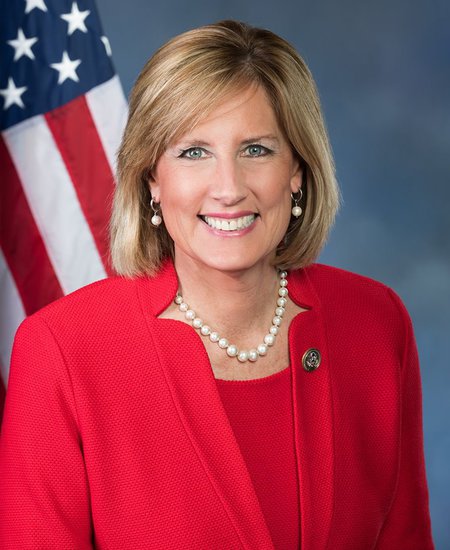
Rep. Claudia Tenney
Sponsored bills
Qualified Immunity Act of 2021 This bill codifies the defense of qualified immunity for law enforcement officers in any case under provisions regarding civil actions for deprivation of rights under color of law. Specifically, a law enforcement officer subject to such an action in his or her individual capacity shall not be found liable if the officer establishes that the right, privilege, or immunity secured by the Constitution or federal law was not clearly established at the time of the deprivation, or that at this time, the state of the law was not sufficiently clear that every reasonable law enforcement officer would have understood that the conduct alleged constituted a violation of the Constitution or federal law; or a court of competent jurisdiction had issued a final decision on the merits holding, without reversal, vacatur, or preemption, that the specific conduct alleged to be unlawful was consistent with the Constitution and federal laws. A law enforcement agency or unit of local government that employed a law enforcement officer subject to such an action shall not be liable if the officer is found not liable and to have been acting within the scope of his or her employment.
This bill requires the Office of the Inspector General in the Department of Justice to report to Congress on the number of (1) firearm transfer denials issued by the National Instant Criminal Background Check System that are referred to the Bureau of Alcohol, Tobacco, Firearms and Explosives (ATF) for investigation; (2) prosecutions resulting from such investigations; and (3) firearms recovered by the ATF in cases in which a denial was issued by the system after a firearm was transferred.
No Social Media Accounts for Terrorists or State Sponsors of Terrorism Act of 2021 This bill bars access to certain social media platforms by individuals designated as terrorists or senior officials of a government that is a state sponsor of terrorism. Specifically, the bill requires the President to prohibit providers of social media platforms (i.e., platforms that allow users to generate and share content and that have over 100,000 active users) from making such platforms available to barred individuals or officials. The bill does, however, allow officials to use these platforms solely for legitimate emergency alert purposes. Violations of this prohibition are subject to civil and criminal penalties. In addition, the President may waive the prohibition in the interests of U.S. national security. The Department of the Treasury must report to Congress on (1) the status and impact of the prohibitions of this bill, and (2) efforts to facilitate the free flow of information and access to communications technologies by civil society and democratic activists in Iran, Syria, North Korea, Cuba, and other countries controlled by authoritarian regimes.
Alzheimer's Caregiver Support Act This bill authorizes grants to expand training and support services for families and caregivers of individuals living with Alzheimer's disease or a related dementia. The Department of Health and Human Services may award these grants to community organizations and health care and social service providers.
Concealed Carry Reciprocity Act This bill establishes a federal statutory framework to regulate the carry or possession of concealed firearms across state lines. Specifically, an individual who is eligible to carry a concealed firearm in one state may carry or possess a concealed handgun (other than a machine gun or destructive device) in another state that allows its residents to carry concealed firearms. It sets forth requirements for the lawful concealed carry across state lines. The bill preempts most state and local laws related to concealed carry and establishes a private right of action for a person adversely affected by interference with a concealed-carry right established by this bill.
This concurrent resolution expresses the sense of Congress that school administrators should safely reopen schools for in-person instruction as soon as possible.
PPP Flexibility for Farmers and Ranchers Act This bill expands eligibility for agricultural producers under the Paycheck Protection Program, established to support small businesses in response to COVID-19 (i.e., coronavirus disease 2019), to include certain agricultural producers organized as partnerships. Currently, only certain agricultural producers that are sole proprietorships, independent contractors, or self-employed individuals may receive support under the program.
Country of Origin Labeling Requirement Act This bill requires sellers of products online to conspicuously disclose the country of origin of the products. This requirement does not apply to individuals selling products through third-party websites. The Federal Trade Commission must enforce violations of this requirement as unfair or deceptive trade practices.
Nuclear Prosperity and Security Act This bill directs the Department of Energy to establish and operate a uranium reserve to ensure the availability of uranium mined in the United States in the event of a market disruption and support strategic fuel cycle capabilities in the United States. Uranium that is mined in the United States by an entity that is owned or controlled by Russia or the People's Republic of China or is incorporated in either country must be excluded from the reserve.