

No Pensions for Corrupt Politicians Act of 2021 This bill makes a Member of Congress who has been convicted of a crime related to public corruption ineligible to receive certain retirement payments between the date of sentencing and the date of final conviction. Such retirement payments are those made under the Civil Service Retirement System or the Federal Employees' Retirement System based on the individual's service as a Member. Under current law, a Member must forgo receipt of these payments only after a final conviction (i.e., after the exhaustion of all appeals under the judicial process). The bill eliminates these payments to a Member from the date of sentencing for the conviction.
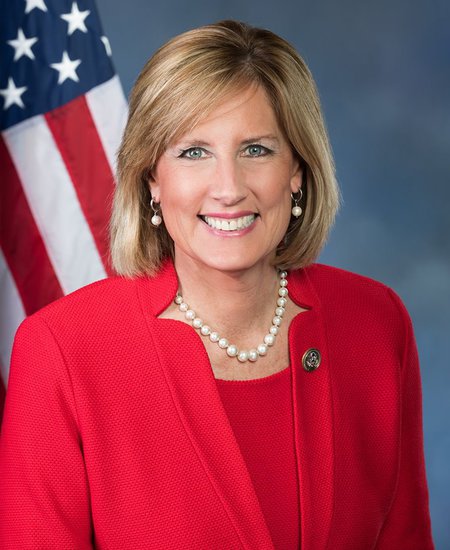
Rep. Claudia Tenney
Sponsored bills
Developing Responsible Individuals for a Vibrant Economy Act or the DRIVE-SAFE Act This bill directs the Department of Transportation to promulgate regulations to implement an apprenticeship program for licensed commercial motor vehicle drivers under the age of 21. Under the program, an apprentice must complete two probationary periods that total 400 hours of on-duty time, of which at least 240 hours must be driving time in a commercial motor vehicle. Additionally, the apprentice must be accompanied in the cab of the commercial motor vehicle by an experienced driver. Further, the bill requires all commercial motor vehicles used in the program for training to be equipped with safety technology such as active braking collision mitigation systems and video event capturing systems. An employer shall not knowingly allow, require, permit, or authorize a driver under the age of 21 to operate a commercial motor vehicle unless the driver is participating in, or has completed, an apprenticeship program that meets the requirements set forth in this bill.
Strengthening American Nuclear Competitiveness Act This bill requires expedited consideration of certain nuclear technology exports, and it requires the Department of Energy (DOE), the Nuclear Regulatory Commission (NRC), and the Government Accountability Office (GAO) to author specified reports. Specifically, DOE must expedite consideration of authorization requests regarding the transfer of technology that involves specified low-proliferation-risk reactors to certain foreign countries. The bill also lifts the prohibition on licensing domestic nuclear projects in which U.S. allies invest if license issuance is not detrimental to common defense and security or the health and safety of the public. DOE must report on U.S. civilian nuclear commerce, including (1) an assessment of practices with respect to the civilian nuclear industry and the impacts of such practices on the industry in domestic and foreign commerce, (2) a comparison of U.S. practices to the practices of foreign countries with respect to their own civilian nuclear industry, and (3) recommendations to improve the competitiveness of U.S. civilian nuclear commerce. The NRC must report on (1) licensing issues or requirements relating to the use of nuclear energy for nonelectric applications, and (2) advanced manufacturing and construction techniques for nuclear energy projects. The GAO must report on actions by DOE regarding the retrospective risk pooling program that requires nuclear suppliers to help cover the contingent cost of certain nuclear incidents.
Speeding Therapy Access Today Act of 2021 This bill requires and authorizes various actions to accelerate the development of therapies for rare diseases. The Food and Drug Administration (FDA) shall establish the Intercenter Institute on Rare Diseases and Conditions. The institute shall (1) coordinate engagement with relevant stakeholders, (2) build the FDA's expertise in the review of medical products to treat rare diseases, (3) coordinate regulatory science initiatives related to rare diseases, (4) establish and implement a program to make recommendations to address challenges associated with developing medical products to treat rare diseases in an individual or in very small populations, (5) convene a stakeholder meeting to consider potential amendments to labels for medical products to treat rare diseases, and (6) establish and carry out a program to facilitate voluntary communication between the sponsors of such medical products and third-party payers (e.g., insurance companies). The bill also authorizes the FDA to make grants to assist in developing practices related to the development and production of individualized therapies or therapies to treat very small populations. The bill also establishes an advisory committee to advise the FDA on issues related to the development of therapies to treat rare diseases.
Death Tax Repeal Act This bill repeals the estate and generation-skipping transfer taxes. It also makes conforming amendments related to the gift tax.
National Women's Hall of Fame Commemorative Coin Act of 2021 This bill directs the Department of the Treasury to mint and issue $5 gold coins, $1 silver coins, half-dollar clad coins, and proof silver $1 coins in recognition and celebration of the National Women's Hall of Fame in Seneca Falls, New York. All minted coins shall include a specified surcharge, which shall be paid to the National Women's Hall of Fame Foundation to establish an endowment fund to provide for the long-term financing of the hall's operations.
Patrick Underwood Federal Law Enforcement Protection Act of 2021 This bill revises the federal criminal statute that prohibits assaulting, resisting, or impeding certain federal officers or employees. Among other changes, the bill increases the applicable penalties for such offenses.
This joint resolution proposes a constitutional amendment limiting Representatives to three terms and Senators to two terms. Terms beginning before the ratification of this amendment do not count towards these term limits.
This joint resolution proposes an amendment to the Constitution to require that the Supreme Court consist of nine Justices.
Protecting the Right to Keep and Bear Arms Act of 2021 This bill prohibits (1) the President or the Department of Health and Human Services from declaring emergencies or disasters for the purpose of imposing gun control; and (2) a federal officer or employee, or person operating under color of federal law, from banning the manufacture, sale, or transfer of firearms or ammunition while acting in support of relief from a major disaster or emergency.