

Maddy summaryHR 3425 creates federal grants to community colleges and college consortia with agriculture programs, helping them expand workforce training, education, and research in farming and related fields. The bill prioritizes colleges partnering with local farms for hands-on student training and allows grant funds to cover equipment, faculty development, and apprenticeships. It authorizes $20 million annually from 2024-2029 for these programs and requires a 3-year evaluation report to Congress. The law directly affects community colleges offering agriculture-focused education, aiming to strengthen their capacity to serve students and the agricultural industry.
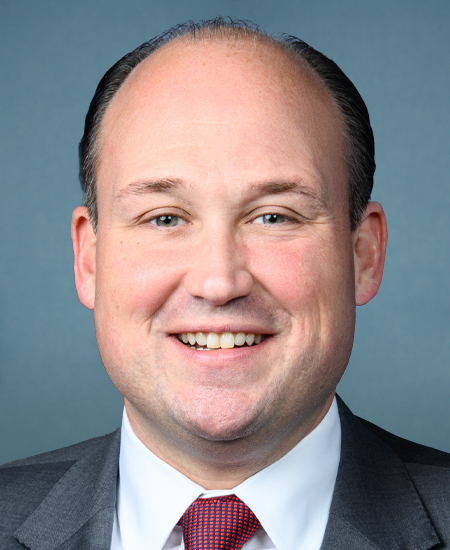
Rep. Nicholas A. Langworthy
Sponsored bills
Maddy summaryHJRES 44 is a congressional resolution seeking to block a 2021 rule by the Bureau of Alcohol, Tobacco, Firearms, and Explosives (ATF). The rule classified firearms with stabilizing braces as "short-barreled rifles," which would have required additional licensing and regulation. This resolution uses a specific legal process (under Title 5, U.S. Code) to formally disapprove the ATF rule, meaning the rule would no longer be in effect. It directly affects firearm owners, manufacturers, and dealers who would have been subject to the rule’s requirements.
Maddy summaryThis resolution (HRES 461) expresses the U.S. House of Representatives' disapproval of using public elementary or secondary school facilities to shelter individuals not admitted to the United States. It specifically references incidents in New York City where school gymnasiums were used for this purpose, arguing such use diverts educational resources, compromises student safety, and disrupts school routines. As a non-binding resolution, it does not create new laws or directly affect anyone but serves as a formal statement of opposition to the practice. The bill focuses on condemning the use of school facilities for sheltering non-admitted individuals, without proposing policy changes.
Maddy summaryThis bill renames the U.S. Food for Peace program after Peter O'Brien and makes key changes to how agricultural aid is delivered. It prohibits using cash, food vouchers, or foreign-sourced food for aid (section 2d), requires that at least 50% of annual funds be used for procuring U.S. agricultural commodities (section 2b(5)), and mandates annual reports to Congress on fund usage (section 2b(6)). These changes directly affect U.S. farmers supplying aid and international recipients of food assistance. The bill focuses on strengthening domestic agricultural exports within the Food for Peace program while adding transparency requirements.
Maddy summaryHRES 521 is a formal resolution censuring Representative Adam Schiff (D-CA, 30th District) for conduct deemed "unbecoming" of a House member. The resolution alleges Schiff repeatedly made false claims about Trump-Russia collusion, including spreading Steele Dossier information and releasing a flawed FISA memo, and misled the public during impeachment proceedings. If passed, it would require Schiff to appear in the House chamber for a public reading of the censure resolution. The resolution also directs the House Ethics Committee to investigate Schiff's "falsehoods and misrepresentations." This is a symbolic procedural action, not a law changing policy or affecting constituents.
Maddy summaryHR 277 would require Congress to approve major federal regulations before they take effect. Major rules are defined as those with significant economic impact ($100 million+ annually), major cost increases for consumers or industries, or significant adverse effects on competition, employment, or innovation. Agencies must submit detailed information about these rules to Congress, including cost-benefit analyses, before they can take effect. Congress would have 70 session days to approve the rule with a joint resolution; if they don't act within that timeframe, the rule would not take effect. This would increase congressional oversight of federal regulations and require more detailed information about proposed rules before they become law.
Maddy summaryThis bill bans senior U.S. government officials (those at GS-15 level or higher, military officers at O-7 or above, or equivalent roles) from holding financial interests in entities that pose conflict risks. Specifically, it prohibits ownership in corporations, businesses, or for-profit entities that are substantially regulated by their agency, major agency contractors, organizations with heavy lobbying ties to the agency, or those creating a realistic appearance of conflict. The Office of Government Ethics must define key terms like "substantially regulated" and "major contractor" through guidance. Agencies must report to Congress if they determine no conflicts exist, detailing their evaluation process and including inspector general assessments where applicable.
Maddy summaryHJRES 69 is a resolution seeking to disapprove an Environmental Protection Agency (EPA) rule published on June 5, 2023, which established a "Federal Good Neighbor Plan" for the 2015 ozone air quality standards. The rule aimed to address ozone pollution crossing state lines, particularly affecting southeastern states and industries subject to the 2015 ozone standards. This resolution would block the rule from taking effect by invoking the Congressional Review Act, preventing it from being enforced. If enacted, it would directly stop the EPA from implementing this specific plan, impacting states and businesses that would have had to comply with the rule.
Maddy summaryThis bill requires all U.S. flags displayed on federal property or purchased by federal agencies to be 100% made in the United States, meaning all materials and manufacturing must occur domestically. It directly affects federal agencies (including military departments, legislative/judicial branches, and U.S.-owned corporations) and their procurement of flags for display on government property. Key provisions include a 90-day implementation for new flag purchases and a 2-year phase-in for display requirements, with a separate mandate for the FTC to study and report on country-of-origin labeling enforcement for flags within one year. The bill does not apply to private entities or flags displayed off federal property.
Maddy summaryThe FAIR Act (HR 4144) establishes a new income-driven repayment assistance plan that would limit borrowers' monthly payments to 10% of their adjusted gross income, with full loan forgiveness after 20 years of payments. It requires the Department of Education to provide borrowers with multiple notifications about repayment options, including the new income-driven plan, and creates new deferment options for borrowers facing economic hardship, medical issues, or military service. The bill modifies loan rehabilitation processes to allow borrowers to rehabilitate loans two times instead of one time and limits the Secretary's authority to issue regulations that could increase subsidy costs. This legislation directly affects borrowers of federal student loans made under Title IV of the Higher Education Act of 1965.