

Maddy summaryThis bill directs the Office of Management and Budget (OMB) to develop guidance for federal agencies on implementing multi-cloud technology - allowing data and applications to move securely between different cloud providers - by 2025. It requires agencies to adopt this approach to reduce duplication, improve security, and lower costs, while also mandating a workforce study to address shortages in cloud computing skills. The guidance must include a roadmap for implementation across all federal agencies, with reports to Congress on progress by 2025. This directly affects all federal agencies using cloud services, aiming to standardize and streamline their cloud infrastructure.
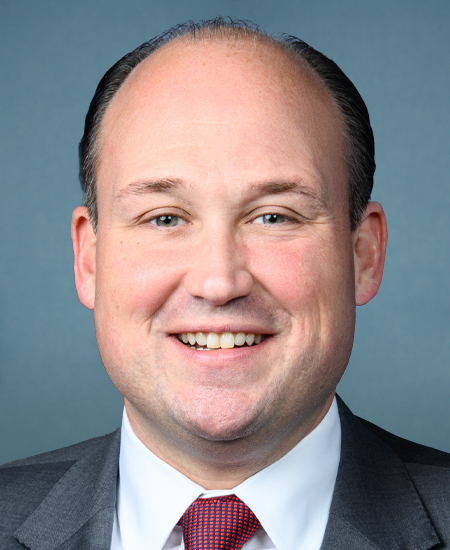
Rep. Nicholas A. Langworthy
Sponsored bills
Maddy summaryHR 3941, the Schools Not Shelters Act, prohibits public schools and colleges receiving federal funds from using their facilities to house non-admitted immigrants. This applies to all K-12 public schools and institutions of higher education that accept federal financial assistance. The rule is a condition for receiving such funding, with exceptions for emergency shelter during specified disasters (like fires or floods). The bill does not restrict schools from using facilities for educational purposes or other non-immigrant-related housing.
No Taxpayer Funding For Climate Zealots Advancing Radical Schemes Act or the No Taxpayer Funding For CZARS Act This bill prohibits the use of federal funds for any activity of the Special Presidential Envoy for Climate.
Maddy summaryHR 4721, the Main Street Tax Certainty Act, makes a permanent the 20% tax deduction for eligible small business owners under Section 199A of the tax code. This provision directly affects pass-through business owners (like S-corps, partnerships, and sole proprietorships) who qualify for the deduction. The bill achieves this by removing the temporary expiration language (subsection (i)) from the existing tax code provision. The key change is ending the need for annual congressional extensions of this deduction, providing long-term tax certainty for small businesses.
Maddy summaryThe ACE Act changes how federal education grants are calculated to better support schools in high-poverty areas. It phases out a current system that favored larger school districts by shifting to a formula based solely on the percentage of students from low-income families, starting in 2024. This directly benefits smaller school districts with high concentrations of economically disadvantaged students that were previously disadvantaged under the old dual-weighting system. The change aims to align funding more closely with congressional intent to direct more resources to schools serving the most economically disadvantaged students.
Maddy summaryThis bill, HR 1282 (Major Richard Star Act), expands benefits for certain military retirees by allowing them to receive both veterans' disability compensation and military retirement pay simultaneously. It specifically affects combat-related disabled retirees under Chapter 61 of the military retirement system who have fewer than 20 years of service. The key change removes the automatic reduction of military retirement pay when these retirees also receive disability compensation, as amended in Section 1413a(b)(3) of Title 10. Technical updates to the law’s structure and effective date (starting after enactment) complete the provisions.
Maddy summaryThis bill prohibits entities controlled by Iran, North Korea, China, or Russia from purchasing or leasing agricultural land in the United States, including both public land managed by federal agencies and private land. It also bars such entities from participating in most U.S. Department of Agriculture programs (with exceptions for food safety, health, and labor safety initiatives). The bill expands reporting requirements to include leases and security interests in foreign land ownership, mandates public online disclosure of foreign ownership data with specific details, and imposes penalties like liens on land for violations. Additionally, it requires annual reports to Congress on risks of foreign ownership, enforcement effectiveness, and foreign investment motives.
Maddy summaryThis bill modifies tax credits for solar energy projects by excluding facilities located on prime or unique farmland from eligibility. Developers seeking the solar energy investment credit (Section 48) or clean electricity production credit (Section 45Y) cannot claim these credits if their project is on land classified as "prime farmland" or "unique farmland" under USDA definitions. The law adopts existing USDA land classifications (from 7 CFR Part 657) to define these terms for tax purposes. This directly affects solar developers planning projects on high-quality agricultural land, removing a key financial incentive for such developments.
Maddy summaryHR 4323 delays any changes to the National Oceanic and Atmospheric Administration's (NOAA) current rule limiting ship speeds to protect North Atlantic right whales. The bill requires NOAA to wait until two conditions are met: (1) new whale protection protocols from the 2022 Coast Guard Act are fully developed and deployed, and (2) the Secretary submits a report to four congressional committees detailing how those protocols will shape future rule updates. This directly affects NOAA's regulatory authority and vessel operators who must follow the existing speed rules. The law does not change the current rule but pauses any amendments until these specific steps are completed.
Maddy summaryThis bill amends the Acer Access and Development Program under the Agricultural Act of 2014 to require the USDA Secretary to solicit input from maple industry stakeholders six months before each grant application cycle. It directly affects maple producers and industry groups by mandating their input on research and education priorities before funding decisions are made. The key provision establishes a formal consultation process for the program, ensuring stakeholder priorities inform grant allocations. The amendment also updates the program’s timeline, changing the reference from 2023 to 2028 for future grant cycles.