

Maddy summaryHR 1147, the Whole Milk for Healthy Kids Act of 2023, allows schools participating in the National School Lunch Program to offer whole milk as an option during lunch. It amends the school lunch law to explicitly permit schools to serve flavored and unflavored whole milk alongside reduced-fat, low-fat, and fat-free milk choices for students. The bill also requires the Secretary of Agriculture to adjust meal regulations to account for saturated fat from whole milk, ensuring it doesn't count against meal fat limits. This change directly affects participating schools and the students who receive school lunches, expanding their milk beverage options.
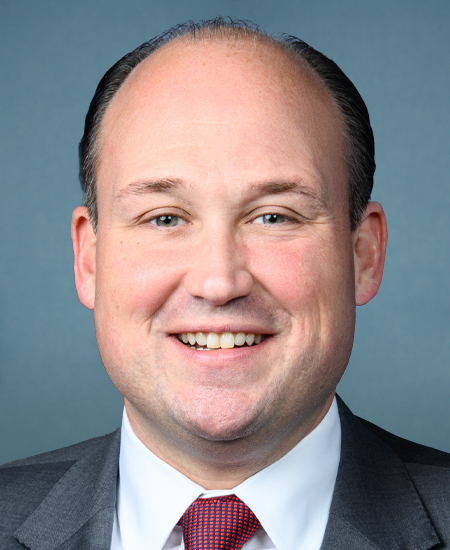
Rep. Nicholas A. Langworthy
Sponsored bills
Maddy summaryThis House resolution (HRES 933) symbolically opposes New York’s Clean Slate Act, which automatically seals certain criminal records (misdemeanors after 3 years, some felonies after 8 years) for eligible individuals. It argues the law would prevent employers from accessing background checks during hiring, though the resolution itself has no legal effect. The resolution urges New York to prioritize crime prevention and public safety over this policy, citing concerns about employer access and recent crime statistics. (Note: This is a non-binding expression of opinion, not a legislative change.)
Maddy summaryThe Defense of Property Rights Act (HR 6758) would allow property owners to seek compensation in either U.S. District Court or the U.S. Court of Federal Claims when government actions - such as regulations or physical takings - deprive them of property rights without "just compensation." It repeals a law that previously forced owners to choose between courts, clarifies that "just compensation" includes full market value and business losses (with interest), and shifts the burden of proof to the government to justify regulatory actions. The bill directly affects individuals and businesses owning real estate, water rights, mineral rights, or other property protected under the Fifth Amendment, particularly when government rules significantly restrict property use or value. It sets a 6-year statute of limitations for claims and requires courts to award attorney fees to successful plaintiffs.
Maddy summaryHR 6734 prohibits the use of federal funds to finalize, implement, or enforce the Bureau of Alcohol, Tobacco, Firearms, and Explosives' (ATF) proposed rule (2022R-17) defining "engaged in the business as a dealer in firearms." This bill directly affects the ATF by blocking funding for this specific regulatory rule, which was proposed in August 2023. The legislation does not create new requirements but prevents federal resources from being used to advance this particular ATF regulation.
Maddy summaryHR 6728, the Save Women’s Sports Act of 2023, requires schools receiving federal funding to designate athletic teams as male, female, or coed based strictly on biological sex at birth. Female-designated teams must be composed exclusively of students biologically female at birth. Schools failing to comply risk losing all federal financial assistance. The bill directly affects public and private schools participating in federally funded sports programs.
Maddy summaryHJRES 88 is a resolution seeking to block a Department of Education rule that would have improved income-driven repayment options for federal student loan borrowers. The rule, published in the Federal Register on July 10, 2023, targeted the William D. Ford Direct Loan Program and the Federal Family Education Loan (FFEL) Program. This resolution uses the Congressional Review Act process to disapprove the rule, preventing it from taking effect and preserving the current repayment structure. If enacted, it would stop the proposed changes to repayment terms without altering existing loan policies.
Maddy summaryThe Innovative FEED Act of 2023 defines and regulates "zootechnical animal food substances" - substances added to animal feed to affect digestion, reduce foodborne pathogens, or alter gut microbiome without providing nutrition. It requires these substances to be approved as food additives by the FDA under existing rules, with specific data on intended effects and mandatory labeling stating "Not for use in the diagnosis, cure, mitigation, treatment, or prevention of disease in animals." The bill excludes drugs, hormones, ionophores, and other substances from this category. This directly affects animal feed manufacturers, the FDA’s regulatory process, and the labeling requirements for these products.
Maddy summaryHR 6573, the Protecting Military Servicemembers' Data Act of 2023, prohibits data brokers from selling, reselling, or sharing military servicemember lists to "covered nations" (as defined in federal law). It directly affects military members by preventing their personal information - contained in specialized lists created for compiling military service details - from being sold to specific foreign governments. The key mechanism bans the commercial transfer of these lists, with enforcement handled by the Federal Trade Commission and state attorneys general. The law takes effect within one year of enactment or when the FTC issues final rules, whichever comes first. This is a concrete policy change targeting data brokers' practices, not a procedural measure.
Maddy summaryHR 4468, the Choice in Automobile Retail Sales Act of 2023, blocks the Environmental Protection Agency (EPA) from finalizing or enforcing a specific proposed rule setting emissions standards for 2027+ light-duty vehicles. It amends the Clean Air Act to prevent future EPA regulations from mandating specific vehicle technologies or limiting the availability of new vehicles based on engine type (e.g., gasoline vs. electric). The bill directly affects EPA rulemaking authority and automakers' compliance with emissions standards, ensuring new vehicle options remain diverse without technology mandates. This is a procedural change to federal emissions regulations, not a direct consumer or industry mandate.
Maddy summaryThis bill corrects a technical error affecting certain 9/11 victims' families who settled claims through the 2014 court case *In re 650 Fifth Avenue*. It ensures these families - designated as "Havlish Settling Judgment Creditors" - receive withheld funds from the Victims of State Sponsored Terrorism Fund and can participate in future payments like other eligible claimants. The bill amends existing law to exempt these families from specific distribution rules and requires released funds to be paid directly to them. It does not create new payments but fixes a bureaucratic oversight preventing these families from accessing funds they were previously owed.