

Maddy summaryThis House resolution (HRES 986) condemns New York Governor Hochul's 2025 budget proposal, which the resolution claims reduces school funding for hundreds of schools while allocating billions for migrant services like housing, health care, and transportation. The resolution has no legal effect and serves only as a symbolic statement by House members urging the governor to reverse the budget changes. It does not alter funding or policy but expresses disapproval of the budget's priorities as described in the resolution.
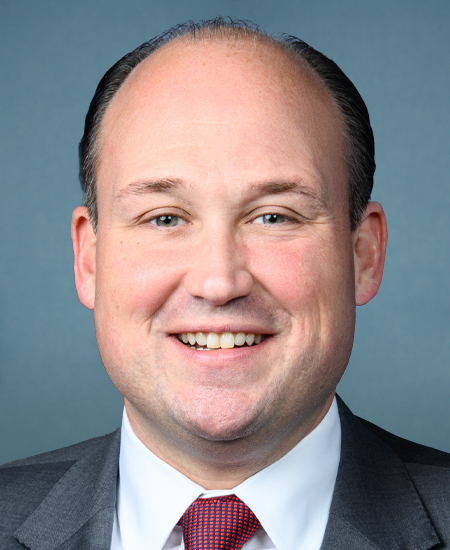
Rep. Nicholas A. Langworthy
Sponsored bills
Maddy summaryHR 7083, the RAZOR Act, prohibits federal agencies from removing or altering barriers (like fences or fences) built by states along the U.S. border to prevent unlawful crossings. It directly affects federal departments and agencies, such as the Department of Homeland Security, by restricting their ability to modify state-constructed border infrastructure. The key provision is a clear ban on any federal action that would change or remove these state-built barriers. This bill makes a specific policy change regarding federal-state border infrastructure authority without altering broader immigration law.
Maddy summaryHR 6914, the Pregnant Students’ Rights Act, requires all colleges and universities receiving federal financial aid to inform students about existing protections under Title IX related to pregnancy. Specifically, it mandates that institutions send annual emails to all students, include this information in student handbooks and orientations, and post it on their websites. The notice must detail campus/community resources for students choosing to carry a pregnancy to term, available accommodations (like modified coursework), and how to file complaints about pregnancy discrimination. This directly affects every enrolled and prospective student at participating higher education institutions by ensuring they receive clear, accessible information about their rights and support options.
Maddy summaryHR 6918 blocks a specific federal regulation that would have restricted funding for pregnancy centers. It prohibits the Health and Human Services Secretary from finalizing, implementing, or enforcing a proposed rule (described in a Federal Register notice) affecting pregnancy center funding. The bill directly affects pregnancy centers - defined as organizations supporting maternal and fetal life and providing services like counseling, pregnancy testing, and material support (e.g., diapers, baby clothes). This is a procedural measure preventing a regulatory change, not creating new programs or altering existing funding.
Maddy summaryThe Death Tax Repeal Act would eliminate the federal estate tax and generation-skipping transfer tax for estates of people who die on or after the bill's enactment date, and for generation-skipping transfers made after that date. It would also establish a new $10 million lifetime gift tax exemption (adjusted annually for inflation) and replace the existing gift tax rate schedule with a revised structure. These changes would primarily affect high-net-worth individuals and their heirs, as the estate tax and gift tax typically apply to large estates or gifts exceeding the new exemption threshold. The bill's provisions would take effect on the date of enactment, with transitional rules for the year the bill is signed into law.
Maddy summaryThe RIFLE Act of 2024 changes how the federal government handles violations by firearms licensees, affecting gun dealers and manufacturers who hold federal licenses. It creates a graduated penalty system where non-willful violations require the Attorney General to work with licensees to fix issues before taking action, while willful violations may lead to license suspension or revocation only after proper notice, hearing, and evidence of continued noncompliance. The bill establishes new procedures for administrative hearings, defines "willful" violations more clearly, and gives licensees 90 days to liquidate inventory after license expiration or revocation, with extensions possible for reasonable cause. These changes aim to create a more transparent process for addressing violations while maintaining public safety standards.
This bill establishes the Commission on National Agricultural Statistics Service (NASS) Modernization to study and provide recommendations on modernizing and streamlining data collection at NASS. (NASS conducts the Census of Agriculture and provides official statistics on agricultural production and other farm sector indicators.) The 11-member commission must include 4 specified members from the Department of Agriculture, 1 member from the Bureau of Labor Statistics, and 6 members appointed by the House and Senate Agriculture Committees. At the request of the commission chair, federal agencies must provide the commission information related to the study. The commission must submit a report to the President and Congress on the results of the study within three years of the bill's enactment. The report must include (1) an inventory of surveys conducted by NASS and their frequency; and (2) recommendations for administrative, regulatory, and legislative changes.
Maddy summaryHR 3925 establishes a federal grant program to fund youth fishing projects in coastal and Great Lakes areas. The bill authorizes $2 million annually (2024-2028) for grants to eligible entities like nonprofits, schools, state/local governments, or Tribal organizations to cover equipment, transportation, licenses, and educational components for youth. Priority is given to projects serving underserved communities, defined as groups facing systemic barriers due to race, disability, poverty, or inequality. Recipients must report annually on grant usage and participant numbers to Congress.
Maddy summaryHR 6922, the Securing Facilities for Mental Health Services Act, amends Section 242(b)(1) of the National Housing Act to adjust the structure of mortgage insurance provisions for hospitals. The bill revises punctuation and renumbers subsections to clarify that hospitals are eligible for mortgage insurance parity under existing law. This procedural change does not alter substantive requirements but ensures consistent application of the provision. The amendment takes effect upon the bill's enactment.
Maddy summaryThis bill designates the U.S. Postal Service facility at 86 Main Street in Haverstraw, New York, as the "Paul Piperato Post Office Building." It updates all official references in federal law, maps, and documents to reflect this new name. The bill does not change postal services, funding, or affect any specific group of people; it solely modifies the facility's official designation. This is a routine naming resolution with no substantive policy provisions.