

Maintaining and Enhancing Hydroelectricity and River Restoration Act This bill establishes a new investment tax credit in the amount of 30% of the basis of any hydropower improvement property. The bill defines hydropower improvement property as property that adds or improves fish passage at a qualified dam; maintains or improves the quality of the water retained or released by a qualified dam; promotes downstream sediment transport and habitat maintenance; upgrades, repairs, or reconstructs a qualified dam to meet safety and security standards; improves public uses of, and access to, public waterways impacted by a qualified dam; removes an obsolete river obstruction; or places into service an approved remote dam. Further, written approval for hydropower improvement property must be obtained from the Federal Energy Regulatory Commission or state or local officials prior to January 1, 2032. The bill also allows an election to claim the investment tax credit for qualified progress expenses for some types of hydropower improvement property in advance of such property being placed into service. Any investment tax credit amount claimed for qualified progress expenses reduces the amount of the investment tax credit that may be claimed once the hydropower improvement property is placed into service. The bill authorizes certain entities, including tax-exempt and governmental entities, to treat the investment tax credit for hydropower improvement property as a payment of tax and receive a refund of any overpayment (also known as elective pay). Finally, the investment tax credit for hydropower improvement property may be transferred (i.e., sold).
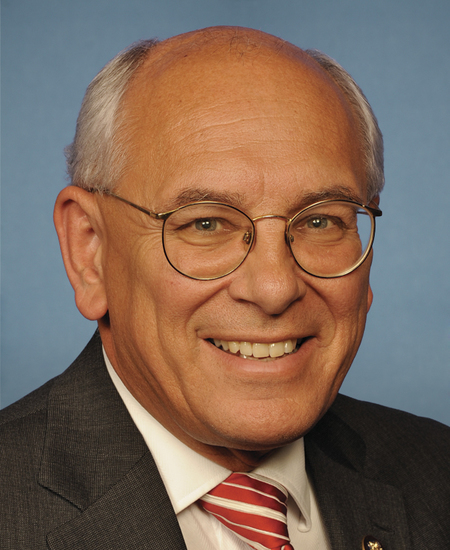
Rep. Paul Tonko
Sponsored bills
Maddy summaryThis bill amends the PACT Act to correct an oversight affecting veterans who served in Guam. It specifically adds the period from August 15, 1958, to July 31, 1980, to the eligibility window for veterans who served in Guam (or its territorial waters) and developed diseases linked to herbicide exposure. The change ensures veterans who served in Guam during that specific timeframe are included in the presumption of service connection for such conditions. This directly impacts veterans who served in Guam between 1958 and 1980, who were previously excluded from the PACT Act's benefits due to the original language. The provision updates the legal text to accurately reflect Guam's historical status during that period.
Maddy summaryHR 2121 establishes a 23-member commission to study the feasibility of creating a National Museum of Irish American History in Washington, D.C. The commission, appointed by the President and congressional leaders, will examine key issues like funding sources (without relying on federal appropriations), potential locations, whether to partner with the Smithsonian, and community engagement strategies. It must submit detailed reports within 24 months, including a fundraising plan and recommendations for potential legislation, but does not authorize the museum's construction or funding. The bill focuses solely on gathering data and recommendations to inform future decisions, with the commission terminating 30 days after final reports are submitted.
Radiation Oncology Case Rate Value Based Program Act of 2025 or the ROCR Value Based Program Act This bill establishes a specialized payment program under Medicare for providers and suppliers of radiation oncology services. Specifically, the Centers for Medicare & Medicaid Services (CMS) must establish a program under which radiation therapy providers (i.e., hospital outpatient departments) and suppliers (i.e., physician group practices and freestanding radiation therapy centers) receive payments for each episode of care provided to individuals with specified types of cancer. An episode of care means the period beginning on the day radiation therapy planning is furnished to the individual and ending (1) for individuals with bone or brain metastases, 30 days later; and (2) for individuals with other cancer types, 90 days later. Participation in the program is mandatory for providers and suppliers that participate in Medicare, unless the provider or supplier is part of a state-based Center for Medicare & Medicaid Innovation model or qualifies for a significant hardship exemption. The CMS must set payment rates for the program based on national payment rates with specified adjustments (e.g., geographic adjustments). Providers and suppliers who provide certain transportation services for individuals under their care may receive an additional payment. Providers and suppliers must be accredited in accordance with certain standards, subject to payment reductions. The Government Accountability Office must report on (1) implementation of the program, and (2) underserved areas that are in need of more or newer radiation therapy resources.
Maddy summaryHR 2151, the Seizure Awareness and Preparedness Act, creates a federal grant program to support schools in managing epilepsy and seizure disorders among students. It directly affects students with these conditions and their schools by requiring funded training for staff on emergency care plans, individualized health plans, and seizure recognition. Key provisions mandate that schools develop written emergency and health care plans with medical providers and parents, train all staff (including bus drivers) every two years on seizure response, and ensure proper communication between schools and families. The bill allocates $34.5 million over five years (2026-2030) to supplement, not replace, existing school funding for these programs.
Homes for Every Local Protector, Educator, and Responder Act of 2025 or the HELPER Act of 2025 This bill establishes a program administered by the Department of Housing and Urban Development to provide mortgage assistance to law enforcement officers, elementary and secondary school teachers, firefighters, or other first responders. Specifically, these individuals may be eligible for a first-time mortgage on a primary family residence with no down payment. Instead, the mortgage is subject to a one-time, up-front mortgage insurance premium.
Maddy summaryHR 2129, the "No Round Up Act," repeals outdated provisions from the 1940 Alien Registration Act within U.S. immigration law. It specifically removes requirements for aliens to register, provide fingerprints, and submit forms under sections 261-266 of the Immigration and Nationality Act. This directly affects immigrants who would have been subject to these mandatory registration procedures under the repealed law. The bill eliminates these specific administrative mandates without creating new requirements or altering broader immigration enforcement mechanisms.
Maddy summaryHRES 216 is a resolution condemning the leadership of the House Republican Conference for allowing a social media post that falsely questioned the immigration status and patriotism of Congressman Adriano Espaillat (Chairman of the Congressional Hispanic Caucus). The resolution specifically names House Speaker Mike Johnson, Majority Leader Steve Scalise, Majority Whip Tom Emmer, and other top Republican leaders as responsible for the post. It characterizes the post as xenophobic and inappropriate, stating such rhetoric violates the standards of conduct expected of members of Congress.
Maddy summaryThe Access to Family Building Act establishes legal rights for individuals seeking fertility care and health care providers offering assisted reproductive technology (ART) services. It prohibits states or localities from imposing unreasonable restrictions on ART access - such as excessive costs, health barriers, or arbitrary limitations - that don’t advance safety or health outcomes. The bill allows patients, providers, or insurers to sue to enforce these rights, while explicitly preserving state health/safety regulations that protect patient safety. It does not override existing state insurance laws or require changes to medical facility safety standards. This bill directly affects patients pursuing fertility treatment, fertility clinics, and health insurers covering ART services.
Maddy summaryThe SAFE Bet Act of 2025 establishes federal standards for sports wagering, requiring states to have approved programs that protect consumers and maintain competition integrity. It prohibits betting on events that have already started, restricts proposition bets on amateur and intercollegiate sports, and bans reload bonuses and VIP programs that could encourage excessive gambling. The bill requires sports wagering operators to conduct affordability checks for large deposits, maintain detailed records of wagers, and report suspicious transactions to state regulators. It also creates a national self-exclusion list for individuals seeking to limit their betting and mandates an annual survey on problem gambling. The law aims to balance the economic benefits of sports betting with consumer protections and public health considerations.