

Maddy summaryHR 296, the "Justice for 9/11 Act," modifies legal procedures for three specific defendants accused of the September 11, 2001, attacks: Khalid Shaikh Mohammad, Walid Muhammad Salih Mubarak Bin ‘Attash, and Mustafa Ahmed Adam al Hawsawi. The bill ensures their plea agreements for the 9/11 attacks cannot block military commission trials under Title 10, makes the death penalty available in those trials, and mandates they remain in solitary confinement at Guantanamo Bay under strict conditions - no contact with foreigners, limited psychological care, and no transfer to the U.S. or other countries. It directly affects only these three individuals and their legal proceedings, not the general public. The bill changes existing legal pathways for their trial and confinement, not broader policy.
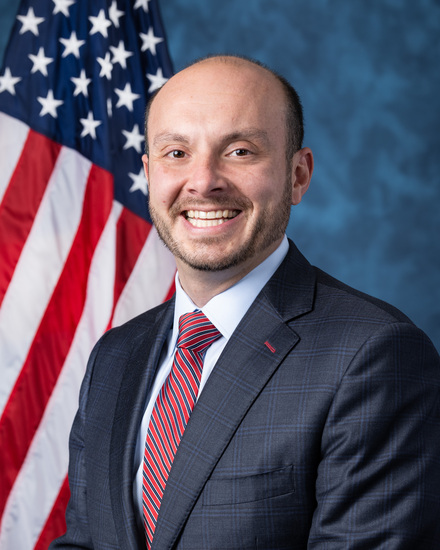
Rep. Andrew R. Garbarino
Sponsored bills
Maddy summaryThis proposed constitutional amendment would limit Members of Congress to serving a maximum of three terms in the House of Representatives or two terms in the Senate. It directly affects current and future members by preventing those who have already served the maximum terms from seeking re-election. Key provisions include counting vacancies filled for more than a year (House) or three years (Senate) as a full term toward the limit, while excluding terms served before ratification from the count. As a constitutional amendment proposal, it requires approval by three-fourths of state legislatures to become law.
Maddy summaryHR 82, the Social Security Fairness Act of 2023, repeals two provisions that reduce Social Security benefits for certain government workers. It eliminates the Government Pension Offset (GPO), which cuts spousal or survivor benefits for people with pensions from jobs not covered by Social Security (like federal or state government roles), and the Windfall Elimination Provision (WEP), which lowers retirement benefits for those with similar pensions. The law takes effect for benefits paid after December 2023, requiring the Social Security Administration to adjust benefit calculations to remove these reductions. This change directly affects public-sector employees who previously had their Social Security benefits reduced due to their government pensions.
Maddy summaryThe AACE Act (HR 5443) changes how appraisers can work on Department of the Interior (DOI) real property transactions. It requires that appraisers only need one state license to value property nationwide for DOI transactions, rather than needing licenses in every state where property is located. The bill mandates the DOI Secretary to submit annual reports tracking appraisal request timelines, workforce staffing, and cases where out-of-state appraisers were used under specific conditions (unavailability, lack of qualifications, or higher cost). It also requires all DOI policies related to appraisals to be published online within 90 days. This directly affects DOI contractors, appraisers working on federal land transactions, and DOI's internal appraisal processes.
Maddy summaryThis bill prohibits federal funding for any state, local, tribal, or private entity operating an injection center that violates the Controlled Substances Act's Crack House Statute (21 U.S.C. 856), which bans drug use in buildings. It directly affects organizations running facilities where illegal drug use occurs, cutting off all federal grants or programs from such entities. The law does not create new drug offenses but withholds existing federal funds from facilities operating in violation of current law. It applies broadly to all federal funding streams, not just specific programs.
Maddy summaryThis bill adds a new deportation ground for non-citizens convicted of assaulting a law enforcement officer under specific circumstances. It makes deportation mandatory if the assault occurred: (1) while the officer was performing duties, (2) because of their duties, or (3) due to their status as an officer. The bill also requires the Department of Homeland Security to annually report the number of deportations under this provision. It directly affects non-citizens convicted of such assaults, not U.S. citizens or law enforcement personnel.
Maddy summaryThe SERVE Our Communities Act (HR 198) creates a federal grant program providing $10 million annually from 2026-2031 to states and local governments that meet specific crime prevention criteria. To qualify, jurisdictions must require courts to consider public safety risks when setting bail or pretrial release (Section 2(b)(1)) and must have implemented one of three actions in the prior year: enacted bail reform, increased law enforcement staffing, or run public safety education programs (Section 2(b)(2)). Grant funds can only be used for evidence-based reentry and violence prevention programs under the Second Chance Act (Section 2(c)). The bill directly affects state and local governments by tying federal funding to specific bail reform and community safety measures, aiming to reduce repeat violent offenses through systemic changes.
Maddy summaryThis bill requires Congress to approve major federal regulations before they take effect. It would mandate that agencies submit detailed reports including cost-benefit analyses, economic impact assessments, and other information to Congress before implementing significant regulations. Major rules - defined as those with at least $100 million annual economic impact or significant effects on costs, competition, or employment - would need a joint resolution of approval from Congress within 70 session days. Nonmajor rules would follow a less stringent disapproval process. The bill aims to increase legislative oversight of the regulatory process, requiring Congress to formally review and approve rules that significantly impact the economy or public regulations.
Maddy summaryThe Let America Vote Act (HR 155) requires states to allow voters not registered with a political party (unaffiliated voters) to vote in primary elections for federal, state, and local offices, but not in more than one party's primary for the same election. It prohibits states from sharing unaffiliated voters' personal information with political parties for fundraising and prevents states from treating such voters as affiliated with a party after they cast a primary ballot. The bill also bans noncitizens from voting in any taxpayer-funded election for public office (including federal, state, and local races) and ties federal election funding to states' certification of compliance. To support implementation, the bill provides transition grants equal to 2% of a state's federal election funds for four years to cover costs related to these changes.
Maddy summaryHR 196, the Family and Small Business Taxpayer Protection Act, rescinds unobligated funds previously allocated to the Internal Revenue Service (IRS) under the Inflation Reduction Act of 2022. Specifically, it directs the cancellation of unused balances from six specific funding categories within the IRS's budget as of the bill's enactment date. This action reduces the IRS's available funding without creating new tax policies or altering taxpayer obligations. The bill is procedural, focusing solely on redirecting existing, unspent government funds rather than changing tax laws or affecting individual taxpayers directly.