

Beaches Environmental Assessment and Coastal Health Act of 2025 or the BEACH Act of 2025 This bill reauthorizes through FY2029 and expands an existing program of the Environmental Protection Agency (EPA) that awards grants to states and local governments to (1) monitor the water quality of coastal recreational waters adjacent to beaches or similar points of access that are used by the public; and (2) notify the public, local governments, and the EPA when the water is not safe for recreational activities. Specifically, the bill expands the program to allow the EPA to award grants for identifying sources of contamination (i.e., pathogens) for coastal recreation waters. It also allows grants to be used for monitoring and notification of contamination in (1) shallow waters upstream from recreational waters, and (2) recreational waters on beaches.
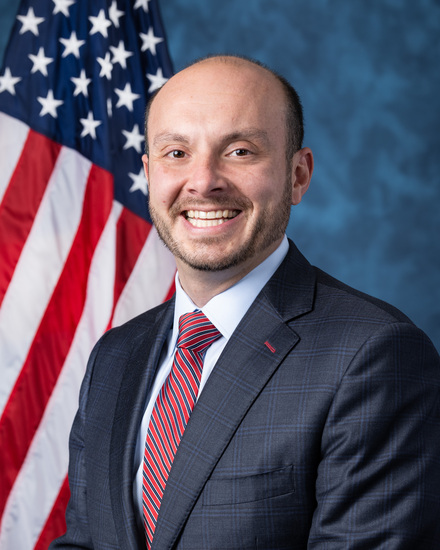
Rep. Andrew R. Garbarino
Sponsored bills
Maddy summaryHR 578, "Sarah’s Law," requires mandatory detention for certain non-citizens (aliens) charged with crimes resulting in death or serious bodily injury. It directly affects non-citizens facing such charges and their victims' families. Key provisions mandate that the Department of Homeland Security detain these individuals immediately and notify victims or their closest living relatives (like parents or spouses) about the alien’s identity, immigration status, custody details, and removal efforts. The bill adds specific categories of non-citizens to the mandatory detention list, including those whose visas were revoked or who are deportable for prior immigration violations. This creates a formal process for victim notification while expanding detention requirements under immigration law.
Maddy summaryHR 542, the No Foreign Gifts Act of 2025, prohibits institutions of higher education receiving federal funds under the Higher Education Act from accepting gifts from specific countries. It bans gifts from China, Russia, North Korea, or Iran, and from any country providing material support to a foreign terrorist organization (as defined by the State Department). Affected institutions must report any such gift offers to the Secretary of Education to maintain eligibility for federal funding. The bill aims to prevent foreign influence over U.S. educational institutions through financial gifts.
Maddy summaryHR 520 allows law enforcement agencies to use Byrne JAG funds for programs specifically targeting the demand behind sex trafficking, such as initiatives aimed at reducing the market for commercial sex acts involving trafficked individuals. This bill amends existing federal funding rules to explicitly authorize these funds for "programs to combat human trafficking (including programs to reduce the demand for trafficked persons)." It directly affects state and local law enforcement agencies that receive Byrne JAG grants by expanding how they can allocate those resources. The key change is creating a dedicated funding category for demand reduction efforts, moving beyond solely supporting victim services or investigations.
Maddy summaryThis bill codifies qualified immunity standards for law enforcement officers under federal law. It specifies that individual officers cannot be held liable in civil suits if they demonstrate either that the constitutional right at issue was not clearly established at the time of the incident, or that a prior court ruling already confirmed the conduct was lawful. Local government agencies also cannot be held liable if the officer is found not liable under these standards and was acting within their job duties. The law applies to all federal, state, tribal, and local officers with arrest powers, including police officers. The changes would take effect 180 days after enactment.
Maddy summaryHR 430, the SALT Deductibility Act, repeals the $10,000 cap on deducting state and local taxes (SALT) for federal income tax filers who itemize deductions. This change directly affects taxpayers in high-tax states who currently face the $10,000 limit on deducting their state income taxes, property taxes, and sales taxes. The bill amends the Internal Revenue Code to remove the specific deduction limit (Section 164(b)(6)), allowing these taxpayers to deduct their full state and local tax payments. The repeal applies to tax returns filed for taxable years beginning after December 31, 2024.
Maddy summaryThe FAIR PREP Act of 2025 prohibits the IRS from preparing individual tax returns or refund claims, except for the existing IRS Free File Program and certain qualified return preparation services. It clarifies that the IRS may still provide fillable tax forms with automated calculations and correct mathematical or clerical errors without violating the prohibition. The bill also bans the IRS from developing or operating new electronic tax preparation services after enactment without explicit new congressional authorization. This directly affects how the IRS delivers tax filing assistance, preserving current free options while restricting new government-run tools.
Sea Turtle Rescue Assistance and Rehabilitation Act of 2025 This bill expands the John H. Prescott Marine Mammal Rescue and Response Grant Program to include separate grants to rescue sea turtles for the next seven years. The grants must be used for the recovery, care, or treatment of sick, injured, or entangled sea turtles; responses to rescue stranded sea turtles; the collection of data and samples from living or dead stranded sea turtles for scientific research or health assessments; facility operating costs that are directly related to activities to assist sea turtles; or development of stranding network capacity where facilities do not exist or are sparse. In addition, the bill establishes the Sea Turtle Rescue, Rehabilitation, and Rapid Response Fund.
Maddy summaryThis bill extends federal funding for Long Island Sound restoration programs through 2029. It reauthorizes two key grant programs: the Long Island Sound Grants (under the Clean Water Act) and the Long Island Sound Stewardship Grants (under the 2006 Stewardship Act), both now covering 2025-2029 instead of 2019-2023. The primary mechanism is simply updating the funding period in existing law, ensuring continued support for state and local projects focused on water quality, habitat restoration, and ecosystem health in the Sound. This directly affects states (Connecticut and New York) and local communities receiving these grants to address pollution and protect the Sound's environment.
Maddy summaryThis resolution (HRES 27) expresses the U.S. House of Representatives' opposition to New York City's proposed Central Business District Tolling Program, which would charge drivers up to $23 per day to enter Manhattan south of 60th Street. It directly affects daily commuters, small businesses (particularly those still recovering from pandemic-related losses), low-income families, and students traveling into Manhattan. The resolution disapproves the program, urges New York State to conduct and publicly share an economic impact report, and recommends halting implementation. The tolling program is intended to generate $1 billion annually for the MTA's capital projects and operations, but critics argue it would impose significant costs on residents and businesses already facing high inflation.