

Maddy summaryHR 1652, the "Rectifying UDAAP Act," refines how the Consumer Financial Protection Bureau (CFPB) enforces rules against "unfair, deceptive, or abusive acts or practices" (UDAAP) in consumer financial products. It requires the CFPB to define "abusive" practices within 180 days, clarifying that such acts must either intentionally interfere with consumer understanding or take unreasonable advantage of consumer confusion or reliance. The bill also mandates a 180-day "cure period" when companies self-identify violations and adds a "good-faith effort" defense for covered entities facing penalties. Additionally, it limits the CFPB’s ability to seek civil penalties for conduct predating the most recent compliance rating. This bill directly affects financial institutions subject to CFPB oversight by altering enforcement procedures and standards.
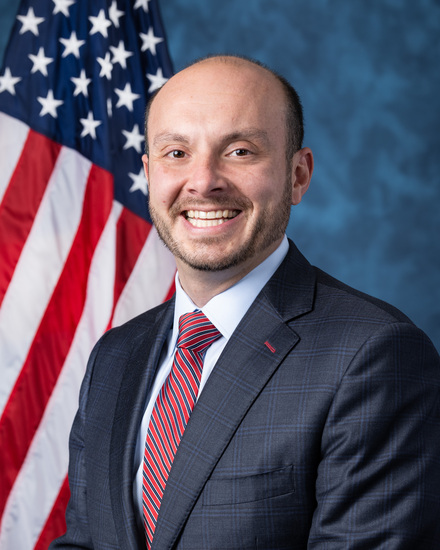
Rep. Andrew R. Garbarino
Sponsored bills
Maddy summaryThis bill awards a Congressional Gold Medal to the 761st Tank Battalion (known as the "Black Panthers"), the first predominantly Black armored unit in World War II's European Theater. It recognizes their combat service from 1944-1946, including key roles in the Battle of the Bulge and breaking the Siegfried Line, despite facing racial prejudice during and after the war. The medal will be displayed at the National Museum of African American History and Culture, with bronze duplicates available for sale to cover costs. The bill commemorates the battalion's 130,000 enemy casualties inflicted, 50% casualty rate, and their 1978 Presidential Unit Citation. It does not create new laws or affect current policies.
Maddy summaryHR 1551, the Protect and Serve Act of 2025, creates a new federal criminal offense for intentionally harming law enforcement officers under specific circumstances. It imposes harsher penalties, including up to 10 years in prison for serious injury or life imprisonment if death occurs, kidnapping is involved, or a firearm is used. The law applies when the crime crosses state lines, involves interstate weapons, occurs on federal property, or targets federal officers. Prosecutions require the Attorney General’s written certification, considering factors like prior state convictions and public safety impact. The bill directly affects law enforcement officers and federal prosecutors by expanding federal jurisdiction for certain violent crimes against them.
Maddy summaryHR 754, the Investing in Main Street Act of 2025, amends the Small Business Investment Act of 1958 to increase the minimum investment requirement for Small Business Investment Companies (SBICs) from 5% to 15% of their capital. This change directly affects SBICs, which are private investment funds licensed to provide capital to small businesses. The key provision requires SBICs to allocate a larger portion of their capital to small business investments, potentially increasing funding availability. The bill makes a concrete policy change to existing SBIC regulations without creating new programs or specifying small business outcomes.
New Era of Preventing End-Stage Kidney Disease Act This bill establishes regional centers of excellence, postgraduate fellowships, and training for health professionals relating to the diagnosis and treatment of rare kidney disease. It also requires the Department of Health and Human Services (HHS) to conduct various studies on rare kidney disease. Specifically, it authorizes the National Institute of Diabetes and Digestive and Kidney Diseases to award funding to public and private nonprofit entities for establishing regional centers of excellence that will increase public awareness, conduct research, and develop resources for diagnosing and treating rare kidney diseases. A center may receive such funding for up to five years, unless extended by the institute. The bill also requires health professions schools receiving a grant from the Health Resources and Services Administration (HRSA) Centers of Excellence program to award fellowships for training on preventing, diagnosing, and treating rare kidney disease in disproportionately impacted populations. Also, the bill expands the priorities of HRSA’s Primary Care Training and Enhancement program to include training for health care workers to care for individuals with kidney disease. Additionally, HHS must conduct several studies and report to Congress on topics such as treating rare kidney disease in disproportionately affected populations, eliminating the need for dialysis or kidney transplants, and increasing public awareness of rare kidney disease.
Promoting Responsible and Effective Virtual Experiences through Novel Technology to Deliver Improved Access and Better Engagement with Tested and Evidence-based Strategies Act or the PREVENT DIABETES Act This bill allows health care entities to provide virtual services under the Medicare Diabetes Prevention Program for an additional three years. The Medicare Diabetes Prevention Program offers Medicare beneficiaries who are at risk of developing Type 2 diabetes specialized training and education regarding diet, exercise, and other behavioral changes. The Centers for Medicare & Medicaid Services issued temporary authorization for entities participating in the program to provide these services virtually until December 31, 2027. The bill extends the authorization for virtual services until December 31, 2030.
Maddy summaryHR 1546 authorizes the minting of commemorative coins to celebrate the 200th anniversary of the Erie Canal. It specifies three coin types ($5 gold, $1 silver, and half-dollar) to be issued in 2026, with surcharges ($35, $10, and $5 per coin, respectively) directed to the Erie Canalway Heritage Fund. These surcharges fund preservation, recreation, and educational programs for the Erie Canalway National Heritage Corridor. The bill does not impose new taxes or regulations but creates a dedicated funding stream for canal corridor maintenance and history initiatives.
Maddy summaryThe American Victims of Terrorism Compensation Act amends the Justice for United States Victims of State Sponsored Terrorism Act to increase funding for victims of terrorism. It directs the transfer of approximately $1.5 billion from the Binance Holdings Limited case, plus 50% of excess unobligated balances from Department of Justice and Treasury forfeiture funds, into the Victims Fund. The bill establishes deadlines for agencies to deposit funds (within 30 days of receipt or 15 days after enactment), requires annual reports on fund activity, and authorizes annual payments to eligible claimants starting in 2026. This legislation directly affects terrorism victims who receive compensation from the fund and federal agencies that handle forfeited assets from terrorism-related cases.
More Options to Develop and Enhance Remote Nutrition in WIC Act of 2025 or the MODERN WIC Act of 2025 This bill permanently allows individuals to remotely certify their eligibility for, and receive benefits through, the Special Supplemental Nutrition Program for Women, Infants, and Children (WIC). Specifically, the bill requires that a state agency allow an individual seeking a WIC certification, recertification, or a nutritional risk evaluation to do so by phone or through video teleconference, in addition to the in-person option. A state agency has 90 days to collect data for a nutritional risk evaluation for a remotely certified individual. Further, a state agency may consider an applicant who meets the income eligibility standards to be temporarily eligible on an interim basis to participate in the program and may certify the individual for immediate participation without waiting for a nutritional risk evaluation. The bill also allows states to provide benefits on WIC electronic benefit transfer cards through mail or remote issuance instead of requiring participants to pick up or reload benefits in person at a WIC office. Further, the Department of Agriculture must report to Congress about the use of remote technologies and other digital tools in the WIC program. Currently, individuals are generally required to be physically present to certify their WIC eligibility and receive benefits, with exceptions. The Food and Nutrition Service has temporarily waived these requirements and allowed remote certification and benefits using authorities that were provided by laws that were enacted to address COVID-19.
Maddy summaryHR 1505, the Public Safety Employer-Employee Cooperation Act, establishes federal standards for collective bargaining rights for public safety officers (including police, firefighters, and emergency medical personnel) in states that do not meet minimum requirements. The Federal Labor Relations Authority (FLRA) will determine after 180 days whether a state law "substantially provides" key rights, such as forming unions, negotiating wages/hours, and using binding arbitration to resolve disputes. If a state fails this assessment, federal bargaining rules apply within two years, but existing state laws with stronger protections remain valid. The bill explicitly respects state laws that exceed its standards and exempts small jurisdictions (under 5,000 population or 25 full-time employees).