

Maddy summaryHR 6753, the Campus Housing Affordability Act, removes a prohibition that previously barred federal housing assistance from being provided to students. It directly affects eligible students enrolled in higher education institutions who live in campus housing and qualify for tenant-based housing assistance under the U.S. Housing Act of 1937. The bill adds a new provision (Section 8(o)(23)) allowing the Secretary to waive income requirements for these students, ensuring federal housing aid does not count as income when determining eligibility for other federal financial aid, work-study programs, service allowances, or child support obligations. This change streamlines access to housing support without reducing other student financial benefits.
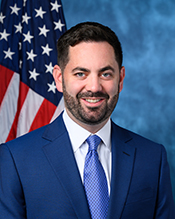
Rep. Michael Lawler
Sponsored bills
Maddy summaryHR 3962, the ESTUARIES Act, extends a deadline within the National Estuary Program. It amends Section 320(i)(1) of the Federal Water Pollution Control Act by changing the year "2026" to "2031" in a requirement related to program management. This change directly affects the National Estuary Program, which oversees coastal water quality protection and restoration efforts. The bill makes a specific procedural adjustment to the program's timeline without altering its core policies or funding.
Maddy summaryHR 6709 establishes a dedicated Office of Fusion within the Department of Energy to accelerate the development and commercial deployment of fusion energy technology. The bill consolidates existing fusion programs under this new office, requires a detailed commercial deployment roadmap for Congress within one year, and mandates coordination with private industry, national labs, and other agencies to overcome barriers. It directly affects the Department of Energy, the U.S. fusion industry, and regulators by streamlining efforts to meet a goal of starting construction on multiple private fusion power plants by 2028. Key mechanisms include centralizing fusion research, managing public-private partnerships, and ensuring supply chain development to advance fusion energy as a clean power source.
Maddy summaryHR 6718, the Professional Student Degree Act, amends the Higher Education Act to clarify the definition of a "professional degree" for federal education purposes. It replaces the previous definition with a new section listing specific degrees that meet the criteria, including Pharmacy (Pharm.D.), Law (J.D.), Medicine (M.D.), Dentistry (D.D.S.), Veterinary Medicine (D.V.M.), and others like Nursing (D.N.P.) and Business Administration (M.B.A.). This definition requires degrees to signify both completion of academic requirements for professional practice (often requiring licensure) and skills beyond a bachelor's level. The bill directly affects students pursuing these designated degrees by formally recognizing them under federal education law, without creating new programs or changing funding.
Maddy summaryThis bill makes the Federal Energy Regulatory Commission (FERC) the sole lead agency for environmental reviews (NEPA) of natural gas pipeline projects, replacing the current multi-agency process. It requires FERC to coordinate early with other federal, state, or tribal agencies that issue permits, sets strict 90-day deadlines for final approvals after FERC's review, and mandates that other agencies defer to FERC's environmental assessment scope. The bill also streamlines water quality reviews by shifting certification requirements to FERC coordination and requires public tracking of all agency actions and deadlines through FERC's website. Pipeline applicants, FERC, and all agencies involved in permitting (like environmental or water quality authorities) are directly affected by these coordination and timeline requirements.
Maddy summaryThe Protect America's Workforce Act cancels an executive order issued on March 27, 2025, that excluded certain groups from federal labor-management relations programs, making it legally unenforceable. It also ensures that all collective bargaining agreements between federal agencies and labor unions, which were active as of March 26, 2025, remain fully effective until their agreed terms expire. This directly affects federal agencies, labor unions, and the employees covered by these agreements. The bill prevents federal funds from being used to implement the canceled executive order while preserving existing labor agreements.
Maddy summaryThe HEAT Act of 2025 updates federal disaster funding rules to include extreme heat as a qualifying event for transportation infrastructure repairs, addressing a gap where heat-related damage was previously excluded. It requires the Transportation Secretary to conduct a study on heat event costs and damage tracking methods, and to issue a best management practices report for highway and bridge safety. The bill directly affects state transportation departments, public transit systems, and freight rail operators by enabling them to seek federal relief for heat-induced infrastructure failures like cracked bridges or jammed drawbridges. Key provisions expand eligibility under Section 125 of Title 23, U.S. Code, and mandate new reporting to help states manage heat-related risks to critical transportation networks.
Maddy summaryThis bill (HR 6694) designates the U.S. Postal Service facility at 130 North Winton Road in Rochester, New York, as the "Lieutenant James N. Lyons Post Office." It updates all official federal references to the location to reflect this new name. The change is purely ceremonial and affects how the post office is identified in government documents and records.
Miracle on Ice Congressional Gold Medal Act This act provides for the award of Congressional Gold Medals to the members of the 1980 U.S. Olympic men's ice hockey team in recognition of the team's achievement at the 1980 Winter Olympic Games.
Maddy summaryHR 6670 creates a new nonimmigrant visa category ("family purpose visas") allowing relatives of U.S. citizens or lawful permanent residents to visit temporarily for family events. It requires applicants to provide proof of financial support, short-term medical insurance covering U.S. travel, and a sworn statement to depart within 90 days per calendar year. The bill restricts petitioners from previously sponsoring relatives who overstayed their visas, and explicitly states that these visits do not count toward permanent residency eligibility. This directly affects extended family members (including grandparents, siblings, and nieces/nephews) seeking short-term U.S. visits for social or major life events.