

Maddy summaryHR 6857 requires all colleges and universities receiving federal funds to prominently display a link to the Department of Education’s civil rights complaint portal on their website homepage and to post annual Title VI awareness materials in high-traffic campus locations (like student centers) and on campus websites. The bill mandates these institutions to annually report discrimination complaints (based on race, color, or national origin) to the Department of Education’s Inspector General. It also requires the Department to provide monthly congressional briefings on complaint volumes and resolution timelines, while the Inspector General must audit institutions with the highest complaint rates and study why some complaints go to schools versus the federal office. This directly affects every federally funded higher education institution in the U.S. by changing how they handle and report civil rights complaints.
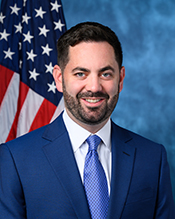
Rep. Michael Lawler
Sponsored bills
Maddy summaryThe "Peace Through Strength Against Russia Act of 2025" proposes to significantly expand and strengthen U.S. sanctions against the Russian Federation and its supporters. The bill mandates blocking property and restricting visas for Russian government officials, state-owned financial institutions, and entities supporting Russia's defense industrial base or war efforts in Ukraine, including those involved in kidnapping Ukrainian children. Key provisions prohibit U.S
Maddy summaryHR 6902, the Youth Substance Use Prevention and Awareness Act, expands a federal grant program to fund research-based public service announcement (PSA) campaigns targeting youth substance use prevention. It authorizes grants for campaigns using age-appropriate materials across TV, radio, print, outdoor, and digital media, including youth-submitted PSA contests. The bill requires the Attorney General to publish annual reports detailing each campaign's research basis, regional messaging, alignment with other prevention efforts, and evaluation of its effectiveness in reducing youth drug use. This directly affects federal grant recipients and aims to standardize and measure the impact of youth-focused prevention messaging.
Maddy summaryHR 6855 reauthorizes the White House Conference on Small Business, updating the 1995 law to require the President to hold the conference between December 2025 and December 2026. It directly affects small business owners (as delegates), state governors, and congressional members by changing delegate selection rules (including 100 presidential appointees) and mandating an electronic system for ongoing collaboration among delegates. Key provisions include revising the conference's purpose to prioritize small business impact on the national economy, requiring a 4-year post-conference communication system for delegates, and funding the event solely through collected fees (not new appropriations). The bill also clarifies that SBA cosponsorships with entities do not constitute endorsements.
Maddy summaryAlyssa's Act of 2025 expands the Federal Clearinghouse on School Safety Evidence-based Practices to collect and analyze school safety data, including information on school shootings and emergency response effectiveness. The bill creates a National School Safety Data Center to track incidents, injuries, and response methods, while requiring emergency response maps for schools to meet specific digital standards for accessibility and real-time updates. It also establishes a program to develop and test panic alarm technology for schools, and mandates annual reports on school safety master plans developed by states and local educational agencies. The legislation requires coordination with the U.S. Secret Service's National Threat Assessment Center to align school safety practices with evidence-based approaches.
Maddy summaryHR 6826, the Critical Minerals Independence Act, expands a federal tax credit for advanced manufacturing to include "black mass" - the material recovered from processing spent lithium-ion batteries. The bill defines black mass as the intermediate solid material containing metals like lithium, nickel, and cobalt, before it is purified into individual components. This change directly affects battery recycling companies and manufacturers who process spent batteries, allowing them to claim the tax credit for components made from this material. The provision applies to components produced and sold after December 31, 2024.
Maddy summaryThis bill requires TRICARE to cover fertility-related care, including in vitro fertilization (IVF), for active-duty military members and their dependents starting October 2027. It mandates up to three IVF cycles per year with single embryo transfers by default (unless medically necessary), eliminates cost-sharing barriers after an infertility diagnosis, and prohibits coverage for genetic screening, cloning, or artificial wombs. The law defines "infertility" based on medical guidelines and specifies covered treatments like egg/sperm retrieval, embryo preservation, and fertility medications. It does not apply to former service members or their dependents.
Maddy summaryThe All American Metal Act (HR 6827) expands a federal tax credit for advanced manufacturing to include copper produced from recycled materials. To qualify, the copper must be purified to at least 99.9% purity by mass and made from recycled sources. This change applies to components sold in taxable years beginning after December 31, 2024. The bill directly affects manufacturers of copper products who use recycled materials meeting these standards, providing them a new pathway to claim the tax credit.
Maddy summaryThis bill establishes a digital system for TRICARE members to electronically file and track complaints about access to care at military medical facilities. It requires the Defense Department to create a system where beneficiaries can submit complaints online, view their status in real time, and have complaints automatically aggregated quarterly for review. The system mandates annual reports to Congress comparing complaint types (e.g., specialty vs. primary care, pediatric vs. non-pediatric, administrative hurdles) and detailing facility-level actions taken to address issues. The goal is to improve transparency and accountability in military healthcare access.
Essential Caregivers Act of 2025 This bill prohibits certain health care facilities from limiting the access of essential caregivers to residents of those facilities, including during designated emergency periods. Specifically, the bill generally prohibits Medicare skilled nursing facilities, Medicaid nursing facilities, Medicaid intermediate care facilities, and associated inpatient rehabilitation facilities from restricting the access of essential caregivers to residents of the facilities, including during emergency periods in which visitation rights are otherwise restricted. During emergency periods, facilities may restrict access for an initial period of up to seven days and for one additional maximum seven-day period (if the additional period is approved by the state health department). Facilities may restrict access for a total of 7 days (or 14 days with the approval of the state health department) during an emergency period. Essential caregivers must agree to comply with any safety protocols set by the facility, which may be no more stringent for caregivers compared to those for staff. Caregivers who fail to comply with these requirements may be denied access, subject to an appeals process.