

Maddy summaryThe Housing for Heroes Act of 2026 expands eligibility for the Good Neighbor Next Door Sales Program to include members of the Armed Forces, firefighters, and law enforcement officers. Under this bill, these eligible individuals can purchase single-unit properties through the program even if the properties are not located in designated revitalization areas. The Department of Housing and Urban Development will update its regulations to implement these expanded eligibility rules. This change allows first responders and military personnel to access discounted housing opportunities in a broader range of locations.
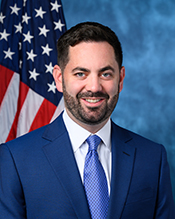
Rep. Michael Lawler
Sponsored bills
Maddy summaryThis bill amends the process for the Financial Stability Oversight Council (FSOC) when considering actions against U.S. nonbank financial companies. It requires the FSOC to first determine that alternative solutions - such as new regulatory standards, agency actions, or a company's written plan - are not possible or insufficient to protect financial stability before voting on a formal determination. The change directly affects the FSOC and large nonbank financial companies that could face regulatory scrutiny. The key provision adds a new step to ensure the Council explores other options before taking significant action. (Procedural bill; summary limited to 3 sentences as specified.)
Maddy summaryHR 3190, the BRAVE Burma Act, extends sanctions authority for Burma by 10 years and requires annual reports on whether specific Burmese entities - like state-owned enterprises, Myanma Economic Bank, and jet fuel sector operators - meet sanctions criteria. It also limits Burma's potential increase in International Monetary Fund shareholding if the military-led State Administration Council remains in power. The bill creates a U.S. Special Envoy for Burma to coordinate all diplomatic and sanctions policy, develop multilateral sanctions strategies, and work with international partners on issues like arms embargoes and support for Burmese civil society. These provisions directly affect Burmese military entities, Burma's IMF representation, and U.S. diplomatic efforts toward Burma.
Maddy summaryThe PROTECT Taiwan Act requires U.S. agencies to bar representatives of China from attending meetings of six major international financial organizations (including the Bank for International Settlements and Financial Stability Board) if the President declares that China's actions threaten Taiwan's security or U.S. interests. It directs the Treasury, Federal Reserve, and SEC to implement this exclusion policy. The law expires automatically after five years unless the President notifies Congress that continuing it serves U.S. national interests. This is a procedural policy change affecting U.S. participation in international financial forums, not a direct economic or security measure.
Maddy summaryHRES 1050 is a symbolic resolution designating September 19, 2026, as "Black Autism Acceptance and Awareness Day" to highlight racial disparities in autism care. It directly addresses Black autistic individuals and their families, who face higher rates of misdiagnosis, delayed treatment, underrepresentation in research, and healthcare dismissal. The resolution encourages nationwide awareness-raising, cultural competence in care, and advocacy for equitable resources across all life stages. It does not create new laws or funding but formally recognizes systemic inequities and calls for inclusion. The resolution focuses on acknowledging these disparities rather than prescribing policy changes.
Maddy summaryThe SECURES Act of 2026 requires the U.S. Department of Transportation to propose new federal safety standards for seat belts on all new school buses within 180 days of the bill becoming law. The proposed rule must consider evidence showing lap/shoulder belts provide the highest passenger safety benefit, including findings from the National Transportation Safety Board and past guidance from the National Highway Traffic Safety Administration. It specifically directs the rulemaking to evaluate seat belt detection systems and existing state requirements for school bus seat belts. This bill affects all manufacturers of new school buses and school districts purchasing new vehicles, setting the stage for potential future federal seat belt mandates.
Maddy summaryThis bill amends disaster preparedness funding rules to better support companion animals during emergencies. It adds a new 90% federal funding option for specific pet-related preparedness activities, alongside the existing 50% option. States, localities, and tribes receiving disaster grants can now use funds for items like collapsible crates, mobile pet trailers, veterinary supplies, emergency generators, and animal response team training. The law directly affects government entities managing disaster response by expanding allowable uses of existing grant money for pet safety.
Maddy summaryHR 7429, "Miranda’s Law," creates a national system requiring automatic notifications to employers when school bus drivers (or other commercial drivers with school bus endorsements) face license issues like moving violations, suspensions, or accidents. It directly affects school districts, schools, and private transportation companies that provide student transportation, mandating their participation in the notification service. The law replaces annual employer checks of driver records by requiring states to implement the service within two years, while also ensuring drivers receive simultaneous copies of these notifications. This system aims to improve safety by ensuring employers are promptly informed of driver license changes affecting school bus operations.
Maddy summaryThe No Tax Dollars for Terrorists Act requires the U.S. State Department to identify foreign countries and organizations receiving U.S. foreign aid that have provided financial or material support to the Taliban, including the amounts of aid they receive and the support they give to the Taliban. It mandates a strategy to use U.S. aid to discourage such support, with initial and follow-up reports to Congress on the strategy and its implementation. The bill also demands detailed reports on U.S. cash assistance programs in Afghanistan and the Afghan Fund, explaining how funds are transferred (including traditional money transfer systems) and how safeguards prevent Taliban access.
Maddy summaryHRES 1044 is a non-binding resolution expressing the House of Representatives' support for designating 2026 as the "National Year of the Volunteer." It aims to honor volunteers who contribute to community safety, health, education, and civic life, while encouraging nationwide efforts to boost volunteerism ahead of the U.S. 250th anniversary. The resolution does not create new laws or funding but serves as a symbolic gesture to highlight the value of volunteer service and inspire greater community engagement.