

Maddy summaryThis bill requires group health plans and health insurers that cover obstetrical services to also cover infertility and iatrogenic infertility treatments, including procedures like in vitro fertilization and egg freezing. It defines infertility as the inability to achieve pregnancy after 12 months of unprotected intercourse or after standard medical treatment, and iatrogenic infertility as fertility damage caused by medical procedures such as chemotherapy or radiation therapy. The legislation establishes coverage standards that cannot be more restrictive than those applied to other medical benefits, prohibits penalties against providers for offering these services, and requires annual compliance reporting to the federal government.
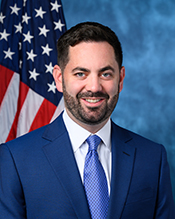
Rep. Michael Lawler
Sponsored bills
Maddy summaryThis bill requires large AI companies and organizations to disclose detailed information about their foundation models, including training data sources, model performance, and potential risks, before and during the model's use. The Federal Trade Commission will create specific rules outlining what information must be submitted to the agency and made publicly available, with exemptions for fully open-source models and special provisions for small businesses. Covered entities are defined as AI providers with over 10 million monthly users, significant computing power usage, or models that could pose security or safety risks, while the FTC will enforce compliance as unfair business practices.
Maddy summaryHRES 971 is a non-binding resolution condemning China's economic and military actions against Japan following Japanese officials' comments about Taiwan. It specifically addresses China's travel advisory (causing $1.2 billion in tourism losses), a ban on Japanese seafood imports, and military drills near Japanese territory. The resolution reaffirms U.S. support for the U.S.-Japan alliance under their mutual security treaty and calls on China to cease coercion. It emphasizes U.S. commitment to upholding a "free and open Indo-Pacific" based on international law. This resolution directly affects Japan's economy and security, with no new legal obligations but serving as a formal U.S. policy statement.
Maddy summaryHR 7669, the "Rejecting the Erasure of Afghan Women and Girls Act," requires the U.S. Secretary of State to submit a report within 180 days of enactment. The report must detail Taliban-imposed restrictions on Afghan women and girls since August 2021 and determine whether these restrictions constitute crimes against humanity, torture under the Convention against Torture, or gross human rights violations under U.S. law. This bill directly addresses the situation of Afghan women and girls under Taliban rule by mandating a formal U.S. government assessment of those restrictions. The legislation focuses on establishing a factual basis for potential policy responses through this required report.
Maddy summaryHR 7675, the Securing Partner Supply Chains Act, establishes a 3-year U.S. initiative to help allied and partner countries strengthen their screening of foreign investments for national security risks. The initiative, led by the Secretary of State, will provide technical assistance, training, and advisory services to partner countries - defined as those with U.S. trade or defense agreements - to improve their ability to assess risks to critical infrastructure, sensitive technology, and supply chains. It requires annual reports to Congress detailing the assistance provided, partner countries' progress, and emerging security risks. The bill does not directly affect U.S. citizens or businesses but focuses on building international capacity to address shared security concerns through cooperation.
Maddy summaryHR 7654, the Advance Global Health Act, requires the Bureau of Global Health Security and Diplomacy at the State Department to consolidate all annual reports to Congress into a single, machine-searchable document submitted by September 30 each year. This applies to most reports, with exceptions for those that cannot be consolidated without losing required information (noted in the annual report) or for quarterly reports and pre-funding expenditure reports. The bill streamlines congressional reporting but does not alter health programs or funding, focusing solely on the format and timing of existing reporting requirements.
Maddy summaryThe GUIDE Act authorizes the State Department to create a program hiring, training, and retaining specialized disaster response professionals for its Bureau of Disaster and Humanitarian Response. This directly affects the Bureau by requiring it to build staff expertise in key areas like procurement, logistics, public health, engineering, and finance. The bill mandates that these professionals must possess specific skills to effectively plan and manage international disaster operations. It focuses on addressing staffing gaps through targeted recruitment rather than changing broader disaster policy. The program aims to strengthen the Bureau’s capacity for complex humanitarian missions.
Maddy summaryHR 7653, the Biodefense Diplomacy Enhancement Act, requires the U.S. Secretary of State to develop two new strategies to strengthen international cooperation on biodefense, biosecurity, and biotechnology. The bill mandates a NATO Biodefense Strategy to improve alliance coordination on biological threat response and a broader International Cooperation Strategy to enhance partnerships with U.S. allies and major non-NATO partners on export controls for dual-use biotech items and adherence to safety standards. These strategies must identify gaps in current efforts, recommend improvements, and assess coordination with U.S. agencies, with reports due to Congress within 270 days of enactment. The bill directly affects U.S. diplomatic engagement with NATO and allied nations on biological threat preparedness, focusing on policy development, capabilities, and enforcement of the Biological Weapons Convention.
Maddy summaryHR 7641, the Transparency in Foreign Assistance Act, requires the State Department to implement a one-year pilot program for specific foreign aid programs under the Bureau of African Affairs and Counterterrorism. It mandates that officials submit detailed reports to Congress - including program names, target countries, funding amounts, implementation methods, objectives, and performance metrics - beyond existing reporting requirements. This applies only to new or expanded programs needing additional funds beyond current allocations. The bill aims to increase congressional oversight by standardizing transparency for these specific aid initiatives during the pilot period.
Maddy summaryHR 7633, the American Assistance Visibility Act, requires the U.S. flag to be distinctly displayed as the sole branding element on all U.S. foreign assistance provided after enactment, including physical items like buildings and equipment, aid supplies, and digital content such as social media posts. The bill directly affects U.S. foreign aid programs and their implementation by requiring the flag to be prominently shown, with limited exceptions for international agreements requiring co-branding or safety concerns. Key provisions mandate the Secretary of State to issue regulations on flag size, color, and placement, while allowing case-by-case waivers for safety or security in high-risk areas. The law defines "foreign assistance" broadly to cover all tangible and digital materials distributed under U.S. foreign aid programs.