

Save Americans from the Fentanyl Emergency Act or the SAFE Act This bill permanently places fentanyl-related substances as a class into schedule I of the Controlled Substances Act. A schedule I controlled substance is a drug, substance, or chemical that has a high potential for abuse; has no currently accepted medical value; and is subject to regulatory controls and administrative, civil, and criminal penalties under the Controlled Substances Act. The temporary scheduling order issued by the Drug Enforcement Administration to place fentanyl-related substances into schedule I of the Controlled Substances Act expires on December 31, 2024. It limits the application of mandatory minimum penalties for certain offenses involving fentanyl-related substances, establishes a process to deschedule or remove certain fentanyl-related substances that have a low potential for abuse, and allows a federal court to vacate or reduce the sentence for convictions of offenses involving a fentanyl-related substance that is descheduled or moved to a schedule other than schedule I or II. The bill establishes a new, alternative registration process for schedule I research. It also makes other changes to registration requirements for conducting research with controlled substances, including permitting a single registration for related research sites in certain circumstances, waiving the requirement for a new inspection in certain situations, and allowing a registered researcher to perform certain manufacturing activities with small quantities of a substance without obtaining a manufacturing registration. Finally, the bill requires the Government Accountability Office to analyze the implementation and impact of permanently placing fentanyl-related substances into schedule I of the Controlled Substances Act.
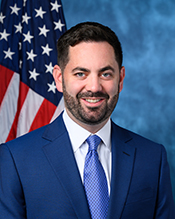
Rep. Michael Lawler
Sponsored bills
Maddy summaryHR 558 amends the Defense Production Act to prohibit China, Iran, North Korea, and Russia (and entities they control) from purchasing or leasing property within 10 miles of designated sensitive sites. These sites include U.S. military bases, ports, government facilities, and other locations where foreign access could threaten national security through intelligence collection or surveillance. The bill requires the Committee to notify Congress of any violations and applies to transactions occurring after its enactment. It directly affects foreign entities from the listed countries seeking real estate near critical U.S. infrastructure.
Maddy summaryHR 804, the Chinese CBDC Prohibition Act of 2023, prohibits U.S. money services businesses (such as banks and payment processors) from handling transactions involving China's central bank digital currency (CBDC). The bill directly affects financial institutions operating in the United States by banning any direct or indirect involvement with the People’s Republic of China’s digital currency. Its key mechanism, added to Title 31 of the U.S. Code, explicitly forbids these businesses from engaging in any transaction related to China’s CBDC. The legislation aims to limit U.S. financial system involvement with a digital currency viewed by its proponents as enabling Chinese government surveillance and control over citizens.
Maddy summaryThis bill directs U.S. representatives at international financial institutions (like the World Bank) to use American voting influence to support financing for nuclear energy projects globally. It requires the Treasury Secretary to instruct U.S. executives at these institutions to promote nuclear energy funding, consistent with U.S. national security interests. The law includes a 10-year sunset provision, ending all authority after 2033, and allows Treasury to waive the requirement for specific projects if deemed in the national interest. It does not directly fund projects but shapes U.S. influence over how global banks allocate resources for nuclear energy.
Maddy summaryHR 755, the Protecting Sibling Relationships in Foster Care Act, creates a $10 million, 5-year competitive grant program to help states develop specialized foster care programs for specific sibling groups. The bill targets groups of three or more siblings, those with wide age gaps, or siblings with complex needs (such as serious mental health challenges, disabilities, or life-threatening illnesses). Eligible entities like state child welfare agencies can apply for grants to fund evidence-based programs designed to place these sibling groups together, requiring them to report on placement outcomes. The grants specifically aim to increase joint placements by addressing challenges in finding suitable foster homes for these groups.
Maddy summaryHR 770, the ESP Family Leave Act, amends the Family and Medical Leave Act (FMLA) to create specific eligibility rules for education support professionals and school support staff in public schools and public higher education institutions. It changes the standard FMLA work-hour requirement (1,250 hours) to a new threshold: these workers qualify if they've worked at least 60% of their expected monthly hours for the previous school year. Employers must maintain records of each employee's expected monthly hours, and the bill defines "education support professionals" to include roles like paraeducators, secretaries, custodians, food service workers, security staff, and health support staff. The bill directly affects these support staff members, making it easier for them to qualify for FMLA leave under the revised hours calculation.
Maddy summaryThis bill creates a new federal crime for assaulting law enforcement officers causing serious injury or death, with penalties up to 10 years in prison for serious injury and up to life for aggravated cases involving death, kidnapping, or attempted killing. It applies when offenses involve interstate travel, commerce, or target officers engaged in law enforcement duties. Federal prosecution requires Attorney General certification that state authorities cannot or will not handle the case, or that federal action is necessary for public safety. The law covers all law enforcement officers (state, local, and federal) who enforce criminal laws or detain individuals.
Maddy summaryHR 795 amends the 1968 Crime Control Act to require federal funding for training first responders on using containment devices that prevent secondary exposure to fentanyl and other dangerous substances. It directs the Department of Justice to provide both training resources and purchase these devices for emergency personnel. The law specifically targets risks faced when handling drugs like fentanyl during arrests or medical emergencies. First responders, including police and EMTs, would directly benefit from this provision. The bill mandates these measures through existing federal programs without creating new standalone requirements.
Maddy summaryThe Protecting School Milk Choices Act of 2023 requires schools participating in the National School Lunch Program to offer both flavored and unflavored milk to students. Schools may also choose to provide lactose-free milk as an optional offering. This bill directly affects all public and private schools receiving federal funding for school meals, which serves millions of students nationwide. The amendment changes existing milk requirements under the National School Lunch Act to expand student choices while maintaining mandatory options.
Maddy summaryThis bill increases labor representation requirements on state and local workforce development boards under the Workforce Innovation and Opportunity Act (WIOA). It raises the minimum percentage of labor representatives from 20% to 30% for both state boards (Section 101) and local boards (Section 107). The bill also expands the definition of "labor organization" to include groups representing federal employees, railroad workers, and agricultural laborers - previously excluded under the National Labor Relations Act. These changes directly affect how workforce boards are structured and which worker groups can participate in workforce planning.