

Maddy summaryHR 1680, the Black Sea Security Act of 2023, mandates the U.S. government to develop a coordinated strategy for security and economic engagement with Black Sea states (Turkey, Romania, Bulgaria, Moldova, Ukraine, and Georgia). The bill requires an interagency strategy within 180 days, focusing on enhancing security cooperation with NATO, bolstering economic ties, supporting democratic resilience, and improving regional connectivity. Key mechanisms include assessing military presence options, diversifying energy partnerships, countering economic coercion from Russia and China, and strengthening infrastructure through initiatives like the Three Seas Initiative. The strategy aims to deepen U.S. engagement without creating new funding or altering existing authorities for affected countries.
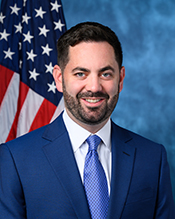
Rep. Michael Lawler
Sponsored bills
Bipartisan Ban on Congressional Stock Ownership Act of 2023 This bill prohibits Members of Congress and their spouses from owning or trading stocks, bonds, commodities, futures, or any other form of security. Each current Member must divest within 180 days after the bill is enacted and each new Member must divest within 180 days after becoming a Member. However, Members and their spouses have 5 years to divest from specified complex investment vehicles. The bill does not apply to certain investments, such as investments in widely held investment funds that are diversified and do not present a conflict of interest and investments held in government employee retirement plans. A Member or spouse who violates the bill may be subject to a fine of up to $50,000 for each violation. The bill permits a Member or spouse who is required to divest property under the bill to avoid recognizing gain for income tax purposes from the sale of that property to the extent that the Member or spouse purchases permitted bonds or diversified investment funds within 60 days of the divestiture.
Correcting Guam's History in the PACT Act This bill expands eligibility for a presumption of service-connection for specified diseases associated with exposure to certain herbicide agents. Under a presumption of service-connection, specific conditions diagnosed in certain veterans are presumed to have been caused by the circumstances of their military service. Health care benefits and disability compensation may then be awarded. Under the bill, service performed in Guam or its territorial waters between August 15, 1958, and July 31, 1980, provides a veteran who has a specified disease that is associated with exposure to certain herbicide agents with eligibility for a presumption of service-connection. (Under current law, the eligible time frame for service in Guam is between January 9, 1962, and July 31, 1980.)
Maddy summaryHRES 214 is a symbolic resolution designating March as "Deep Vein Thrombosis and Pulmonary Embolism Awareness Month" to raise public awareness about these preventable conditions. It highlights that DVT/PE causes an estimated 100,000 U.S. deaths annually - more than HIV, breast cancer, or car accidents - and contributes to $10 billion in yearly medical costs. The resolution does not create new laws or allocate funds but formally supports awareness efforts through congressional recognition. It aims to educate the public about risk factors like immobility, surgery, cancer, and postpartum periods, where DVT/PE is particularly dangerous. This resolution directly affects public health awareness efforts, not specific individuals or policies.
Maddy summaryThis bill, HR 1625 (St. Patrick’s Day Act), would add "St. Patrick’s Day" to the list of official federal holidays under 5 U.S. Code § 6103(a). It does not create new government operations, change work schedules, or affect any specific group of people. The bill only amends the statutory holiday calendar by inserting "St. Patrick’s Day" after "Washington’s Birthday." It is purely a ceremonial designation with no substantive policy changes.
Establishing Accreditation Grants for Law Enforcement Act of 2023 or the EAGLE Act of 2023 This bill requires the Department of Justice to provide grants to eligible local law enforcement agencies for activities related to obtaining qualified accreditation or recertification. Such accreditation or recertification shall be provided by a professional law enforcement organization involved in developing standards for law enforcement at the national, state, regional, or tribal level, such as the Commission on Accreditation for Law Enforcement Agencies.
Maddy summaryThis bill expands the U.S. Postal Service's (USPS) subpoena authority for investigations into specific violations. It allows the Postmaster General to issue subpoenas requiring production of records and testimony related to "covered offenses," including postal law violations, mail-related crimes under Title 18, certain federal laws, and mail-related drug offenses under the Controlled Substances Act. Subpoenas can demand records (like documents or evidence) and testimony from custodians about those records' authenticity, though they cannot require testimony in investigations under section 3005(a). The bill also restricts approval of subpoenas to the General Counsel, a Deputy General Counsel, or the Chief Postal Inspector.
Maddy summaryHR 1520 reauthorizes the Energy Efficiency and Conservation Block Grant Program through 2028 with $3.5 billion annually. It expands eligible uses to include infrastructure for alternative fuels (like hydrogen or electric vehicle charging) and projects that diversify energy supplies. State and local governments would receive grants for initiatives such as district heating systems, distributed energy resources, or fuel delivery infrastructure. The bill explicitly allows funding for projects that expand alternative fuel access, building on the 2007 Energy Independence Act framework. This represents a concrete policy update to modernize program eligibility and funding levels.
Maddy summaryThis bill amends the Federal Power Act to strengthen security for defense-related electricity infrastructure. It updates definitions (like replacing "48 contiguous States" with "any State") and adds a new provision (§215A(g)) authorizing the Secretary to contract with external energy providers. These contracts aim to improve resilience - meaning the ability to withstand disruptions - and reduce vulnerabilities for critical defense facilities that rely on electricity. The bill directly affects defense installations and their electric supply chains by creating a new process for enhancing infrastructure security.
This resolution demands that Russia respect Ukraine's sovereignty and territorial integrity, as well as immediately withdraw its military forces from inside Ukraine. Affirming strong support for continued U.S. support to Ukraine, the resolution also calls on allies and partners in Europe to increase national defense spending, supports robust transparency and accountability mechanisms for U.S. assistance to Ukraine, and condemns Russian war crimes.