

Maddy summaryThe Building Chips in America Act of 2023 streamlines environmental reviews for semiconductor manufacturing projects receiving federal financial assistance under the CHIPS Act. It exempts certain facility construction, expansion, or modernization projects from standard National Environmental Policy Act (NEPA) reviews if they meet specific criteria, such as being on existing sites with limited additional development. The bill allows states to assume some environmental review responsibilities with federal oversight, requires reliance on prior environmental studies, and establishes specific categorical exclusions for semiconductor projects. These changes aim to accelerate semiconductor manufacturing facility construction by reducing regulatory delays for projects eligible for federal assistance.
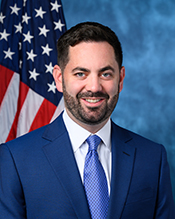
Rep. Michael Lawler
Sponsored bills
Maddy summaryThe Water Infrastructure Enhancement Act of 2023 establishes a federal grant program to fund critical upgrades for public water systems. It directly affects water suppliers in rural areas (population ≤20,000) and communities designated as "areas of persistent poverty" (e.g., counties with 20%+ poverty for 30 years or census tracts with ≥20% poverty). The program allocates $800 million annually from 2024-2029, requiring at least 50% of funds to support rural areas and 15% to historically disadvantaged communities or persistent poverty zones. Grants cover up to 90% of costs for eligible activities like replacing pipes, upgrading treatment facilities, or modernizing monitoring systems, with the Administrator determining additional eligible projects.
Maddy summaryThe RISE from Trauma Act creates federal grants to support community-based coordination of trauma-informed services for children, youth, and families who have experienced or are at risk of trauma. It provides up to $6 million per grant to local entities that bring together diverse stakeholders (including schools, healthcare providers, law enforcement, and community organizations) to develop local strategies for preventing trauma, promoting resilience, and improving outcomes in health, education, and child welfare. The bill reauthorizes and expands existing programs like the National Child Traumatic Stress Network, school-based trauma support services, and hospital-based interventions for trauma patients. It also includes specific funding increases for these programs and requires grant recipients to prioritize communities with high rates of trauma exposure, including those affected by violence, substance misuse, or systemic inequities.
This resolution calls on the government of the United Kingdom to employ its influence to end the obstruction of Northern Ireland's devolved governmental institutions by the Democratic Unionist Party and restore power-sharing in Northern Ireland as set out in the Good Friday Agreement. The resolution also calls on all participants of the Good Friday Agreement to honor their obligations under the agreement.
Maddy summaryThis House Resolution condemns the April 2023 conflict in Sudan between the Sudanese Armed Forces (SAF) and Rapid Support Forces (RSF), calling for an immediate ceasefire and adherence to prior cease-fire agreements. It urges the U.S. government to scale up humanitarian aid, prioritize support for displaced civilians and children, and apply sanctions against those obstructing Sudan’s democratic transition or violating international law. The resolution directs U.S. agencies to coordinate with local actors, ensure aid reaches civilians, and develop strategies for civilian-led negotiations. As a non-binding statement, it expresses congressional support for Sudanese civilians and democratic transition without creating new legal requirements or funding.
Maddy summaryThe Choice in Affordable Housing Act of 2023 (HR 4606) aims to increase landlord participation in the Housing Choice Voucher program, particularly in high-opportunity neighborhoods (census tracts with poverty rates below 20%), by providing new financial incentives. Key provisions include one-time payments to landlords (up to 200% of monthly rent) for leasing to voucher holders in low-poverty areas, security deposit assistance for tenants, and bonuses for public housing agencies employing dedicated landlord liaisons. The bill establishes a $100 million annual fund (Herschel Lashkowitz Housing Partnership Fund) to support these initiatives and requires annual reports tracking landlord participation and unit distribution in high-opportunity areas. These changes directly affect low-income renters seeking housing in quality neighborhoods and landlords in underserved areas.
Maddy summaryHR 4604, the Don Young American Grown Act, requires that cut flowers and cut greens displayed in public areas of Executive Office, State Department, and Defense Department buildings must be grown in the United States. This affects federal agencies by mandating U.S.-sourced decorative floral products for official displays, excluding personal use by employees. The bill defines "produced in the United States" to include all states, D.C., territories, and federally recognized tribal lands. It takes effect one year after enactment, with no impact on personal displays by federal staff.
Maddy summaryThe Afghan Adjustment Act creates a pathway for certain Afghans who directly supported U.S. missions in Afghanistan during the 20-year U.S. military presence to adjust to lawful permanent resident status (green card holders). It specifically targets Afghans who worked with U.S. forces or agencies, including military personnel, security personnel, and their families, who received "Chief of Mission approval" for special immigrant status. Key provisions include new vetting requirements (in-person interviews and biometric screening), exemption from immigration numerical limits, $20 million annually for implementation, and a task force to develop resettlement strategies. The bill also establishes a new category of special immigrant visas for at-risk Afghan allies and sets a two-year application deadline after guidance is published.
Maddy summaryThis bill ensures children in foster care who are placed in specialized treatment facilities (QRTPs) maintain continuous Medicaid coverage without interruption. It requires states to keep Medicaid payments active for these children as long as they remain in foster care under state responsibility and the state is receiving federal foster care payments. The policy change applies to medical assistance starting October 1, 2023, preventing coverage gaps during transitions to these facilities. The bill directly affects foster children in QRTPs and their state child welfare agencies.
Maddy summaryThe Mount Rushmore Protection Act prohibits federal funding for any changes to the Mount Rushmore National Memorial, including altering, destroying, or removing its carved faces or features. It specifically bans the use of federal funds to modify the memorial's existing names, faces, or other physical elements. The bill also formally designates the site as "Mount Rushmore" in all federal records, maps, and documents. This legislation directly affects federal agencies and government documents that reference the memorial, ensuring its current appearance remains protected from funded modifications.