

Maddy summaryThis bill amends federal education law to require K-12 schools to include Asian American, Native Hawaiian, and Pacific Islander (AANHPI) history in American history and civics education. It directs the Department of Education to update curriculum standards, teacher training programs, and national assessments to ensure AANHPI contributions and experiences are integrated into existing history lessons. The policy affects all public schools receiving federal education funding by mandating specific inclusion of AANHPI history alongside traditional American history content. This change aims to address historical gaps in curricula that have excluded these communities' diverse roles and experiences.
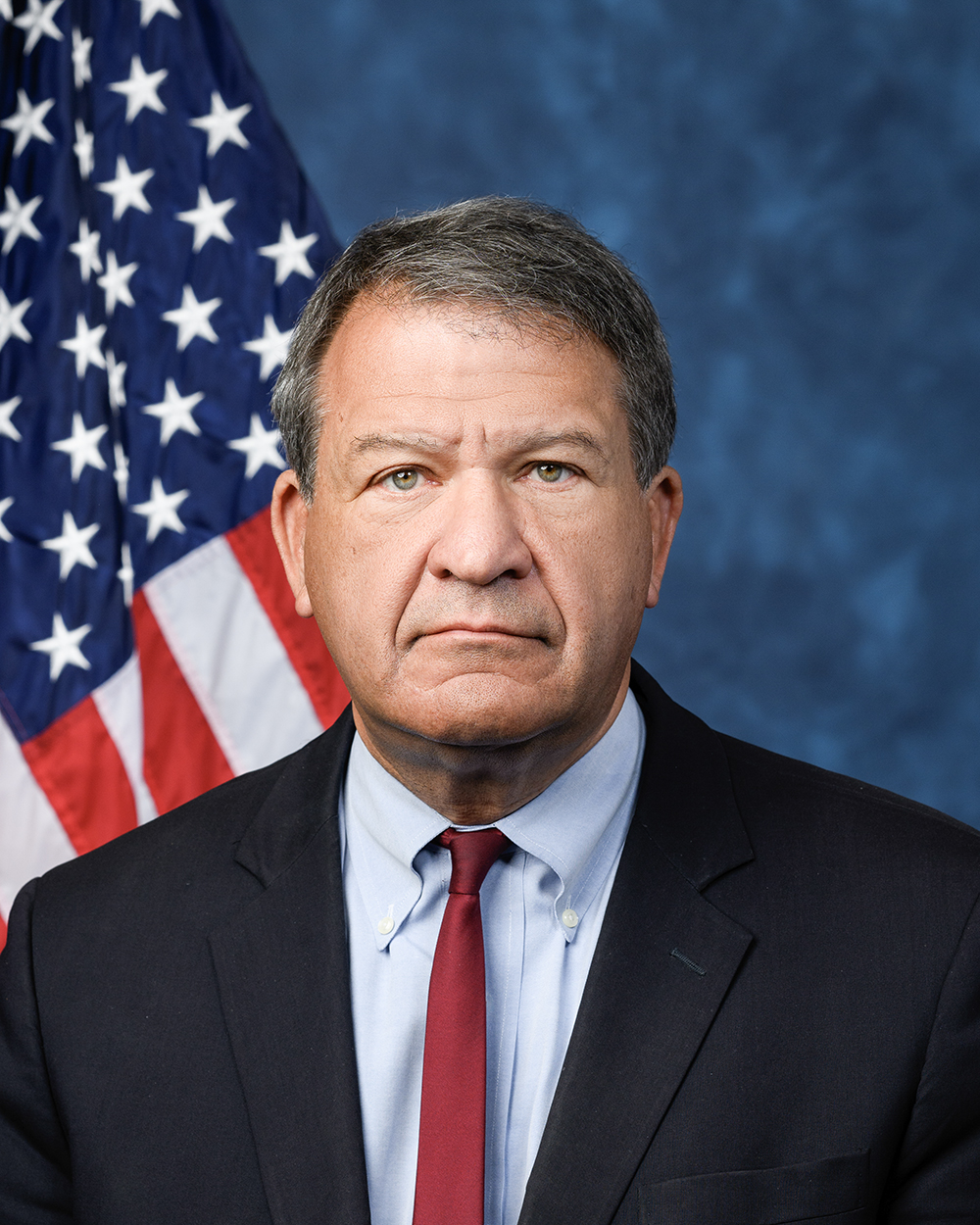
Rep. George Latimer
Sponsored bills
Maddy summaryThe College for All Act of 2025 would eliminate tuition and required fees for eligible students at public community colleges and 4-year institutions through a federal-state partnership. The federal government would cover 100% of costs in the first year (2026-2027), gradually decreasing to 80% by 2030-2031, while states would start with 0% and increase to 20% by 2030-2031. Eligible students would include those with family income below $150,000 for single parents or $300,000 for married parents, regardless of immigration status. The bill also includes requirements to maintain instruction funding, improve transfer pathways between community colleges and 4-year institutions, and provide additional support for students after tuition elimination.
Maddy summaryThis bill would establish 18-year fixed terms for all Supreme Court justices, replacing lifetime appointments. It requires the President to nominate one justice every two years (during first and third years after presidential elections), with Senate confirmation within 90 days, and prohibits reappointments after a single term. Current justices would be phased out in order of seniority as new justices are appointed under this schedule. The bill directly affects all sitting and future Supreme Court justices by mandating term limits and a structured appointment process.
Maddy summaryHR 3532, the Striking and Locked Out Workers Healthcare Protection Act, prohibits employers from terminating or altering an employee’s employer-sponsored health coverage during a lawful strike or a lockout (when an employer withholds work to influence bargaining). It directly affects workers participating in strikes or facing lockouts, ensuring continued healthcare access during these labor disputes. The bill adds penalties: $75,000 per violation for lockout-related coverage termination (up to $150,000 for repeat offenses), and $50,000 per violation for strike-related termination (up to $100,000 for repeat offenses), with penalties applied alongside other remedies. These provisions amend the National Labor Relations Act to protect workers’ healthcare rights during collective bargaining actions.
Maddy summaryHR 3526, the Uplifting First-Time Homebuyers Act of 2025, increases the maximum amount first-time homebuyers can withdraw penalty-free from retirement accounts. It amends the Internal Revenue Code to raise the limit from $10,000 to $50,000 for qualified first-time homebuyer distributions. This change directly affects individuals using retirement savings to purchase their first home, allowing them to access significantly more funds without incurring the usual 10% early withdrawal penalty. The provision applies to taxable years beginning after December 31, 2024.
Maddy summaryHR 3505, the Barriers to Suicide Act of 2025, creates a federal grant program administered by the Department of Transportation to fund the installation of proven safety barriers and nets on specific high-risk structures. The program provides competitive grants (up to 80% federal funding) to states, local governments, or other eligible entities for projects installing suicide deterrents on bridges, buildings, parking garages, highway-rail crossings, or rail stations. It prioritizes areas with high suicide rates and mandates a study by the Comptroller General to evaluate effective deterrents for non-bridge structures and their costs, with a report due within one year of enactment. The bill authorizes $10 million annually from 2026-2030 for this initiative.
Stronger Communities through Better Transit Act This bill requires the Department of Transportation (DOT) to establish a grant program to support operating projects for public transportation and related service improvements, particularly in underserved communities and areas of persistent poverty. Specifically, the bill requires DOT to allocate funding under the program for urbanized areas, states, and Indian tribes that are recipients of funds under either the Federal Transit Administration's (FTA's) Urbanized Area Formula Funding program or Formula Grants for Rural Areas program. Eligible recipients may use funding for operating costs associated with projects that improve public transportation service for transit-dependent populations and support increased transit ridership (e.g., service expansion, information technology enhancements, and workforce development). DOT must apportion the funding so that recipients receive funds that are proportional to their share of operating costs. The bill also provides for an increased federal cost share for operating assistance for projects or programs carried out in areas of persistent poverty or underserved communities. DOT must set up a multimodal access measurement interface for public agencies to aid transit agencies in determining and reporting on access to jobs and essential services. A grant recipient must (1) report specific information to the FTA for inclusion in the National Transit Database, and (2) survey transit riders and non-riding residents regarding transit service improvements. Further, the bill expands the purposes of the public transportation programs to include supporting public transportation's role in combating climate change through growing/retaining transit ridership.
Maddy summaryThis bill restores a tax deduction for personal losses caused by disasters, crimes, or scams (like stolen property or damage from hurricanes). It directly affects taxpayers who filed returns before 2025 but couldn’t claim this deduction due to a prior suspension. The bill reinstates the deduction and extends the deadline to file refund claims for these losses until the tax filing deadline for the year the bill becomes law. This allows eligible individuals to claim refunds they were previously barred from receiving.
Maddy summaryThis bill clarifies that the President has no constitutional authority to withhold funds Congress has appropriated. It creates new legal mechanisms allowing private citizens and state/local governments to sue the federal government for impoundments of appropriated funds. The bill strengthens the Comptroller General's oversight role by requiring executive branch cooperation in investigations of potential violations. Federal employees who knowingly violate these provisions would face personal liability and lose immunity protections. The legislation aims to reinforce Congress's constitutional authority over the budget process.
Maddy summaryHR 3452, the "Six Assurances to Taiwan Act," formally codifies six longstanding U.S. policy commitments regarding Taiwan that were established in 1982. It reaffirms that the U.S. has never agreed to set a date for ending arms sales to Taiwan, consult with China on such sales, mediate between Taiwan and China, revise the Taiwan Relations Act, take a position on Taiwan's sovereignty, or pressure Taiwan to negotiate with China. The bill’s key mechanism requires the President to notify Congress before taking any action that could alter these assurances, giving Congress 30 days (or 60 days during a specific period) to review proposals through a joint resolution process. This applies to actions like pausing arms sales, negotiating with China on arms, or changing U.S. policy on Taiwan’s status. The bill directly affects U.S. executive branch decisions on Taiwan policy and Congressional oversight authority.