

Maddy summaryHR 549, the Metastatic Breast Cancer Access to Care Act, removes waiting periods for disability and Medicare coverage for people diagnosed with metastatic breast cancer. Specifically, it amends Social Security Act sections to allow immediate eligibility for disability insurance benefits (eliminating the standard waiting period) and immediate Medicare coverage (waiving the 24-month waiting period) for these patients. The bill directly affects individuals with metastatic breast cancer who would otherwise face delays in accessing critical benefits. These changes apply to applications filed or benefits beginning after the bill's enactment date. The law makes no other policy changes beyond these specific eligibility adjustments.
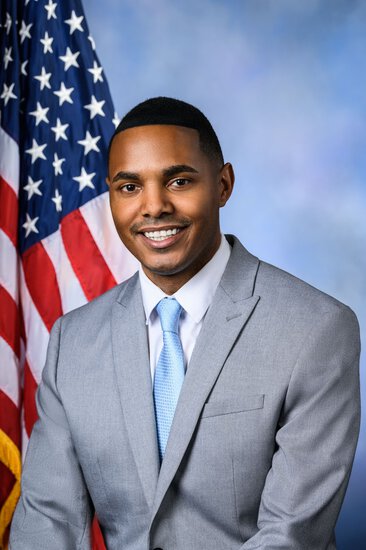
Rep. Ritchie Torres
Sponsored bills
Maddy summaryThe EACH Act of 2023 would require federal health programs - including Medicaid, Medicare, the Indian Health Service, and TRICARE - to cover abortion services without restrictions. It repeals a provision in the Affordable Care Act that allowed states to limit abortion coverage in health insurance plans sold through state marketplaces. The bill also prohibits the federal government from restricting abortion coverage in private health insurance plans. This would directly affect millions of people, particularly low-income individuals and people of color, who are disproportionately enrolled in Medicaid and currently face barriers to abortion care due to coverage restrictions.
Maddy summaryHR 415, the "End the Threat of Default Act," repeals the statutory debt ceiling (section 3101 of Title 31, U.S. Code), which currently limits how much the federal government can borrow. This would eliminate the need for Congress to approve increases to the borrowing cap, removing the risk of a government default on its debts. The bill directly affects the Treasury Department’s ability to manage federal borrowing, as it would no longer require congressional action to authorize new debt issuance. The technical amendments update references to the debt ceiling in other laws to reflect this change.
Maddy summaryThis bill, the Supplemental Security Income Equality Act (HR 256), would extend the federal Supplemental Security Income (SSI) program to residents of Puerto Rico, the U.S. Virgin Islands, Guam, and American Samoa. Currently, these territories are excluded from SSI, which provides monthly financial assistance to low-income elderly, disabled, and blind individuals. The bill amends the Social Security Act to include the territories in the definition of "state" for SSI eligibility, remove payment limits for territories, and ensure U.S. nationals are treated equally with citizens. It also grants the Social Security Commissioner authority to waive requirements to adapt the program to each territory’s needs. The changes would take effect one year after the bill is enacted.
Maddy summaryHR 33 would expand Medicare to cover dental, vision, and hearing services for beneficiaries, which are currently not covered under Medicare. The bill provides 100% coverage for preventive dental services in 2024, with basic dental services gradually increasing to 80% coverage by 2027. Vision coverage would include routine eye exams and corrective lenses at 80% coverage, while hearing services would cover hearing exams and hearing aids at 80% coverage. The bill includes specific limitations, such as two dental cleanings per year and one pair of glasses every 24 months, with the Secretary of Health and Human Services having authority to apply additional limitations or modify coverage based on medical recommendations. The changes would take effect on January 1, 2024.
Maddy summaryThis bill adds export controls for specific battery recycling materials ("black mass" and "swarf") to prevent their export to China and other designated foreign adversaries. It requires U.S. exporters to obtain licenses for these materials when the end-user is a foreign adversary (including China, Russia, Iran, North Korea, and Cuba), with automatic license denial for China. "Black mass" is defined as processed material from spent lithium-ion batteries containing lithium, cobalt, nickel, manganese, and graphite, excluding intact batteries. The law directly affects U.S. companies exporting these materials and Chinese entities seeking to import them.
Maddy summaryThis bill creates two main pathways to build expertise in critical minerals. First, it allows immigration waivers for foreign engineers working full-time in U.S. businesses or government agencies focused on critical minerals extraction, processing, or recycling (defined by the 2020 Energy Act). Second, it establishes new educational exchange programs, including funding for U.S. students studying abroad in this field, foreign students studying in the U.S., and international partnerships for research and training. The bill directly affects engineers in the critical minerals supply chain and educational institutions developing specialized curricula. It aims to strengthen domestic workforce capacity through targeted immigration and international education initiatives.
Maddy summaryThis bill authorizes the U.S. Secretary of the Interior to establish international agreements with designated "partner foreign countries" to share earth science data and resources. It prioritizes cooperation with nations having defense treaties, strategic mineral partnerships, or existing agreements, focusing on mineral assessments, geoscience data analysis, and training for sustainable resource management. The legislation allocates $3 million for fiscal year 2025, requiring at least 70% of funds to directly support these agreements and their activities. It affects U.S. agencies (via the Geological Survey) and partner countries through new frameworks for collaborative critical mineral resource data sharing.
Maddy summaryThis bill establishes a commission to study whether the Weitzman National Museum of American Jewish History in Philadelphia should be transferred to the Smithsonian Institution. The commission, composed of 8 members appointed by congressional leaders with expertise in Jewish American history and museum administration, will examine the museum's collections, financial status, governance, and feasibility of transfer within two years. The commission must submit a report detailing findings, a fundraising plan, and legislative recommendations for any potential transfer. The bill does not transfer the museum but creates a process to evaluate the possibility.
Maddy summaryThis bill extends funding for the existing Public Health Service Act program focused on raising public awareness about Alzheimer's disease and related dementias. It authorizes $33 million annually for fiscal years 2025 through 2029 to support public health education and outreach initiatives. The program directly affects public health organizations and community groups that develop and distribute educational materials about Alzheimer's prevention, diagnosis, and care. The key provision is the multi-year funding extension, ensuring continued support for nationwide awareness efforts without altering the program's core structure.