

Maddy summaryHR 3615, the SAFE Act, prohibits the use of federal funds to pay foreign governments or organizations for detaining individuals when a U.S. court has determined such detention violates U.S. law. It blocks federal money from being spent - directly or indirectly - to cover costs related to these detentions, including through third parties. The law specifically applies when a U.S. court has ruled the detention unlawful under U.S. legal standards, affecting federal agencies that might fund such arrangements and foreign entities receiving those funds.
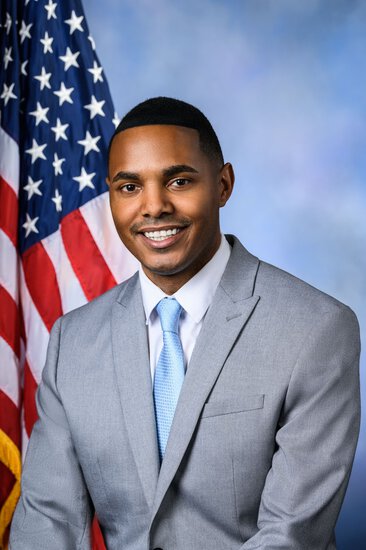
Rep. Ritchie Torres
Sponsored bills
Maddy summaryThis bill prohibits the U.S. military from discriminating against service members or applicants based on gender identity. It bans policies that would deny service, involuntarily separate members, deny medically necessary healthcare, or require service in a gender different from one's identity. The law defines "gender identity" broadly to include a person's internal sense of gender, appearance, and mannerisms, regardless of sex assigned at birth. It directly affects transgender and gender-diverse individuals currently serving or seeking to serve in the Armed Forces.
Maddy summaryThis bill prohibits the President, Vice President, Members of Congress, and their immediate family members from engaging in specific digital asset activities. It bans them from owning digital assets where they could unilaterally alter them, serving as officers for crypto issuers, receiving compensation for crypto sales/marketing, or trading with non-public information while in office. The law also prevents these individuals from using trusts, companies, or other entities to secretly participate in digital asset markets, requiring full disclosure of indirect ownership. Violations could trigger criminal penalties under existing federal law, mirroring restrictions on other financial conflicts of interest.
Maddy summaryThe College for All Act of 2025 would eliminate tuition and required fees for eligible students at public community colleges and 4-year institutions through a federal-state partnership. The federal government would cover 100% of costs in the first year (2026-2027), gradually decreasing to 80% by 2030-2031, while states would start with 0% and increase to 20% by 2030-2031. Eligible students would include those with family income below $150,000 for single parents or $300,000 for married parents, regardless of immigration status. The bill also includes requirements to maintain instruction funding, improve transfer pathways between community colleges and 4-year institutions, and provide additional support for students after tuition elimination.
Maddy summaryHR 3533, the Blockchain Regulatory Certainty Act, creates a legal exemption for most blockchain developers and service providers. It prevents these entities from being classified as money transmitters, financial institutions, or subject to related licensing requirements under federal or state law - unless they personally control users' digital assets. The bill specifically exempts developers who create blockchain software or provide access to blockchain networks (like public ledgers for digital assets), as long as they lack unilateral authority over those assets. This provides regulatory clarity for the industry while preserving existing intellectual property laws and state regulations that align with the bill.
Maddy summaryThis bill would establish 18-year fixed terms for all Supreme Court justices, replacing lifetime appointments. It requires the President to nominate one justice every two years (during first and third years after presidential elections), with Senate confirmation within 90 days, and prohibits reappointments after a single term. Current justices would be phased out in order of seniority as new justices are appointed under this schedule. The bill directly affects all sitting and future Supreme Court justices by mandating term limits and a structured appointment process.
Stronger Communities through Better Transit Act This bill requires the Department of Transportation (DOT) to establish a grant program to support operating projects for public transportation and related service improvements, particularly in underserved communities and areas of persistent poverty. Specifically, the bill requires DOT to allocate funding under the program for urbanized areas, states, and Indian tribes that are recipients of funds under either the Federal Transit Administration's (FTA's) Urbanized Area Formula Funding program or Formula Grants for Rural Areas program. Eligible recipients may use funding for operating costs associated with projects that improve public transportation service for transit-dependent populations and support increased transit ridership (e.g., service expansion, information technology enhancements, and workforce development). DOT must apportion the funding so that recipients receive funds that are proportional to their share of operating costs. The bill also provides for an increased federal cost share for operating assistance for projects or programs carried out in areas of persistent poverty or underserved communities. DOT must set up a multimodal access measurement interface for public agencies to aid transit agencies in determining and reporting on access to jobs and essential services. A grant recipient must (1) report specific information to the FTA for inclusion in the National Transit Database, and (2) survey transit riders and non-riding residents regarding transit service improvements. Further, the bill expands the purposes of the public transportation programs to include supporting public transportation's role in combating climate change through growing/retaining transit ridership.
Maddy summaryThis bill establishes minimum nurse-to-patient ratios for hospital units across the country, requiring hospitals to maintain specific staffing levels (such as 1:1 in trauma units, 2:1 in critical care units, and 3:1 in emergency rooms) to improve patient safety and quality of care. Hospitals must develop transparent staffing plans that account for patient acuity, involve direct care nurses in planning, and document actual staffing levels for each shift. The bill includes strong whistleblower protections for nurses who object to unsafe staffing levels and prohibits hospitals from retaliating against nurses who report violations. It requires hospitals to comply with these standards as a condition for receiving Medicare and Medicaid payments, with enforcement through audits and civil penalties of up to $50,000 for repeated violations. The bill also includes provisions to support nurse recruitment and retention through workforce initiatives and training programs.
Maddy summaryHR 3368, the "Born in the USA Act of 2025," prohibits federal funding for Executive Order 14160 (which aimed to restrict birthright citizenship for children born in the U.S.). The bill directly affects federal agencies that might implement the executive order by blocking their use of funds for that purpose. Its key provision is a funding ban targeting the executive order and any similar future policies, without changing citizenship law. The bill does not alter birthright citizenship rights but prevents federal resources from being used to enforce the controversial executive order. It is a procedural measure focused on funding, not a substantive policy change to citizenship rules.
Maddy summaryHR 3376 creates the Water Affordability, Transparency, Equity, and Reliability Trust Fund, funded by increasing the corporate tax rate from 21% to 24.5% starting in 2025, with annual funding capped at $35 billion or 1/20th of 20-year infrastructure needs. The bill allocates funds to clean water programs (42%), safe drinking water programs (42.5%), household water well systems (1%), colonias assistance (0.5%), and Indian health services (3%), requiring specific prioritization of low-income and minority communities for many programs. It mandates an EPA study on water affordability, discriminatory practices, and civil rights violations in water service, including data collection on service disconnections affecting vulnerable populations. The bill also includes provisions for lead service line replacement, PFAS contamination response, and job training grants for water system operators with specific requirements to prioritize low-income communities.