

Maddy summaryHRES 876 is a non-binding House resolution calling on the U.S. government to formally recognize Israel's actions in Gaza as genocide under the Genocide Convention. It directs the U.S. to cease arms transfers to Israel where genocide is suspected, ensure Israel complies with International Court of Justice orders, investigate potential genocide-related crimes, and support UNRWA funding. The resolution specifically cites findings from the UN Commission of Inquiry, the International Association of Genocide Scholars, and major human rights organizations regarding Israel's conduct. It affects U.S. foreign policy and military aid decisions toward Israel, requiring the administration to take concrete steps to fulfill U.S. legal obligations under the Genocide Convention. The resolution does not alter U.S. law but sets a policy stance for congressional action.
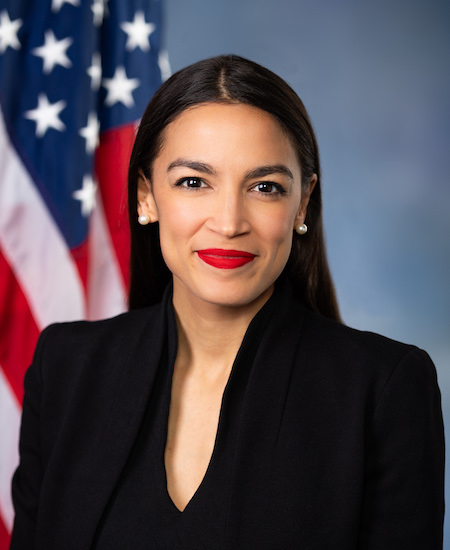
Rep. Alexandria Ocasio-Cortez
Sponsored bills
Maddy summaryHR 6030, the Puerto Rico Substance Use and Health Data Collection Act, requires the federal government to include Puerto Rico in the annual National Survey on Drug Use and Health starting fiscal year 2026. This amendment to the Public Health Service Act ensures Puerto Rico residents' substance use and health data will be collected alongside data from states and territories. The key mechanism is adding Puerto Rico to the survey's geographic scope, which has been excluded since the survey's inception. This provides a more comprehensive dataset for federal health programs serving Puerto Rico.
Maddy summaryThis bill ensures continuous funding for SNAP (food assistance) and WIC (nutrition program for mothers/children) during government funding gaps. It authorizes emergency Treasury funds to cover SNAP/WIC benefits and reimburse states for costs if Congress fails to pass regular appropriations for the Department of Agriculture by September 30, 2025. The funding covers missed payments retroactively from September 30, 2025, through the bill’s enactment date, and continues until either regular appropriations pass or September 30, 2026. It directly affects low-income households relying on these programs and state agencies administering them during funding lapses.
Maddy summaryHRES 846 is a symbolic resolution designating October 2025 as National Domestic Violence Awareness Month. It expresses the House's support for raising awareness about domestic violence and its impacts, and calls for continued congressional attention to ending domestic violence through existing programs. The resolution does not create new laws, allocate funding, or directly affect any specific groups - it is purely a statement of support. It references statistics on domestic violence prevalence but focuses on awareness rather than policy changes.
Maddy summaryThis bill prohibits the Department of Veterans Affairs (VA) from discriminating against transgender veterans in healthcare, specifically requiring the VA to provide medically necessary treatments for gender dysphoria. It directly affects transgender veterans seeking VA health services by mandating that the VA cannot deny such care or misgender patients based on gender identity. The law adds a new section to VA healthcare law explicitly banning gender identity discrimination and ensuring access to gender dysphoria treatments, aligning with existing protections under the Affordable Care Act. Additionally, it requires the VA to provide quarterly reports to Congress on how transgender veterans receive healthcare services under this new standard.
Maddy summaryThis resolution formally recognizes the vital role of Spanish-language media in serving over 41 million U.S. residents who speak Spanish at home. It affirms that access to Spanish-language news and entertainment is essential for community engagement, combating misinformation, and supporting democratic participation. The House resolution specifically commends Spanish-language media professionals and encourages policies that sustain this media sector, which provides culturally relevant information on elections, health, and civic life. As a symbolic gesture (not a law), it has no direct policy changes but highlights the sector's importance to Latino communities and national inclusivity.
Maddy summaryThis bill establishes the New York-New Jersey Watershed Restoration Program to coordinate and fund habitat restoration and water quality improvements across the shared watershed region. It creates a competitive grant program providing federal matching funds (up to 90% for small/rural/disadvantaged communities) to state/local governments, nonprofits, and tribes for projects advancing habitat restoration, climate resilience, and public access. The program prioritizes communities facing environmental injustice and requires coordination with existing regional conservation plans like the Hudson River Estuary Program. Funding of $20 million annually (2026-2031) will support these activities, with 75% dedicated to the grant program and all projects supplementing existing conservation efforts.
Keep Air Travel Safe Act This bill provides continuing appropriations for the Transportation Security Administration (TSA) during any period in which there is a lapse in appropriations for TSA. It also requires the continuing appropriations to be funded using certain unobligated funds that were provided to U.S. Immigration and Customs Enforcement by the One Big Beautiful Bill Act. The bill provides the appropriations for TSA to continue all programs, projects, or activities (including the costs of direct loans and loan guarantees) that were funded in the preceding fiscal year. The appropriations provided by this bill are available from the first day of a lapse in appropriations for TSA until the earlier of the date on which the applicable regular appropriations bill for the fiscal year becomes law or a joint resolution making continuing appropriations becomes law, or the date that is 180 days after the first day of a lapse in appropriations.
Maddy summaryThis bill makes federal funding for the WIC program mandatory by requiring Congress to appropriate necessary funds annually for fiscal year 2026 and each subsequent year. It removes discretionary language from WIC funding requirements and clarifies that eligible participants must be served without participation limits. The bill directly affects low-income pregnant women, new mothers, and young children who rely on WIC for nutrition assistance, ensuring continued access to critical food, health, and education services.
Maddy summaryHR 5720, the Federal Worker Childcare Protection Act of 2025, would provide reimbursement to federal employees who face a pay gap during a government funding lapse (starting October 1, 2025) while paying for childcare. It directly affects federal workers who are furloughed or working without pay during such a lapse. Employees would receive reimbursement for childcare costs if they provide documentation, such as receipts from a childcare provider, to the General Services Administration. This reimbursement is subject to available congressional appropriations and does not guarantee payment.