

Maddy summaryThe Health and Location Data Protection Act of 2026 prohibits data brokers from buying, selling, or sharing specific types of personal information, including an individual's health data and location history. This ban applies to any entity that resells data it did not collect directly from the person, though it allows exceptions for actions compliant with existing HIPAA rules, newsworthy reporting, and disclosures where the individual has given valid consent. The Federal Trade Commission is tasked with defining exactly what counts as "data" and issuing final rules within 180 days of the law's enactment. Violations of these restrictions can lead to enforcement actions by the FTC, state attorneys general, or private individuals, potentially resulting in civil penalties of up to 15 percent of the violator's annual revenue. The legislation also includes a funding provision that appropriates $1 billion to the FTC for fiscal year 2027 to support its work under this act.
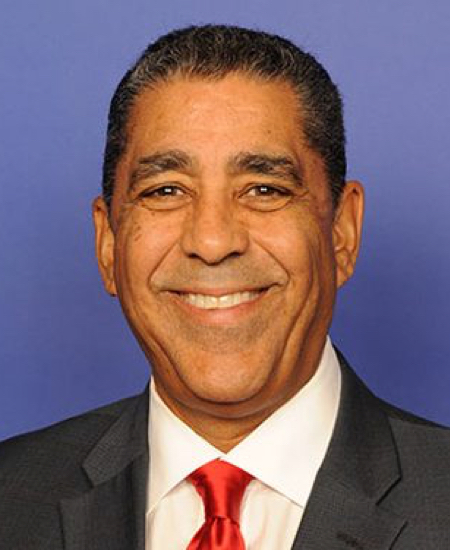
Rep. Adriano Espaillat
Sponsored bills
Maddy summaryThe Diversity Visa Protection and Modernization Act limits the executive branch's ability to completely stop the Diversity Visa Program, which provides immigration opportunities to applicants from countries with low rates of migration to the United States. Instead of allowing indefinite or broad pauses, the bill permits only targeted restrictions on specific countries, individual security denials, or temporary suspensions lasting no more than 60 days. Any such limitation requires the relevant government officials to notify Congress and publish details about the threat and legal basis at least seven days in advance. Additionally, the law ensures that individuals who have already received a Diversity Visa cannot lose their eligibility due to a temporary program-wide suspension.
Maddy summaryThis resolution expresses the House of Representatives' sense that Congress must urgently restore the Voting Rights Act of 1965 to protect against racial discrimination in voting and ensure fair political representation for all Americans. It specifically calls for ending the 60-vote threshold in the Senate to allow for easier passage of legislation and proposes structural changes to the Supreme Court, including term limits for justices, a binding code of ethics, and potentially expanding the court's size. The text argues that recent Supreme Court decisions have weakened voting protections and enabled partisan gerrymandering, threatening the political power of communities of color and undermining democratic institutions. By outlining these specific legislative and structural goals, the bill aims to rebuild public trust in the judiciary and strengthen the mechanisms that guarantee equal access to the ballot box.
Maddy summaryThis House resolution reaffirms the United States' commitment to protecting refugees and displaced persons by calling for the restoration of the Refugee Admissions Program and asylum protections. It urges federal officials to lift current bans on refugee entry, resume vetting for approved applicants, and increase humanitarian aid to host countries. The measure highlights the economic contributions of refugees and emphasizes the need for fair, humane policies that align with international obligations and domestic law.
Maddy summaryThis resolution expresses the sense of the House of Representatives that the United States should recognize and encourage acts of kindness to foster community and build social resilience. It highlights the belief that kindness strengthens families, neighborhoods, and the nation by connecting people across differences and promoting a healthier society. The bill does not create new laws or funding but serves as a symbolic statement affirming the value of everyday compassionate actions.
Maddy summaryThis bill proposes a new amendment to the U.S. Constitution to guarantee the right to vote for all citizens of legal voting age in their place of residence. It requires states to allow voters to register and cast ballots on election day and mandates that Congress set national standards for how elections are administered. The amendment permits only narrowly tailored rules to protect election integrity and gives Congress the authority to pass laws enforcing these new voting rights.
Maddy summaryThis resolution commemorates the 10th anniversary of the 2016 Pulse nightclub shooting in Orlando, Florida, which was an act of domestic terrorism. It formally honors the names of the victims and expresses condolences to their families while acknowledging the bravery of law enforcement and emergency responders who responded to the tragedy. The document also reaffirms support for the LGBTQ+ community and calls for continued efforts to improve gun safety and mental health legislation.
Maddy summaryThe PRIDE Act of 2026 expands the Office of Minority and Women Inclusion to include LGBTQI+ individuals and businesses. It amends existing financial and housing laws to require the office to consider gender identity and sexual orientation when enforcing regulations and supporting small businesses. The bill formally defines LGBTQI+ as lesbian, gay, bisexual, transgender, queer, or intersex and sets a standard where more than 50 percent of a business's ownership and profits must accrue to LGBTQI+ individuals to qualify as LGBTQI+-owned. This change directly affects the Department of the Treasury's oversight of financial institutions and the Small Business Administration's lending programs. By updating the legal definitions within the Dodd-Frank Act and related housing legislation, the bill ensures that federal support and compliance measures explicitly cover the LGBTQI+ community.
Maddy summaryThe Keep Public Funds in Public Schools Act of 2026 eliminates a federal tax credit that allowed parents to deduct contributions to scholarship granting organizations from their income. By removing these specific tax breaks, the bill prevents the use of public tax dollars to support private school vouchers and scholarship programs. This change directly affects families who currently rely on these tax incentives to fund education outside the public school system. The provisions take effect for taxable years beginning after December 31, 2026.
Maddy summaryThis bill, known as the Double the Wage for Overtime Act of 2026, aims to change how overtime pay is calculated for employees covered by the Fair Labor Standards Act. It directly affects workers who currently earn less than $23,660 annually, as it would require employers to pay them two times their regular hourly rate instead of one and a half times for hours worked beyond 40 in a week. The law takes effect 180 days after it is signed, ensuring a transition period before the new pay requirements begin. By raising the overtime multiplier, the legislation seeks to increase earnings for hourly workers who work extra hours.