

Maddy summaryThis bill amends the Elementary and Secondary Education Act to improve support for English learners (ELs) and immigrant children/youth. It requires states to collect and report data on teacher diversity (racial, ethnic, gender, linguistic) and to disaggregate student performance data by EL status, disability, ethnicity, race, and native language. The bill mandates states to monitor progress of former ELs and expands funding for programs providing legal/educational resources in students' native languages, culturally responsive educator training, and dual-language program access. It directly affects public schools, educators, and EL students - regardless of immigration status - by strengthening data-driven support systems and resource access.
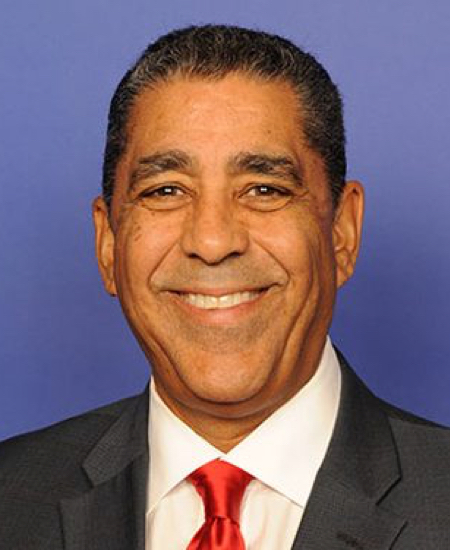
Rep. Adriano Espaillat
Sponsored bills
Maddy summaryHR 5546, the Combating Hate Across Campus Act, requires colleges and universities receiving federal funding to collect and report campus hate crime data in more detailed categories. Specifically, it amends the Higher Education Act to mandate that data be reported both by the category of prejudice (like race or religion) AND broken down by the specific identity of the targeted individual or group, following the FBI's latest Hate Crime Data Collection Guidelines. This change directly affects all institutions covered by the Higher Education Act, which includes most colleges and universities receiving federal financial aid. The bill's key provision is the requirement for more detailed, disaggregated hate crime reporting to improve data accuracy and transparency on campus.
Maddy summaryHRES 750 is a ceremonial resolution recognizing Lloyd Ashburn Williams' community work in Harlem. It formally acknowledges his decades-long leadership as CEO of the Greater Harlem Chamber of Commerce, his co-founding of Harlem Week, and his advocacy for economic empowerment, cultural preservation, and social equity in Harlem. The resolution does not create new policies, allocate funds, or affect any individuals or entities - its sole purpose is to honor Williams' legacy following his death in August 2025. It was introduced by Rep. Espaillat and referred to the Oversight Committee.
Maddy summaryThis bill authorizes the posthumous presentation of a Congressional Gold Medal to Welles Remy Crowther, a volunteer firefighter and equities trader who died saving others during the September 11, 2001, attacks. The medal, designed by the Treasury Secretary, will be given to Crowther’s mother, Alison Crowther, following a formal presentation by congressional leaders. The bill also permits the U.S. Mint to sell bronze duplicates of the medal at cost to cover production expenses. It is a purely commemorative measure with no legislative or regulatory impact.
Maddy summaryThe POJA Act of 2025 amends the Age Discrimination in Employment Act to explicitly prohibit age discrimination against job applicants, not just current employees. It directly affects job seekers aged 40 and older who face bias during hiring. The bill requires the Equal Employment Opportunity Commission to conduct a study within one year of enactment, counting age discrimination claims filed since 2015 (including closed cases), and issue a public report with prevention recommendations for employers. This study aims to address gaps in protecting applicants during the hiring process.
Maddy summaryThis bill requires health plans and insurers to create a clear, timely process for patients or doctors to request exceptions when step therapy protocols (which force patients to try cheaper drugs first) might harm them. It mandates approval for exceptions in six specific cases, such as when prior treatments failed, delaying care risks severe harm, or the required drug causes adverse reactions. Plans must respond within 72 hours (24 hours for emergencies) and cover the requested drug for at least one year if approved. Additionally, health plans must report annual data on exception requests, approvals, denials, and reasons to the government for transparency.
Maddy summaryThe Algorithmic Accountability Act of 2025 requires companies that deploy complex AI systems making significant decisions (such as those affecting education, employment, healthcare, or financial services) to conduct impact assessments and submit annual reports to the Federal Trade Commission. It applies to companies with over $50 million in annual revenue or those handling information about more than 1 million consumers. Companies must assess potential negative impacts on consumers, including bias, privacy risks, and fairness concerns, and document their findings. The FTC will maintain a public repository of anonymized information from these reports to inform consumers and researchers about how AI systems are being used.
Maddy summaryHRES 734 is a symbolic resolution designating the third week of September as "Latino Conservation Week." It recognizes the Latino community's longstanding engagement in outdoor recreation and conservation activities, such as hiking, stewardship events, and environmental justice efforts on public lands. The resolution affirms that including Latino voices strengthens public lands protection and climate resilience, highlighting their role as a growing force in the outdoor economy. It does not create new laws or funding but formally supports the annual observance initiated by the Hispanic Access Foundation.
Maddy summaryThe Tyler Clementi Higher Education Anti-Harassment Act of 2025 requires U.S. colleges and universities participating in federal financial aid programs to create and distribute clear anti-harassment policies covering harassment based on race, color, national origin, sex (including sexual orientation and gender identity), disability, or religion. These policies must explicitly prohibit harassment in all settings - including online, on campus, off-campus housing, and during school-sponsored activities - and outline reporting procedures and support services for victims. The bill also establishes a $50 million annual grant program to fund schools developing prevention programs, victim support services, or staff/student training on recognizing and addressing harassment. Grants are competitive, require annual reporting on effectiveness, and must be used to improve existing efforts without replacing existing civil rights laws like Title IX.
Maddy summaryThis bill prohibits new fossil fuel infrastructure by banning greenhouse gas emissions from new power plants, blocking new LNG terminals, and banning hydraulic fracturing (effective January 1, 2029). It also prohibits exports of domestically produced crude oil and natural gas, with limited exceptions for Canada, Mexico, and temporary shipments. These provisions directly affect energy companies planning new power plants, LNG projects, and oil/gas extraction firms. The bill requires a "just transition" for workers through labor union partnerships and environmental justice considerations. It does not impact existing fossil fuel operations or infrastructure.