

Maddy summaryHR 7245 provides additional funding for fiscal year 2024 to support U.S. military and security assistance efforts related to Ukraine. The bill allocates approximately $29 billion for Defense Department operations to support Ukraine Security Assistance, $7.9 billion for economic aid to Ukraine, and additional funding for military personnel, equipment, and humanitarian assistance. These funds are designated as emergency requirements under the Balanced Budget and Emergency Deficit Control Act of 1985. This bill directly affects U.S. military operations, foreign assistance programs, and the government's ability to provide support to Ukraine and other countries impacted by the conflict.
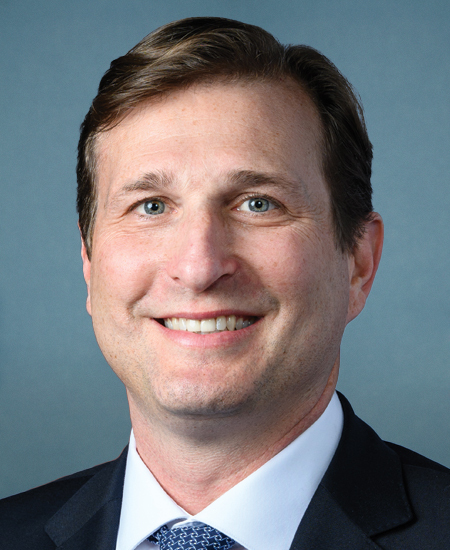
Rep. Daniel S. Goldman
Sponsored bills
Maddy summaryHR 7261, the Reimagining Inclusive Arts Education Act, creates a federal grant program to improve arts education access for children with disabilities in K-12 schools. The bill authorizes $15 million over five years (2025-2029) to fund competitive grants for eligible entities like school districts, state agencies, or partnerships with colleges/nonprofits. Grant recipients must use funds to adapt arts curricula, provide professional development for arts educators, and incorporate creative arts therapies (like music or dance) to increase inclusion and accessibility for students with disabilities. Priority is given to schools receiving Title I funding, and grants last up to three years with possible renewal based on program success.
Maddy summaryHR 7244, the "End Tax Breaks for Dark Money Act," eliminates tax exemptions for political groups and certain nonprofits when they receive property that has increased in value (like stocks or real estate). It targets organizations that accept anonymous donations ("dark money") by removing their ability to avoid capital gains tax on such property transfers. The bill amends the tax code to require these groups to pay tax on the appreciated value when receiving property, rather than allowing them to bypass capital gains tax. This change directly affects political organizations under Section 527 and specific nonprofits under Section 501(c), applying to transfers after the bill's enactment.
Maddy summaryHR 7223 requires the Transportation Security Administration (TSA) to create guidelines improving access to Transportation Worker Identification Credential (TWIC) cards for people leaving prison. The bill directs TSA to develop tools helping incarcerated individuals apply for TWIC cards before release and assist with appeals or waivers if denied initially. This aims to speed up employment opportunities in maritime and port-related jobs - critical for 525,000 Louisiana port jobs and 260,000 oil/gas industry roles requiring TWIC cards. The guidelines must be finalized within one year of the bill’s enactment.
Maddy summaryHR 7127, the FAIR Act, establishes pay adjustments for federal employees in 2025. It increases base pay by 4% for most federal workers under statutory pay systems and for "prevailing rate" employees (like those in specific geographic areas), while raising locality pay rates by 3.4%. The bill directly affects all federal employees receiving pay under these systems, as it modifies their 2025 salary calculations. These changes are based on statutory formulas under Title 5 of the U.S. Code, with no new policy mechanisms beyond the specified percentage increases. The adjustments apply to pay rates in effect as of the end of fiscal year 2024.
Maddy summaryThe SWIMS Act of 2024 bans the captivity of orcas, beluga whales, false killer whales, and pilot whales for public display in the United States. It prohibits exporting, importing, or taking these animals for display - except for relocation to a sanctuary meeting specific welfare standards or release into the wild. The bill also makes it illegal to breed these species for public display. This directly affects marine parks and aquariums that currently display these animals, preventing them from acquiring new animals for exhibits or breeding them for that purpose.
Maddy summaryThis resolution condemns the ongoing violence in Sudan, including attacks on civilians and the use of sexual violence as a weapon of war, and calls for immediate diplomatic action to end hostilities. It directly urges the U.S. President to appoint a special envoy for Sudan and directs the Secretary of State to develop a sanctions strategy targeting military leaders, monitor arms sales, and support humanitarian aid access. Key provisions include requiring regular review of atrocities determinations, deepening coordination with the Treasury for sanctions, and urging regional partners to impose targeted sanctions on violators. The resolution focuses on U.S. policy actions to support civilians and accountability, without proposing new laws or funding.
Maddy summaryHR 7108, the Expanding Access to Mental Health Services in Schools Act of 2024, authorizes federal grants to help high-need public schools hire and retain mental health staff. It targets schools that meet specific criteria: being in the top 15% of need (based on student poverty or other metrics) and failing to meet minimum staffing ratios for counselors, psychologists, or social workers. Grants fund recruitment (through salary stipends or loan repayment), retention (via professional development or incentives), and evidence-based mental health services, with grantees required to contribute 25% matching funds and report annually on provider numbers, demographics, and student-to-provider ratios. The program runs through 2029 and requires all services to comply with privacy laws like FERPA.
Maddy summaryThe ACCESS Act of 2024 creates a federal grant program to help clinics and health care providers expand abortion and reproductive health services in states where abortion is legal (outside of life or health exceptions). It authorizes $200 million annually for fiscal years 2024-2028 to fund specific capacity-building activities, including facility expansions, hiring clinical staff, telehealth services, and culturally appropriate patient resources. Priority is given to providers in states experiencing the highest increases in out-of-state patients seeking abortion care. The bill directly supports health care entities serving patients who travel across state lines for services, aiming to reduce wait times and improve access for vulnerable communities.
Maddy summaryThe Complete Streets Act of 2024 requires states to establish programs that help local governments, transit agencies, and other eligible entities design and build transportation infrastructure accommodating all users, including pedestrians, cyclists, and public transit riders. States must provide technical assistance and grants for complete streets projects, with 5% of certain transportation funds allocated to these programs. The bill establishes design standards requiring features like protected bike lanes, accessible sidewalks, and appropriate lighting for all transportation projects, applying to new projects on Federal-aid highways within metropolitan areas. It mandates that states develop complete streets policies and prioritization plans to improve safety and accessibility, particularly in underserved communities, with compliance required by 2026 or 2029 for different project types.