

Maddy summaryHR 7378, the Frederick Douglass Congressional Gold Medal Act, authorizes Congress to posthumously award a gold medal to honor Frederick Douglass's legacy as a pivotal abolitionist, writer, and advocate for civil rights. The medal, designed by the Treasury Secretary, will be presented to the National Museum of African American History and Culture for display, with bronze duplicates available for sale to cover costs. This ceremonial bill does not create new laws or affect current policies - it solely commemorates Douglass's historical contributions to ending slavery and advancing equality.
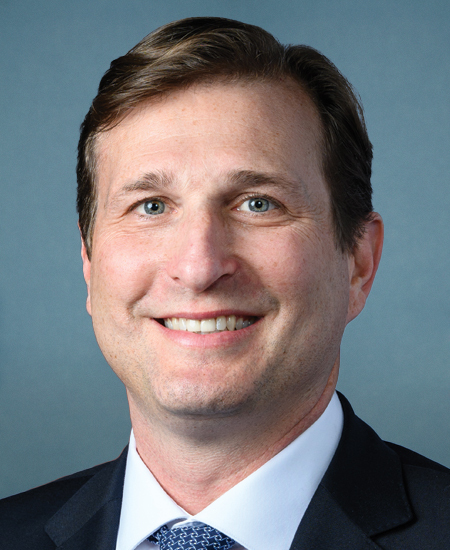
Rep. Daniel S. Goldman
Sponsored bills
Maddy summaryHRES 966 is a symbolic resolution condemning alleged sexual violence committed by Hamas during its October 7, 2023, attack on Israel. It specifically references eyewitness accounts, forensic evidence, and Hamas fighters' admissions of ordering gang rape, sexual mutilation, and assault against Israeli civilians. The resolution calls for international condemnation of such acts as weapons of war, urges nations to criminalize sexual violence, and supports investigations into Hamas' actions. As a non-binding resolution, it does not create new laws or directly affect any individuals but formally expresses the House's position on the issue.
Maddy summaryThis bill prevents states from banning or discouraging the use of specific financial industry codes (merchant category codes) that identify firearm and ammunition merchants. It directly affects financial institutions and payment processors that use these standardized codes for transaction tracking. The law requires states to allow the use of these codes, and the Attorney General can enforce this through civil lawsuits. The bill does not change gun laws or affect gun owners; it only addresses financial coding standards.
Maddy summaryHR 7329, the Election Day Holiday Act of 2024, would designate November 5, 2024 (and subsequent general elections) as a federal public holiday. This change would require federal offices to close and provide federal employees a paid day off on Election Day. The bill amends Title 5 of the U.S. Code to add "Election Day" to the list of designated federal holidays, following Columbus Day. This directly affects federal employees and operations, ensuring they have a day off during general elections.
Maddy summaryThe Pray Safe Act of 2024 creates a DHS-run Federal Clearinghouse to provide evidence-based safety and security guidelines, grant opportunities, and resources specifically for houses of worship, faith-based organizations, and nonprofits. The online resource will compile best practices for preventing threats, natural disasters, and terrorism, including facility safety checklists and incident response tools, while linking directly to applicable federal grants. The Clearinghouse must be updated annually based on user feedback and will expire four years after enactment. It aims to centralize security support for organizations deemed at risk of threats, without altering existing civil rights protections.
Maddy summaryHR 7248, the FDA Modernization Act 3.0, creates a new FDA process to qualify alternative nonclinical testing methods that can replace or reduce animal testing in drug development. Drug developers can request qualification for methods that improve safety/efficacy predictivity or shorten development time, with the FDA required to review requests within 180 days. If qualified, these methods allow expedited FDA review of drug applications and enable referencing the qualified method in submissions. The bill mandates annual reports tracking qualified methods, animal use reduction, and application approvals, with transparency requirements for Congress. This directly affects pharmaceutical companies and biotech firms developing new drugs.
Maddy summaryHRES 1002 is a symbolic House resolution recognizing the cultural and historical significance of Lunar New Year (celebrated as the Year of the Dragon in 2024). It acknowledges the holiday's 4,000-year history in China, its celebration across Asia (including Seollal and Tết), and its significance to Asian Americans and others in the U.S. The resolution expresses respect for those observing the holiday and wishes them a happy new year, but it does not create new laws, policies, or funding. As a ceremonial resolution, it has no direct effect on legislation or constituents.
Maddy summaryHR 7288, the Armenian Protection Act of 2024, repeals the waiver authority that allows the President to bypass restrictions on U.S. aid to Armenia. Specifically, it prevents the waiver of Section 907 of the Freedom Support Act for fiscal years 2024 and 2025, which currently blocks U.S. assistance to Armenia due to historical disputes. This bill directly affects Armenia's eligibility for certain U.S. foreign aid programs by removing the possibility of executive branch waivers for those years. The key mechanism is the permanent removal of the waiver option under the specified appropriations law, changing the policy landscape for U.S.-Armenia aid relations.
Maddy summaryThis bill restricts how credit reporting companies share homebuyers' credit reports during mortgage applications. It prevents companies from sending these reports to third parties (like marketers) just because a lender requested them for a mortgage. Only specific entities can receive the reports: the mortgage lender who originated the loan, the company servicing the loan, or the bank holding the homebuyer's account. This directly protects homebuyers' privacy by limiting unauthorized sharing of their financial data.
Maddy summaryHR 7272, the Shining a Spotlight on Safer Communities Act, requires the Attorney General to submit annual reports to Congress starting in 2024, detailing how the Bipartisan Safer Communities Act's provisions (specifically sections 932 and 933 of title 18) are being implemented. These reports must include data on investigations, prosecutions, demographic information of defendants, and seized firearms or assets related to gun trafficking and straw purchasing. The bill mandates these reports for fiscal years 2024 through 2027, with a funding limit of $2 million annually for this reporting. It is a procedural bill focused solely on transparency and accountability for existing gun safety measures, not creating new policies.