Maddy summaryThis bill establishes a commission to study whether the Weitzman National Museum of American Jewish History in Philadelphia should be transferred to the Smithsonian Institution. The commission, composed of 8 members appointed by congressional leaders with expertise in Jewish American history and museum administration, will examine the museum's collections, financial status, governance, and feasibility of transfer within two years. The commission must submit a report detailing findings, a fundraising plan, and legislative recommendations for any potential transfer. The bill does not transfer the museum but creates a process to evaluate the possibility.
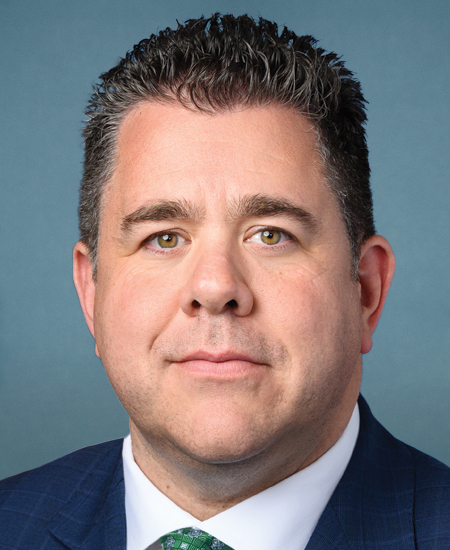
Rep. Nick LaLota
Sponsored bills
Maddy summaryHR 7438 directs the U.S. Treasury to mint commemorative coins for the 2026 FIFA World Cup, including 100,000 $5 gold coins, 500,000 $1 silver coins, and 750,000 half-dollar coins. The coins will be sold to the public at face value plus surcharges ($35, $10, and $5 per coin, respectively), with all surcharge revenue paid to FWC2026 US, Inc. for U.S. soccer programs. These funds must support soccer initiatives, particularly in underserved communities and youth development, as specified in the bill. The coins are legal tender but will only be issued during 2026, with no net cost to the U.S. government.
Maddy summaryThe Coastal Habitat Conservation Act of 2023 authorizes the U.S. Fish and Wildlife Service to work with partners to protect and restore coastal habitats that support Federal trust species like migratory birds, endangered species, and marine mammals. The bill establishes a Coastal Program that provides technical assistance and financial support for coastal habitat planning, assessment, protection, restoration, and enhancement projects on public and private lands. It requires annual reporting on program progress, including quantitative data on protected, restored, and enhanced coastal landscapes, and authorizes $16.957 million annually for fiscal years 2024-2028. This legislation affects coastal states and territories along the Atlantic, Pacific, and Arctic Oceans, the Gulf of Mexico, the Great Lakes, and U.S. territories.
Maddy summaryThis bill reinstates a pre-American Rescue Plan Act (ARP) tax reporting rule for gig economy platforms. It requires third-party payment platforms (like Uber or DoorDash) to report transactions to the IRS only if a gig worker earns over $20,000 in total or completes more than 200 transactions in a year. This directly affects gig workers whose income falls below these thresholds, exempting them from the reporting requirement. The provision effectively reverses a change made by the ARP, reducing administrative burden for both platforms and lower-earning gig workers. The bill amends IRS Code Section 6050W to restore these specific de minimis payment thresholds.
Maddy summaryHR 6751 authorizes the U.S. Mint to produce commemorative coins honoring Roberto Clemente, a Hall of Fame baseball player and humanitarian, including 50,000 $5 gold coins, 400,000 $1 silver coins, and 750,000 half-dollar coins. The coins must feature Clemente's image and inscriptions like "Roberto Clemente" and "2027," with all sales including a surcharge ($5-$35 per coin) paid to the Roberto Clemente Foundation. The foundation, which supports youth sports, education, and disaster relief programs, will use these funds for its mission, while the U.S. Treasury must recover all production costs. The coins will be sold exclusively in 2027, with no net cost to the government.
Maddy summaryHRES 609 is a House resolution expressing opposition to New York City's proposed Central Business District Tolling Program, which would charge drivers up to $23 daily to enter Manhattan south of 60th Street. The resolution highlights that this fee could cost daily commuters about $5,000 annually and disproportionately burden small businesses (still recovering from pandemic lockdowns), low-income families, and students. It disapproves of the program, calls for a public economic impact report, and urges federal and state authorities to halt its implementation. The resolution notes the program is intended to generate $1 billion yearly for the MTA’s capital projects and operations, following the agency’s $690 million 2022 revenue loss.
Maddy summaryThe Disaster Contract Improvement Act (HR 6997) requires the Federal Emergency Management Agency (FEMA) to establish an advisory group with state, tribal, local governments, and debris removal industry experts to improve oversight of federal disaster debris removal contracts. Within one year, FEMA must develop new guidance for states and localities to take primary oversight of these contracts, streamline cost reimbursement, and reduce duplication in debris management. The bill also mandates a Government Accountability Office (GAO) study to examine advance contracts, reimbursement rates, fraud prevention, and reporting processes for debris removal programs. This legislation directly affects states, tribes, and local communities receiving federal disaster relief funds for debris removal operations.
Maddy summaryThe Working Dog Commemorative Coin Act (HR 807) directs the U.S. Treasury to mint three types of commemorative coins honoring working dogs' service: $5 gold coins, $1 silver coins, and half-dollar coins with specific weight and composition requirements. Each coin will carry a surcharge ($35 for $5 coins, $10 for $1 coins, $5 for half-dollars) that will be paid directly to America's VetDogs to support their programs providing service dogs for veterans, the disabled, and others. The coins will be issued in 2027 with designs reflecting working dogs' roles in military, detection, therapy, and assistance work. The legislation specifies that all surcharge revenue must fund America's VetDogs' operations without creating new government programs. This is a commemorative measure focused on honoring working dogs' contributions through coin sales, with all surcharge funds going to a specific nonprofit organization.
Maddy summary# Summary of Proposed Higher Education Act Amendments This document outlines significant proposed amendments to the Higher Education Act of 1965, primarily as part of the "College Cost Reduction Act." The key elements include: ## Accreditation Reform - Major overhaul of accreditation standards, requiring accrediting agencies to demonstrate independence from trade associations - New requirements for accrediting agencies to assess student achievement outcomes, including median value-added earnings relative to median total price charged - Introduction of an "Alternative Quality Assurance Experimental Site Initiative" to test non-accredited institutions - Protections for religious institutions, including a new process for appealing accreditation decisions related to religious mission - Removal of "litmus tests" that would require institutions to support specific political viewpoints ## Student Success Initiatives - Establishment of "Postsecondary Student Success Grants" to increase participation, retention, and completion rates for high-need students - Focus on evidence-based practices, with tiered requirements (tier 1, 2, and 3 reforms) - Mandatory inclusion of high-need student populations (low-income, first-generation, military-connected, etc.) - Requirements for institutions to report on completion rates, retention rates, and student demographics ## Regulatory Changes - Repeal of numerous existing regulations including: * Closed school discharges * Borrower defense to repayment * Pre-dispute arbitration * False certification requirements * Ability-to-benefit rules * Financial responsibility regulations - New restrictions on incentive compensation for recruiters - Changes to third-party servicer definitions and regulations ## Transfer and Credit Policies - New requirement that institutions cannot deny transfer credit based solely on the source of accreditation - Requirements for transparent transfer policies - Changes to reverse transfer policies ## Other Key Provisions - Modifications to the National Advisory Committee on Institutional Quality and Integrity (NACIQI) - New definitions for "total price" and "value-added earnings" - Changes to the process for institutions to change accrediting agencies - New requirements for institutions to report on student outcomes The overall focus of these proposed amendments is to reduce regulatory burden on institutions, promote transparency, improve student outcomes (particularly for high-need students), modernize accreditation processes, and protect religious institutions' rights in accreditation decisions.

Maddy summaryHR 10038 directs the Veterans Affairs (VA) Secretary to run a two-year pilot program making naloxone available at no cost and without a prescription to veterans and their VA-registered caregivers at VA pharmacies and medical facilities. The program requires providing information about VA addiction, suicide prevention, and mental health services, along with naloxone use education. The VA must report to Congress within 90 days of the pilot's end, detailing participation numbers, feasibility of expanding to family members or non-VA providers, and budget considerations for potential permanent adoption. This bill directly affects veterans and their registered caregivers by removing barriers to accessing overdose reversal medication.