

Maddy summaryThe American Victims of Terrorism Compensation Act amends the Justice for United States Victims of State Sponsored Terrorism Act to increase funding for victims of terrorism. It directs the transfer of approximately $1.5 billion from the Binance Holdings Limited case, plus 50% of excess unobligated balances from Department of Justice and Treasury forfeiture funds, into the Victims Fund. The bill establishes deadlines for agencies to deposit funds (within 30 days of receipt or 15 days after enactment), requires annual reports on fund activity, and authorizes annual payments to eligible claimants starting in 2026. This legislation directly affects terrorism victims who receive compensation from the fund and federal agencies that handle forfeited assets from terrorism-related cases.
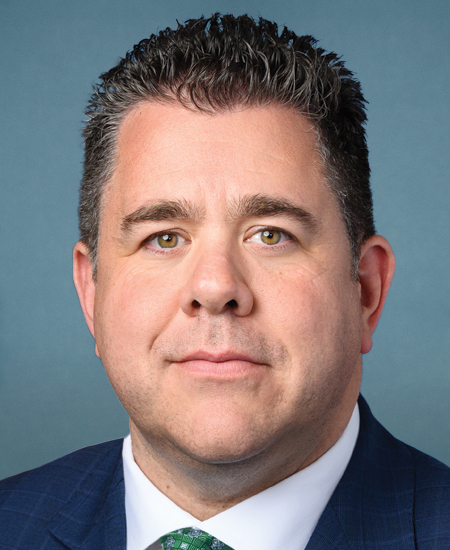
Rep. Nick LaLota
Sponsored bills
Maddy summaryHR 1502 authorizes the creation of a Congressional Gold Medal to honor the volunteers and communities (primarily from Nebraska, Colorado, and Kansas) who supported the North Platte Canteen during World War II. The bill directs the Treasury Secretary to design and strike the medal, which will be presented to the individuals who contributed to the canteen’s operations and then permanently displayed at the Lincoln County Historical Museum in North Platte, Nebraska. It also permits the sale of bronze duplicates to cover production costs, with proceeds going to the U.S. Mint. This is a commemorative measure recognizing historical service, not a policy change affecting current laws or programs.
More Options to Develop and Enhance Remote Nutrition in WIC Act of 2025 or the MODERN WIC Act of 2025 This bill permanently allows individuals to remotely certify their eligibility for, and receive benefits through, the Special Supplemental Nutrition Program for Women, Infants, and Children (WIC). Specifically, the bill requires that a state agency allow an individual seeking a WIC certification, recertification, or a nutritional risk evaluation to do so by phone or through video teleconference, in addition to the in-person option. A state agency has 90 days to collect data for a nutritional risk evaluation for a remotely certified individual. Further, a state agency may consider an applicant who meets the income eligibility standards to be temporarily eligible on an interim basis to participate in the program and may certify the individual for immediate participation without waiting for a nutritional risk evaluation. The bill also allows states to provide benefits on WIC electronic benefit transfer cards through mail or remote issuance instead of requiring participants to pick up or reload benefits in person at a WIC office. Further, the Department of Agriculture must report to Congress about the use of remote technologies and other digital tools in the WIC program. Currently, individuals are generally required to be physically present to certify their WIC eligibility and receive benefits, with exceptions. The Food and Nutrition Service has temporarily waived these requirements and allowed remote certification and benefits using authorities that were provided by laws that were enacted to address COVID-19.
Maddy summaryHR 1467, the POLE Act, requires states to permit local governments to hold elections for local office in odd-numbered years to receive federal election administration funds. It prohibits federal funding under the Help America Vote Act for states that do not allow this, effective starting fiscal year 2027. The bill aims to ensure local elections receive focused voter attention by shifting them from even-numbered years, which Congress states overcrowd ballots and diminish community-level focus. This policy directly affects states that do not currently allow odd-year local elections, as they would lose federal funding for election administration. The bill does not change election schedules but ties federal funding to state compliance with odd-year local election requirements.
Maddy summaryThis bill establishes a Veterans Affairs grant program to fund peer-to-peer mental health support for veterans. It provides up to $250,000 per grant to eligible organizations (like veteran nonprofits, service groups, or state agencies) to hire veterans as peer specialists who host nonclinical support groups and offer 24/7 mental health assistance. The program prohibits grant recipients from collecting or reporting veterans' personal information. It directly affects veterans seeking accessible, nonclinical mental health support through peer-led services.
Maddy summaryThis bill expands Veterans Affairs (VA) coverage for veterans with permanent and total service-connected disabilities needing medical care outside the U.S. It allows the VA to pay for hospital care and medical services abroad if the care meets U.S. medical standards and uses FDA-approved medications. Key provisions include requiring direct deposit for faster reimbursements, enabling digital submission and tracking of forms via VA mobile apps, and mandating a VA report to Congress within two years on implementation. The policy directly affects veterans with qualifying disabilities seeking necessary medical treatment overseas, modernizing how the VA handles foreign medical coverage.
Maddy summaryHRES 142 is a non-binding resolution recognizing the 80th anniversary of the February 1945 amphibious landing on Iwo Jima and the iconic flag-raising on Mount Suribachi during World War II. It commemorates the Battle of Iwo Jima (February 19-March 26, 1945), honors all service members who fought on both sides (including over 26,000 U.S. casualties and an estimated 20,000 Japanese soldiers), and acknowledges the battle's role in securing airfields that saved 24,000 bomber crew lives. The resolution encourages public remembrance through ceremonies and reaffirms U.S.-Japan friendship, but does not create new policies or affect any group.
Maddy summaryHR 1410 expands access to mental health care for 9/11 responders and survivors by allowing licensed mental health providers (not just physicians) to conduct initial health evaluations and certifications under the World Trade Center Health Program. It adjusts the program’s funding formula to account for changing enrollment numbers by linking annual funding to the previous year’s enrollment ratio, and clarifies that deceased individuals are excluded from enrollment counts. The bill also extends the timeframe for adding new health conditions to the program’s list and requires a 2028 report assessing long-term funding needs through 2090. These changes aim to streamline eligibility, improve care access, and ensure sustainable funding for the program.
Goldie's Act This bill expands enforcement provisions under the Animal Welfare Act (AWA). Specifically, the bill directs the Department of Agriculture (USDA) to document and record detailed descriptions of violations of the act observed during inspections and investigations. USDA must provide a copy of all records documenting violations to state, local, and municipal animal control or law enforcement officials within 24 hours of such inspections or investigations. Inspections must be held at least once a year of each research facility, the premises of each animal dealer, and each exhibitor of animals. If violations are found during inspections, then USDA must conduct any necessary follow-up inspections until all the violations are corrected. Inspectors must confiscate or destroy in a humane manner animals found to be suffering physical or psychological harm as a result of failure to comply with the AWA. Violators are subject to civil penalties as outlined in the bill.
This concurrent resolution declares that Congress should not impose any new performance fee, tax, royalty, or other charge relating to the public performance of sound recordings on a local radio station for broadcasting sound recordings over the air, or on any business for such public performance of sound recordings.