

Federal Firearms Licensee Protection Act of 2025 This bill modifies criminal penalties for an offense involving the theft of a firearm from a licensed importer, manufacturer, or dealer, or from their business premises. Specifically, the bill does the following: increases from 10 to 20 years the maximum prison term, and creates a 3- or 5-year mandatory minimum prison term for an offense that occurs during the commission of a burglary or robbery. An attempt to commit an offense is subject to the same penalties as a substantive offense.
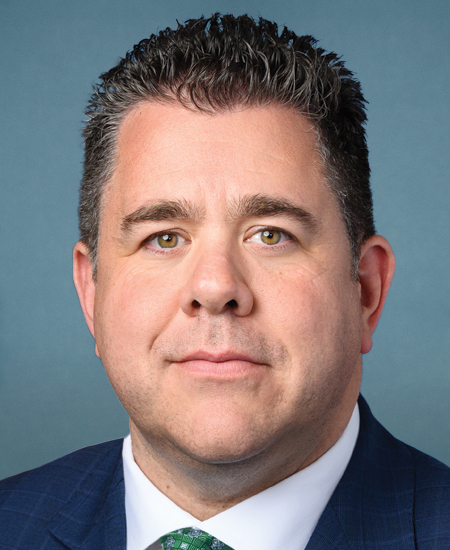
Rep. Nick LaLota
Sponsored bills
Maddy summaryThe PLUS for Veterans Act of 2025 regulates how agents and attorneys can represent veterans in claims for benefits with the Department of Veterans Affairs. It establishes new requirements for these representatives, including application processes, conditional recognition periods while verification occurs, and caps on fees (limiting them to $12,500 or 5 times the monthly benefit increase). The bill reinstates penalties for unauthorized fee charging, including fines up to $50,000 and bars from representation for repeat violations. This legislation directly affects veterans seeking benefits, their representatives, and the Department of Veterans Affairs in handling claims. The bill also preempts state laws that conflict with these new federal regulations.
Maddy summaryHR 1657, the Humane Cosmetics Act of 2025, prohibits cosmetic companies from conducting or contracting animal testing for products sold in the U.S. beginning one year after the law takes effect. It also bans the sale or transport of cosmetics developed using such testing after that date, with limited exemptions (e.g., for foreign regulatory requirements or when no non-animal safety alternatives exist). The bill directly affects cosmetic manufacturers, retailers, and distributors by requiring them to shift to non-animal testing methods. The Food and Drug Administration (FDA) will enforce the law, including reviewing records and imposing civil penalties for violations.
Maddy summaryThe PAST Act of 2025 amends the Horse Protection Act to ban harmful practices known as "soring," which deliberately cause pain to horses to exaggerate their gait for shows. It specifically prohibits devices like action devices (e.g., boots causing friction) and weighted shoes on Tennessee Walking Horses, Racking Horses, and Spotted Saddle Horses at events. The bill increases penalties, including escalating disqualifications for repeat offenses (180 days → 1 year → 3 years) and raises fines for violations to $5,000 per offense. It also requires stricter licensing for inspectors and mandates public posting of violation records to help event organizers enforce rules.
Maddy summaryHRES 166 is a non-binding House resolution expressing U.S. support for the Iranian people's desire for a democratic, secular, and nonnuclear republic. It condemns the Iranian regime's terrorism, regional proxy wars, internal suppression of ethnic and religious minorities, and human rights abuses - including executions and repression of women-led protests. The resolution calls for holding the regime accountable through sanctions, supports the Ten-Point Plan for Iran’s democratic transition, and urges protection for Iranian political refugees in Albania. It does not create new laws but affirms U.S. policy alignment with Iranian protesters' demands.
Maddy summaryHR 788 requires the Department of Energy (DOE) and Small Business Administration (SBA) to establish formal agreements for joint research and development (R&D) projects. This mandates that small businesses must be included in these collaborative efforts, aligning DOE and SBA missions to advance shared goals like clean energy innovation. The bill creates a two-year reporting requirement for the agencies to Congress, detailing coordination, research achievements, and future collaboration opportunities. It does not authorize new funding and ensures R&D activities comply with existing research security rules.
Maddy summaryHR 1551, the Protect and Serve Act of 2025, creates a new federal criminal offense for intentionally harming law enforcement officers under specific circumstances. It imposes harsher penalties, including up to 10 years in prison for serious injury or life imprisonment if death occurs, kidnapping is involved, or a firearm is used. The law applies when the crime crosses state lines, involves interstate weapons, occurs on federal property, or targets federal officers. Prosecutions require the Attorney General’s written certification, considering factors like prior state convictions and public safety impact. The bill directly affects law enforcement officers and federal prosecutors by expanding federal jurisdiction for certain violent crimes against them.
Maddy summaryThis bill changes how women-owned small businesses (WOSBs) are counted in federal contracting goals. It excludes businesses that self-certify as WOSBs (without formal SBA approval) from government-wide and agency goals until they receive official certification from the Small Business Administration (SBA) or an approved entity. Businesses that self-certified before the effective date and applied for formal certification by that date will be treated as certified during the SBA’s review period. The SBA must issue implementing regulations within one year and provide quarterly reports to Congress on certification applications, processing timelines, and outreach efforts.
Maddy summaryHR 818 (the SPUR Act) updates federal tracking requirements for small business contracts. It requires agencies to report annually on new small business contract awards, specifically tracking new entrants from categories including service-disabled veteran-owned, HUBZone, women-owned, and disadvantaged-owned businesses. This change modifies existing scorecard reporting under the Small Business Act to include these new metrics and compare annual numbers. The bill is procedural, making no new spending authorizations.
Maddy summaryHR 585, the Supporting Veteran Families in Need Act, amends Section 2044(e) of Title 38, U.S. Code, to establish permanent funding authority for financial assistance to very low-income veteran families living in permanent housing. It adds a new provision (paragraph (9)) ensuring that funding for these supportive services continues automatically for fiscal year 2027 and all subsequent years, without requiring annual congressional appropriations. This change directly affects eligible veteran families by securing ongoing access to financial aid for housing-related support. The bill does not create new benefits but ensures the continuation of existing assistance programs through a permanent funding mechanism.