

Maddy summaryThis resolution (HRES 459) is a symbolic gesture recognizing National Poppy Day, observed the Friday before Memorial Day. It supports the tradition of wearing red poppies as a symbol honoring U.S. military veterans who died in service, referencing the historical connection to World War I poetry and veterans' organizations. The resolution encourages all U.S. citizens, residents, and visitors to wear poppies on this designated day to express appreciation for those who died preserving freedom. It does not create new laws, funding, or obligations, but formally acknowledges the poppy's role in commemorating military sacrifice.
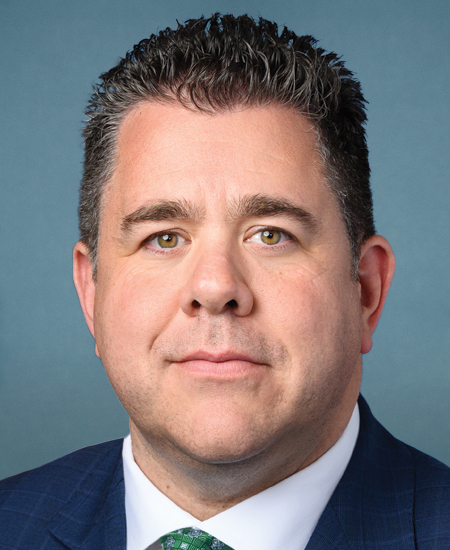
Rep. Nick LaLota
Sponsored bills
Maddy summaryHR 3694, the VALID Act of 2025, requires lenders to include specific information about VA loans in mortgage disclosures. It amends the National Housing Act to mandate that disclosures state the loan-to-value ratio and clarify that VA loans are available under Chapter 37 of Title 38 (veterans' benefits law), assuming prevailing interest rates. The bill also requires the Federal Housing Finance Agency to add a military service question to the Uniform Residential Loan Application form, placing it above the signature line within six months of enactment. This directly affects veterans and active-duty service members applying for VA-guaranteed mortgages, as well as the lenders processing those applications.
Maddy summaryHR 3640, the Oath of Exit Act, adds a voluntary "separation oath" to the military's existing oath framework for service members leaving the Armed Forces (excluding court-martial separations). The bill establishes a specific oath that members may take before retirement or separation, pledging to protect fellow veterans, maintain personal well-being, seek help when needed, and honor the values learned during service. This provision directly affects all members of the Army, Navy, Air Force, Marine Corps, Space Force, and Coast Guard who separate from service. The oath is optional and aims to reinforce peer support and self-care, reflecting findings about elevated veteran suicide rates. The bill does not create new benefits or requirements but adds this ceremonial option to the military's oath process.
Maddy summaryHR 3641, the Wounded Warrior Bill of Rights Act of 2025, clarifies that military department secretaries - not the Defense Health Agency - hold final authority over fitness-for-duty determinations for service members injured in service during the medical separation process. It ensures wounded warriors have the right to a full due process hearing within 90 days if they request one, conducted by their military chain of command. The bill requires commanders to pause or withdraw a service member from the system if procedures aren’t followed and mandates a 2026 briefing to Congress on implementation. This directly affects service members navigating the Integrated Disability Evaluation System (IDES) for potential medical separation. The law reinforces existing protections without creating new benefits, focusing on procedural clarity and accountability.
Maddy summaryThis bill requires colleges and universities to include suicide prevention contact information on student identification cards or their websites. Specifically, institutions must list the 988 Suicide and Crisis Lifeline, Crisis Text Line, and their campus mental health center on student IDs (or post the info online if IDs aren't issued). The requirement applies to all higher education institutions creating student ID cards after the bill's enactment, with a one-year implementation period. It directly affects students by ensuring immediate access to critical mental health resources through a routine campus tool.
Maddy summaryHR 3604, the *Reducing Waste in National Parks Act*, requires National Park Service (NPS) units to reduce and eliminate the sale of disposable plastic products (including water bottles, bags, and food containers) where feasible, considering operational factors like cost, waste reduction, and concessioner impacts. Park officials must develop visitor education plans, implement refill stations, and weigh 13 specific factors before eliminating sales, such as infrastructure costs, revenue effects, and public health safety. The program must be evaluated every two years to measure visitor satisfaction, waste collection rates, and safety outcomes. This bill directly affects NPS operations, concessioners, and park visitors who use park facilities.
Maddy summaryHR 3597, the Protecting Circuit Boards and Substrates Act, creates two main incentives to boost domestic production of printed circuit boards and integrated circuit substrates. It provides a 25% tax credit for businesses purchasing US-manufactured circuit boards and substrates, and establishes a federal financial assistance program offering up to $300 million per project (with larger amounts possible with presidential approval) for manufacturing or research and development facilities in the United States. The program prioritizes small businesses, minority-owned businesses, veteran-owned businesses, and projects that expand domestic production capacity or relocate manufacturing from foreign-controlled areas. Recipients must use funds for specific covered incentives like facility construction, equipment, or workforce training programs, with strict clawback provisions for delays or inappropriate technology sharing with foreign entities of concern. The program requires coordination with multiple federal agencies and includes annual reviews by the Government Accountability Office to track outcomes.
Maddy summaryThe DEFIANCE Act of 2025 creates a new civil legal remedy for victims of non-consensual intimate digital forgeries (synthetic images or videos manipulating real people into sexual contexts without consent). It allows affected individuals to sue perpetrators in federal court for damages up to $250,000, injunctions to remove content, and privacy protections like pseudonyms. The bill specifically covers cases where forgeries are created or shared with intent to disclose, including scenarios involving sexual assault or harassment. It expands existing federal protections under 15 U.S.C. 6851 to address digital forgeries while ensuring state laws remain in effect.
Maddy summaryHR 3270, the Air Traffic Control Workforce Development Act of 2025, aims to strengthen the pipeline of air traffic controllers by improving training programs and retention. It provides $20 million annually (2026-2031) for colleges to develop specialized curricula and equipment through the Enhanced-Collegiate Training Initiative program, allowing graduates to be hired noncompetitively as controllers. The bill also establishes a committee to modernize training curricula and the Air Traffic Skills Assessment exam, while creating retention bonuses for certified controllers and mental health training for medical examiners. These changes directly affect colleges offering air traffic control programs, prospective controllers, and current FAA air traffic controllers.
Maddy summaryThe Certainty for Our Energy Future Act ends tax credits for new wind and solar energy projects that begin construction after December 31, 2030, effective January 1, 2026. It also denies clean energy tax benefits to companies controlled by governments of China, Russia, Iran, or North Korea. The bill uses existing IRS guidelines to define when construction begins for projects, avoiding new bureaucratic rules. Treasury must issue implementation guidance within 180 days, with country-related restrictions taking effect 180 days after that guidance is published.